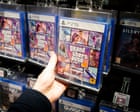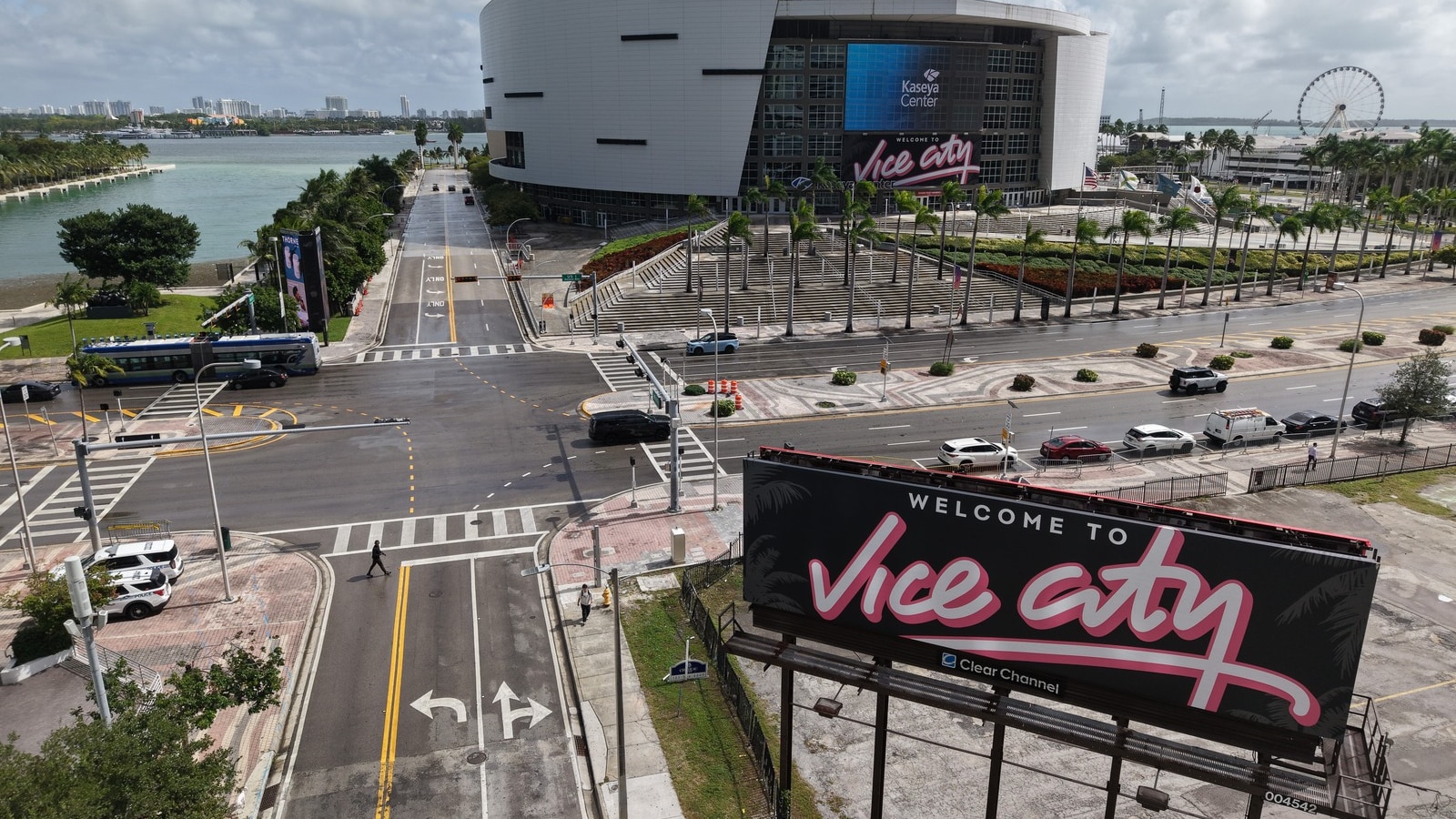
Walk down Ocean Drive or through Wynwood right now, and you will see neon pink and cyan lighting, retro script fonts, and palm tree silhouettes plastered across storefronts that had nothing to do with video games six months ago. Local businesses across South Florida are aggressively rebranding their menus, merchandise, and marketing campaigns to mimic the visual identity of Rockstar Games' Grand Theft Auto VI and its fictional setting of Vice City. They are riding an unprecedented wave of global attention to capture tourist dollars and viral social media impressions without signing a single licensing deal.
It is an old playbook executed at a modern, hyper-accelerated scale. Every major entertainment release triggers a wave of unauthorized tie-ins, from bootleg t-shirts outside concert venues to themed cocktails at neighborhood bars. Yet the sheer economic gravity of GTA VI has turned this routine opportunism into a city-wide commercial strategy. With Take-Two Interactive's flagship franchise commanding billions of dollars in projected revenue and dominating online conversation, Miami hospitality operators, retail shops, and tour guides have recognized a simple truth. They do not need Rockstar's permission to sell the fantasy of Vice City when they already own the real estate it is built upon.
The Economics of Shadow Marketing
To understand why a family-owned Cuban bakery in Little Havana or a boutique hotel in South Beach suddenly starts selling "Vice City" espresso shots, you have to look at customer acquisition costs in modern hospitality. Running targeted digital ads in a competitive tourist market like Miami is brutal. Cost-per-click rates for travel and dining keywords routinely eat through thin profit margins before a customer even walks through the door.
Shadow marketing—the practice of associating a brand with a massive cultural event without paying for official sponsorship—solves that problem overnight. By adopting the recognizable pastel color palettes, 1980s synth-wave aesthetics, and tongue-in-cheek criminal underworld tropes associated with the franchise, local merchants tap directly into an existing algorithmic engine. A tourist takes a photo of a neon sign reading "Welcome to Vice City" inside a local taco joint, posts it to TikTok or Instagram, and tags the location. The business gets free global distribution driven by gaming enthusiasts who are starved for anything connected to the release.
This dynamic works because of a unique inversion of intellectual property. Usually, a brand creates a fictional world and guards every visual element fiercely. Here, Rockstar spent years meticulously recreating South Florida's architecture, culture, and visual noise. When Miami businesses lean into the Vice City aesthetic, they are essentially cosplaying as a caricature of themselves. It creates a feedback loop where reality imitates art that was already imitating reality.
Consider a hypothetical example to see how the math plays out on the ground. Imagine an independent boat tour operator running charters out of Biscayne Bay. Normally, they compete against dozens of identical operators on travel booking platforms, paying steep commissions for every seat filled. By rebranding an evening cruise with neon lighting, playing synth-pop tracks, and marketing it online as a "Vice City Sunset Run," that operator suddenly differentiates their product without changing their underlying overhead. Even if only a fraction of their bookings come from hardcore gamers, the novelty drives higher engagement across all social channels, lowering their overall marketing spend.
Where Nostalgia Meets Trademark Law
Of course, straddling the line between homage and infringement is a dangerous game, especially when dealing with a corporation as protective of its assets as Take-Two Interactive. Over the years, Take-Two has developed a reputation in the gaming industry for aggressive legal enforcement, routinely issuing cease-and-desist letters to modders, fan projects, and commercial entities that stray too close to its trademarks.
Most Miami business owners are not consulting intellectual property attorneys before printing new menus, yet many instinctively understand where the tripwires are buried. The legal distinction comes down to trademark infringement versus descriptive or aesthetic fair use.
- Protected Assets: The specific "Grand Theft Auto" wordmark, the stylized "VI" numeral, the exact Rockstar Games logo, and distinct character likenesses or proprietary artwork from promotional trailers. Using these on a t-shirt or storefront invites immediate legal action.
- Gray Area Tropes: The phrase "Vice City" has existed in Miami's cultural lexicon since the 1980s, long before Rockstar released its 2002 title. Neon pink and teal lighting, Art Deco typography, and flamingos are regional staples, not proprietary code.
When a bar names a drink after a generic Miami trope or uses colors reminiscent of the game's cover art, Take-Two has very little legal recourse. Even if the publisher wanted to crack down on every storefront in Dade County using pastel neon, the public relations backlash would be severe. You do not win hearts and minds by suing small local businesses in the very city your game celebrates.
Still, the risk remains uneven. A local café selling a themed pastry flies well below corporate radar. A regional clothing brand printing thousands of hoodies featuring altered versions of the game's official key art is begging for a subpoena. Smart operators stick to the vibe and leave the actual logos off the merchandise.
The Tourism Pivot and Civic Identity
For decades, Miami's tourism board worked tirelessly to scrub away the city's 1980s reputation as a lawless hub of cartel violence and excess. Civic leaders pushed gleaming luxury condos, high-end art fairs like Art Basel, and sanitized family-friendly beachfronts. They wanted Miami to be seen as a global financial capital, not a crime scene.
The GTA VI phenomenon has forced an awkward reckoning with that polished image. The franchise thrives on satire, crime, and the grotesque absurdities of American excess. By embracing the Vice City branding, local businesses are actively leaning back into the edgy, chaotic reputation city planners spent forty years trying to bury.
Tourists do not fly to Miami hoping to see a pristine banking district. They come for the heat, the spectacle, and the sensation of stepping into a slightly dangerous neon paradise. Gaming tourism—travelers visiting real-world locations made famous by video games—has become a measurable economic driver. Just as fans of The Witcher flock to Poland or Ghost of Tsushima players visit Nagasaki Prefecture, millions of players are treating Miami as a pilgrimage site.
Local hospitality groups recognize that these visitors want an immersive physical experience that mirrors what they see on their screens. Hotels are curating retro-themed suites. Car rental agencies specializing in exotic vehicles are seeing heightened demand from visitors wanting to drive down Collins Avenue in something that looks like it belongs in a high-speed pursuit. The city's commercial sector has effectively decided that if the world is going to view Miami through Rockstar's satirical lens anyway, they might as well collect the cover charge.
The Hidden Risks of the Hype Cycle
Relying on a video game launch to sustain a brick-and-mortar business carries obvious structural flaws. Video game hype is violent, concentrated, and notoriously short-lived. Unlike a permanent sports franchise or an annual music festival, a game release peaks during a narrow window and then fades into the background noise of daily life.
Businesses that over-invest in custom renovations, specialized inventory, or niche branding risk getting stuck with dated aesthetics once the cultural conversation moves on. A restaurant that spends tens of thousands of dollars on custom neon installations and themed menus might see a sharp spike in foot traffic during launch month, followed by an abrupt cliff once tourists move on to the next viral trend.
There is also the problem of brand dilution. When every third storefront on a commercial strip adopts the exact same Vice City aesthetic, the novelty evaporates instantly. Instead of standing out as a clever nod to pop culture, the businesses blend into a homogenous sea of pink and blue clichés. Locals, who form the backbone of any sustainable hospitality business during the off-season, tend to actively avoid establishments that feel like tourist traps built around an internet meme.
Furthermore, the tone of the game itself presents a reputational wildcard. Grand Theft Auto is famous for biting social commentary that rarely flatters its setting. If the narrative of GTA VI depicts certain neighborhoods, industries, or local subcultures in a particularly harsh or unflattering light, businesses that tied their identity too closely to the game may find themselves scrambling to distance their brand from the satire.
What Comes After the Launch Window
The current gold rush in Miami demonstrates how completely video games have overtaken film and music as the dominant force in pop culture. Twenty years ago, a major Hollywood blockbuster filming on location might generate a temporary bump for local catering companies and a few bars frequented by the cast. Today, the mere anticipation of a digital release can reshape the visual identity and marketing strategy of an entire metropolitan area.
Rockstar Games built a digital mirror of South Florida designed to parody American excess and hyper-capitalism. By hijacking that imagery to sell overpriced cocktails, novelty t-shirts, and luxury car rentals, Miami's business community has accidentally proven the game's central thesis right. The satire is no longer confined to the screen; it is open for business on every corner, accepting all major credit cards.