The Met Gala functions as the primary capital engine for the Metropolitan Museum of Art’s Costume Institute, operating less as a social gathering and more as a high-stakes trade mission for the global luxury sector. While public discourse focuses on aesthetic choices, the event is governed by a rigid hierarchy of brand placement, donor relations, and institutional funding requirements. Understanding the 2026 Met Gala requires a breakdown of the three systemic drivers: the curatorial thesis, the donor-brand ecosystem, and the logistical constraints of the First Monday in May.
The Curatorial Thesis as a Market Driver
The Costume Institute’s choice of theme serves as the structural foundation for the entire event. Unlike a typical museum exhibition, the Met Gala theme dictates the visual language and marketing strategies for every luxury house participating. The 2026 theme acts as a set of constraints that designers must navigate to balance brand identity with institutional relevance.
The theme generally adheres to one of three archetypes:
- The Monographic Study: Focused on a single designer (e.g., Karl Lagerfeld or Rei Kawakubo), creating a narrow but deep creative funnel.
- The Conceptual Binary: Exploring a tension between two ideas (e.g., Manus x Machina or Heavenly Bodies), allowing for a broader interpretation across historical and technological lines.
- The Cultural Movement: Addressing a specific era or aesthetic philosophy (e.g., Camp or Gilded Glamour), which carries the highest risk of misinterpretation but offers the greatest PR visibility.
The success of the theme is measured by its "meme-ability" versus its academic rigor. A theme that is too abstract fails to generate the necessary social media impressions to justify the $75,000+ per-seat price tag for corporate sponsors. Conversely, a theme that is too literal risks devaluing the "prestige" of the museum, turning a gala into a costume party.
The Unit Economics of the Gala
The Met Gala is the only department-led fundraiser at the Met that funds its own annual operating budget. The revenue model is predicated on two primary streams: individual ticket sales and corporate table acquisitions.
Seat Allocation and Pricing
In 2026, individual ticket prices have reached an estimated $75,000, with tables starting at approximately $350,000. However, payment does not guarantee entry. The approval process, overseen by Anna Wintour, serves as a non-financial gatekeeper that maintains the event’s scarcity value.
The cost function of a table for a brand like Louis Vuitton or Gucci includes:
- The Table Fee: Direct donation to the Costume Institute.
- The Talent Dressing: Design, production, and shipping of custom garments for a "stable" of 8–10 celebrities.
- The Logistics: Travel, accommodation, and security for the brand’s guests.
- The PR Multiplier: The cost of specialized agencies to manage the rollout of red-carpet imagery in real-time.
A brand’s ROI is not calculated in direct sales but in "Media Impact Value" (MIV). If a brand’s guest goes viral, the earned media value can exceed $20 million in a single night, dwarfing the initial $1 million investment.
The Celebrity-Designer Symbiosis
The red carpet is a marketplace where social capital is traded for brand equity. This relationship is codified through contractual obligations that often start months in advance.
The selection process follows a specific hierarchy:
- The Co-Chairs: These individuals represent the face of the year. They are selected based on their current cultural "velocity" and their relationship with the museum and the lead sponsors.
- The Brand Ambassadors: Celebrities under contract with specific houses. Their appearance is mandatory and their look is often determined by the brand’s upcoming seasonal direction rather than the Gala theme itself.
- The Cultural Wildcards: Emerging artists or athletes invited to provide "edge" and broaden the event’s demographic reach.
The friction in this system arises when a designer’s vision clashes with a celebrity’s personal brand. A garment that is too avant-garde may alienate a celebrity’s fan base, while a garment that is too "safe" results in a brand being ignored by the fashion press. This creates a bottleneck where most looks gravitate toward a "safe-thematic" middle ground.
Operational Logistics and the Red Carpet Funnel
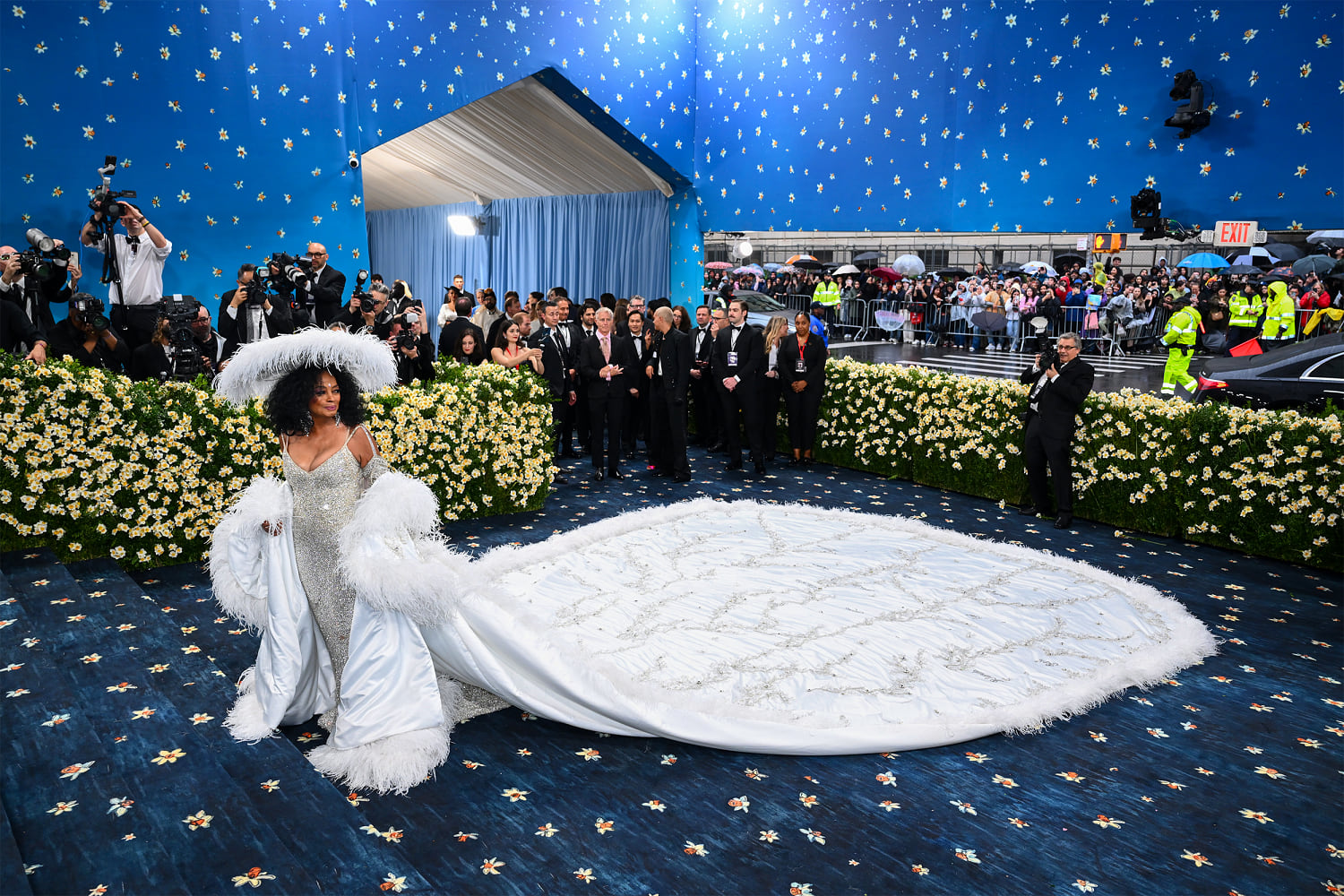
The execution of the Met Gala is a masterclass in throughput management. The museum must process approximately 600–700 high-profile guests through a single entrance within a narrow three-hour window.
The Flow Rate
Guests are assigned strict arrival times. This is not for convenience but to ensure that "A-list" talent receives a clear "runway" without background clutter from other guests. The red carpet is divided into zones:
- The Arrival Zone: Initial security and identification.
- The Step and Repeat: High-density photography area.
- The Interview Pit: Where major broadcast partners (often Vogue or E!) conduct rapid-fire questioning.
- The Grand Staircase: The primary site for "theatrical" garment display.
Once inside, the event shifts from a public-facing spectacle to a private institutional dinner. The transition from the chaotic red carpet to the structured interior of the Temple of Dendur is designed to re-establish the event’s identity as a museum fundraiser rather than a media circus.
Security and Privacy Protocols
The Met Gala operates under a strict "no social media" policy once guests are inside the museum. This serves two functions:
- Maintaining Exclusivity: It preserves the mystery of the event, ensuring that the only high-quality imagery comes from official channels.
- Managing Liability: It allows high-profile guests to interact without the risk of unauthorized filming, which is critical for securing the attendance of the world’s most powerful individuals.
The security apparatus involves a coordination between the NYPD, private security firms, and the museum’s own internal force. The perimeter is one of the most tightly controlled urban environments in the world for that duration.
The Strategic Shift in 2026
The 2026 iteration marks a shift toward "Sustainability and Heritage." As the luxury market faces increased scrutiny over environmental impact and overconsumption, the Gala is being leveraged to promote the idea of fashion as "art" and "investment" rather than disposable commodity.
Brands are now incentivized to utilize archival pieces or repurposed materials. This creates a new competitive layer: designers are no longer just competing on who can make the most beautiful new dress, but who has the deepest and most relevant archive. This pivot strengthens the museum’s position as a historical authority while giving brands a "green-washed" narrative that appeals to younger demographics.
Institutional Risks
Despite its success, the Met Gala model faces significant structural risks. The primary threat is "Spectacle Fatigue." As the red carpet becomes increasingly theatrical, there is a point of diminishing returns where the fashion becomes secondary to the "stunt." If the event loses its grounding in high-fashion craft, it risks becoming a parody of itself, which would devalue the Costume Institute’s academic reputation.
Furthermore, the reliance on a few dozen high-spending corporate sponsors creates a financial vulnerability. Should the luxury sector face a significant downturn, the Costume Institute’s ability to fund its massive exhibitions would be compromised.
Strategic Recommendation for Stakeholders
For brands participating in 2026, the objective should not be "maximum noise" but "thematic precision." The most successful participants will be those who bridge the gap between their brand’s historical DNA and the 2026 curatorial vision.
- Prioritize the Archive: Use the museum's setting to validate your brand's longevity. Select one archival piece to reinterpret rather than creating an entirely new concept.
- Optimize for the Multi-Channel Feed: Design the garment for both the static high-resolution photograph on the staircase and the low-resolution, vertical video clips that will dominate TikTok and Instagram.
- Manage the Talent Narrative: Ensure the celebrity guest can articulate the "why" behind the garment. A celebrity who cannot explain their look devalues the brand’s intellectual investment.
The 2026 Met Gala is not a party; it is a three-hour window to define a brand's position in the global cultural hierarchy.