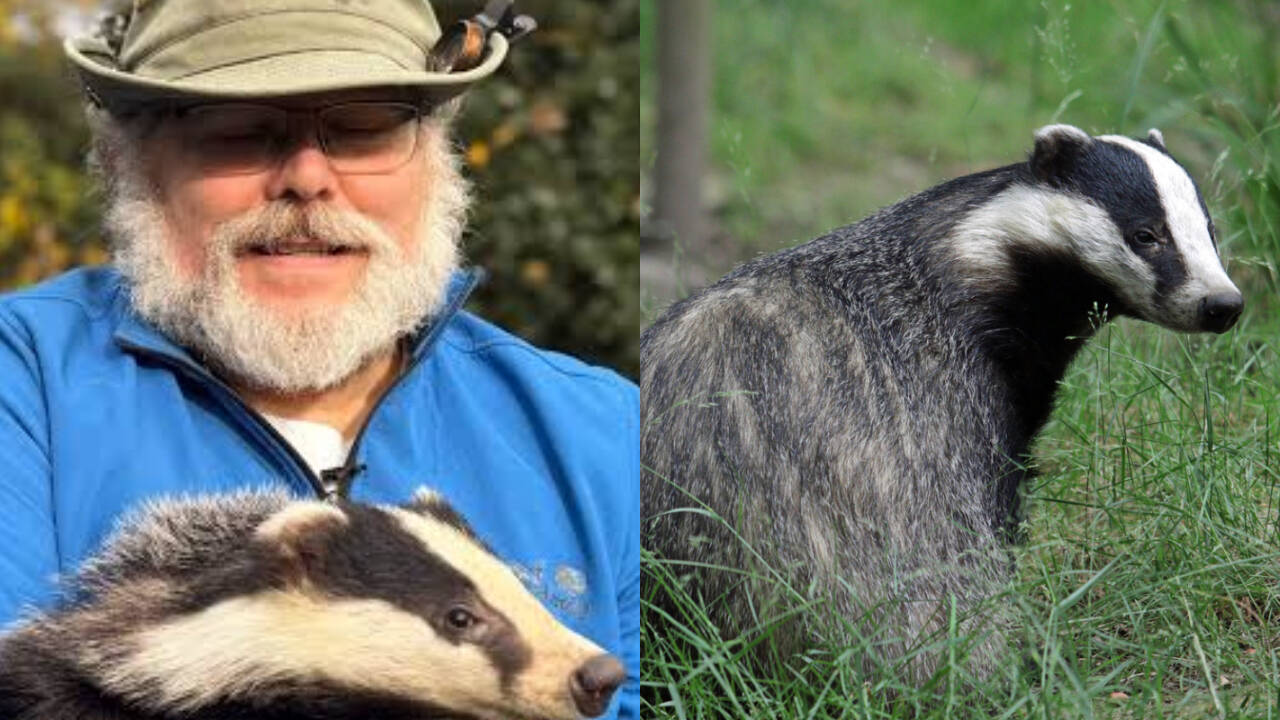
When a Scottish wildlife rescuer refuses to surrender a hand-reared badger cub to state authorities, the dispute exposes a fundamental collision between individual animal welfare and rigid statutory wildlife policy. Under Scottish law, specifically the Protection of Badgers Act 1992 and the Wildlife and Countryside Act 1981, keeping a wild badger in permanent captivity without a specific license is illegal, regardless of the caregiver's intentions or the animal's perceived inability to survive outside an enclosure. Authorities routinely mandate either release into the wild or euthanasia for habituated wild mammals, leaving rescuers trapped between criminal prosecution and what they view as an avoidable death sentence for a creature in their care.
This is not an isolated domestic squabble over a beloved pet. It is a recurring structural fault line across the United Kingdom's wildlife rehabilitation sector. Every spring, orphaned or injured badger cubs are brought into independent rescues and veterinary clinics by well-meaning members of the public. By autumn, the survivors become legal flashpoints.
The Biology of Habituation and the Point of No Return
To understand why these standoffs become so intractable, you have to look at the developmental biology of Meles meles, the European badger. Badgers are highly social, complex mammals that rely on extended maternal care and clan structure to learn foraging techniques, territorial boundaries, and threat avoidance.
In the wild, cubs remain underground in the sett for roughly the first eight weeks of life. They emerge in late spring and spend months shadowing their mothers and older siblings, learning how to dig for earthworms, navigate road networks, and recognize the scent markers of rival clans.
When a cub arrives at a rescue center at three or four weeks old, eyes barely open and requiring bottle-feeding every few hours, the biological clock starts ticking against its future freedom. Human contact during this critical imprinting window alters the animal's behavioral wiring. Even experienced rehabilitators struggle to prevent habituation—the process by which a wild animal loses its innate fear of humans.
A badger that associates human scent with food and safety faces grim odds upon release. Worse still, an adult badger weighs between 10 and 14 kilograms, possesses bone-crushing jaw strength, and is equipped with long, non-retractable claws built for excavating compacted earth. A fearless adult badger wandering into a suburban garden or approaching a dog walker is not merely vulnerable; it becomes a public safety liability.
Yet rescuers on the ground often encounter a different reality. Some cubs arrive with permanent neurological deficits from road traffic collisions, congenital blindness, or chronic respiratory damage from lungworm. For these animals, the standard rehabilitation pipeline breaks down entirely. They cannot be released because they cannot forage or evade predators. Under strict regulatory frameworks, however, they also cannot be kept.
The Legal Architecture Governing Scottish Badgers
Scotland maintains some of the strictest wildlife protection statutes in Europe, enforced through a combination of Police Scotland, the Scottish SPCA, and NatureScot, the public body responsible for Scotland’s natural heritage.
Under the Protection of Badgers Act 1992, it is an offense to willfully kill, injure, take, or possess a badger, or to interfere with a sett. The legislation was drafted primarily to combat badger baiting, illegal digging, and habitat destruction—crimes that remain persistent problems in rural Britain. Because the law had to close every conceivable loophole exploited by bloodsport offenders, it contains almost zero flexibility for compassionate captivity.
If a rescuer takes in an injured badger, the law permits temporary possession solely for the purpose of tending to the animal until it is fit for release. The moment a veterinary surgeon or wildlife inspector determines that the badger will never be fit for the wild, the legal justification for keeping it evaporates.
NatureScot possesses the statutory authority to issue licenses for keeping badgers in captivity, typically for scientific research, education, or zoological conservation. Private individuals and small independent rescues rarely meet the stringent facility, veterinary, and biosecurity thresholds required for a permanent sanctuary license.
Consider a hypothetical scenario that plays out regularly in rural jurisdictions. A sole-operator rescuer takes in a blind cub, raises it in a reinforced garden enclosure, and invests thousands of pounds of personal money into its care. When an anonymous tip alerts authorities, inspectors arrive with a clear statutory mandate. Because the rescuer lacks a zoological license and the animal cannot survive in the wild, the law points toward a single administrative resolution: euthanasia.
Why Wildlife Authorities Resist Sanctuary Exceptions
To the general public, ordering the destruction of a healthy, tame badger cared for by a devoted rescuer looks like bureaucratic cruelty. Social media campaigns erupt overnight. Petitions gather tens of thousands of signatures. Local politicians face furious constituents demanding ministerial intervention.
From the perspective of statutory regulators and mainstream veterinary bodies, however, granting ad-hoc exemptions creates a dangerous precedent.
First, there is the enforcement problem. Wildlife crime investigators already struggle to prosecute offenders who claim that a badger found on their property was being "rescued" rather than held for illegal baiting or fighting. If the law allows private citizens to keep non-releasable badgers indefinitely based on personal assessments of the animal's welfare, verifying legitimate rescue work becomes vastly more difficult.
Second, long-term captivity raises profound welfare concerns that are often invisible to sympathetic onlookers. Badgers are nocturnal, fossorial animals that travel miles each night across varied terrain. A domestic garden pen, no matter how lovingly constructed, cannot replicate the sensory complexity or spatial range of a wild territory. Badgers confined to small enclosures frequently develop stereotypic behaviors—repetitive pacing, self-mutilation, and chronic stress-induced illnesses—that mask severe psychological distress behind an appearance of physical health.
Third, disease control hangs over every policy decision involving British badgers. Bovine tuberculosis (bTB) remains one of the most contentious agricultural issues in the United Kingdom. While Scotland holds officially tuberculosis-free status—unlike parts of England and Wales where controversial badger culls have taken place—Scottish agricultural authorities remain hyper-vigilant about any unregulated movement or housing of wildlife that could theoretically compromise biosecurity protocols.
The Independent Rescue Sector Versus Institutional Gatekeepers
Beneath the legal arguments lies a deep cultural divide between grassroots wildlife rescuers and institutionalized animal welfare agencies.
Across Scotland and the wider UK, independent wildlife rescues operate on shoestring budgets, fueled by personal savings, local donations, and relentless emotional labor. These rescuers are the ones answering phone calls at two in the morning when a motorist hits a badger on a country lane. They clean bloodied cages, tube-feed hypothermic neonates, and absorb the grief when an animal dies despite days of round-the-clock care.
Institutional bodies, by contrast, operate within strict risk-management frameworks. Larger charities and government agencies must answer to trustees, legal counsel, veterinary regulators, and public auditors. Their protocols are designed to maximize population-level welfare and minimize legal exposure, even when doing so requires making utilitarian decisions about individual animals.
When an independent rescuer bonds with a cub over several months, the emotional calculus shifts entirely. Having fought to keep the animal alive through pneumonia, parasites, and malnutrition, handing that same animal over for a lethal injection feels like an act of betrayal.
The Grey Zone of Veterinary Discretion
Veterinarians sit squarely in the middle of this conflict, often forced to act as arbiters between conflicting ethical codes. Under Royal College of Veterinary Surgeons (RCVS) guidelines, a vet's primary obligation is the welfare of the animal under their care.
When presented with a wildlife casualty, a vet must make a clinical judgment:
- Can this animal be restored to full physical and behavioral competence for survival in the wild?
- If not, would keeping it in captivity constitute unacceptable suffering due to confinement and stress?
- Does an accredited, licensed facility exist that can provide lifelong, species-appropriate care?
In practice, accredited facilities with spare capacity for permanent-resident badgers are virtually nonexistent. Wildlife sanctuaries across Britain are chronically overcrowded, underfunded, and overwhelmed by seasonal surges of orphaned juveniles. When no licensed sanctuary space is available, the clinical options narrow down to immediate release—which for a disabled or heavily imprinted badger means slow starvation or fatal territorial attacks by wild badgers—or humane euthanasia.
What Happens When a Hand-Reared Badger Is Forced Into the Wild
Rescuers who fight to keep non-releasable badgers often point to the brutal realities of "hard releases"—releasing a captive-reared animal directly into unfamiliar territory without gradual acclimation.
Wild badgers are fiercely territorial. Clans defend their setts and foraging grounds against intruders with lethal aggression. A lone, hand-reared badger dropped into an occupied territory does not get welcomed into a new family; it gets attacked. Bite wounds inflicted during territorial disputes frequently become infected, leading to septicemia and protracted death.
Even when a soft release is attempted—housing the animal in an artificial sett on the release site for several weeks while providing supplementary food—success depends entirely on the badger retaining its wild instincts. A badger that walks up to the back door of a rural cottage looking for dog biscuits will eventually encounter a landowner with a shotgun, a pack of farm dogs, or fast-moving traffic on an A-road.
Rescuers who refuse to surrender habituated cubs argue that authorities are prioritizing theoretical wildness over actual survival. If an animal is thriving, pain-free, and bonded to a caregiver who meets its physical needs, forcing its death or release to satisfy statutory orthodoxy strikes many observers as fundamentally irrational.
The Counter-Argument Rescuers Rarely Want to Hear
Critics within the professional wildlife rehabilitation community, however, point out an uncomfortable truth: human attachment frequently masquerades as animal advocacy.
Raising a wild mammal from infancy triggers powerful caregiving instincts in humans. A young badger cub is undeniably charismatic—playful, vocal, and responsive to human touch. Over months of bottle-feeding and indoor care, the boundary between wildlife rehabilitator and pet owner can blur without the caregiver even realizing it.
Experienced wildlife rehabilitators follow strict minimal-contact protocols specifically to prevent this outcome. They wear scent-masking clothing, avoid speaking around young animals, feed through visual barriers, and house cubs with conspecifics so the animals bond with their own kind rather than with humans.
When a lone cub ends up irreparably tame, professional rehabilitators often view it not as a noble exception requiring legal dispensation, but as a failure of rehabilitation protocol. From this viewpoint, changing the law to accommodate improperly raised wildlife would incentivize amateurs to take wild cubs out of nature, raise them as quasi-pets, and then demand compassionate exemptions once the animals are too tame to release.
Regulatory Blind Spots and the Need for Reform
Still, acknowledging the risks of amateur wildlife keeping does not absolve the current regulatory system of its rigidity. Scotland's wildlife protection framework was built to punish poachers and habitat destroyers, not to adjudicate complex end-of-life and sanctuary decisions for legitimate rescuers.
There is currently no streamlined, middle-tier licensing pathway in Scotland for vetted, small-scale sanctuaries to house permanently disabled native mammals under regular veterinary inspection. The regulatory architecture treats the situation as binary: an operator is either a temporary first-aider preparing an animal for imminent release, or a major zoological institution capable of meeting commercial-grade licensing standards.
That binary leaves dedicated, competent independent rescuers operating in a legal shadowland. Many quietly care for non-releasable wildlife off the books, terrified that seeking veterinary help or registering their facilities will trigger an inspection that results in their animals being seized and destroyed. Driving wildlife care underground helps neither the animals nor the regulators.
A modern regulatory approach would establish clear, enforceable criteria for permanent wildlife sanctuary permits—requiring proof of genuine disability certified by an independent wildlife vet, mandatory neutering to prevent captive breeding, secure containment standards, and annual welfare audits. Such a system would separate genuine sanctuary care from illegal wildlife possession without forcing veterinarians and inspectors to destroy healthy animals simply because they lack a wild future.
Until lawmakers address that statutory gap, every spring will bring another crop of orphaned cubs into human hands, and every autumn will set the stage for another bitter collision between the people trying to save them and the laws written to protect them.