The air inside the third-floor apartment had stopped moving around 11:00 AM.
By mid-afternoon, the drywall felt warm to the touch, radiating a dull, heavy heat that standard desk fans could only push around in useless, dizzying circles. Marcus sat at his kitchen table, the skin of his forearms sticking slightly to the faux-wood laminate every time he shifted his weight. He was trying to draft a quarterly report, but the numbers on the screen were blurring. His forehead was slick. Every few minutes, a single bead of sweat would trace a slow path down his temple, pooling at the jawline before dropping onto his collar.
This is the hidden tax of a modern heatwave. It is not just the headline-grabbing temperature readings or the dramatic footage of melting asphalt on the evening news. It is the invisible, slow-motion friction it introduces into the ordinary rhythms of human life.
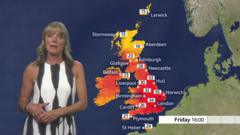
Friday is coming, and with it, another massive wave of high pressure. The meteorological maps show a deep, bruising red creeping across the region, a stubborn ridge of atmospheric weight that traps the sun’s energy and refuses to let it go. To the weather anchors, it is a sequence of figures: 35 degrees, low humidity, clear skies. To the people living beneath that ridge, it is a test of endurance.
The human body is essentially a beautifully complex thermal engine. When the air temperature rises past a certain threshold, the internal mechanisms that keep us stable begin to work overtime. Blood vessels dilate, forcing the heart to pump faster to move heat away from the core and toward the skin. Sweating, our primary cooling mechanism, demands a massive expenditure of hydration and electrolytes. When this happens day after day without a break, the exhaustion becomes cumulative. You do not just feel hot; you feel heavy. Your reaction times slow. Your patience thins.
Consider Sarah, a hypothetical delivery driver navigating the urban core during these peak hours. Her van does not have adequate cooling in the cargo bay. Every time she slides open the side door to grab a parcel, she is met with a blast of air that feels like opening a preheated oven. By her fortieth stop, the physical toll is no longer just about discomfort. It is about cognitive fog. She misreads a house number. She forgets her water bottle on a porch. These are not failures of character; they are the direct biological consequences of a environment pushing past comfort into hostility.
We tend to treat weather as a backdrop, a passive setting for the real stories of our lives. But a prolonged stretch of extreme heat rewrites the script entirely. It dictates when we can walk our dogs without burning their paws on the sidewalk. It determines the electricity bill that will arrive three weeks later, causing a sharp intake of breath at the kitchen counter. It alters the very social fabric of our neighborhoods, driving everyone indoors behind closed blinds, turning vibrant streets into echoing, sun-bleached canyons.
The real problem lies in the infrastructure we built for a cooler past.
Our cities were designed to absorb and retain light, not reflect it. The dark tarmac of the roads, the dense concrete of the office towers, the brick facades of older residential terraces—they act as giant thermal sponges. They soak up the solar radiation all through the grueling afternoon hours. Then, when the sun finally dips below the horizon and the world is supposed to cool down, these materials begin to release that stored energy back into the night air. This is the urban heat island effect, a phenomenon that prevents the nighttime relief our bodies desperately need to reset.
Without that nocturnal cooling period, the next day starts at a disadvantage. You wake up already tired, the sheets slightly damp, the air in the bedroom thick and unyielding.
Dealing with this requires a shift in how we view our daily routines during the peak summer months. It is not about fighting the heat; it is about adapting to its terms. It means shifting heavy physical labor to the early hours of the morning, before the sun has had a chance to bake the earth. It means checking on neighbors, particularly those who live alone or without the luxury of climate control, because heat is an isolating force that quietens the vulnerable before it harms them.
Marcus finally shut his laptop. The report could wait until the early morning, when the air might carry a brief, fragile coolness. He walked over to the sink, ran the tap until the water came out as cold as the old pipes could manage, and soaked a small cotton towel. He pressed it to the back of his neck, closing his eyes as the shock of it register against his skin.
Outside the window, the sun was still high, casting sharp, blinding shadows across the quiet street, waiting for Friday to demand even more.


