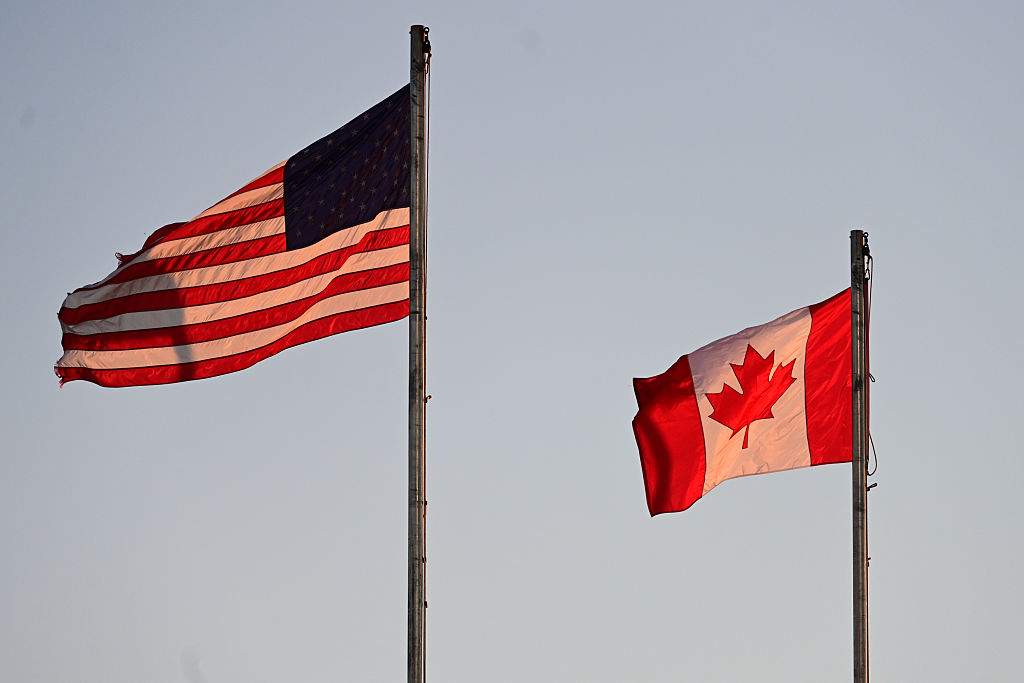
The kitchen table in a modest suburban home in Ohio often holds two distinct items at the end of each month: a calendar marked with circled payment dates and a trio of orange prescription bottles. For years, the arithmetic of survival in America has required a quiet, desperate kind of geography. When the price of maintenance medications climbs past the edge of a family budget, patients begin looking north.
They look toward Canada.
To understand why millions of Americans have relied on pharmacies across the northern border, you have to understand the sheer weight of a diagnosis paired with a price tag. Imagine holding a small plastic container that costs more than a monthly car payment. That is not a hypothetical scenario for Arthur, a retired machinist living just outside of Cleveland whose daily insulin regimen keeps him upright and breathing. For over a decade, Arthur’s salvation arrived in padded envelopes bearing Canadian postmarks, containing the exact same chemical compounds manufactured by the exact same pharmaceutical giants, but priced at a fraction of what local pharmacies demanded.
Price controls. Government negotiation. Different rules of engagement in a market where health care is treated less like a luxury good and more like a public utility.
Arthur’s story is echoed across living rooms in every state. Millions of Americans—teachers, veterans, retirees on fixed incomes—have quietly built a parallel supply chain. They navigated international mail-order pharmacies with the cautious hope of people smuggling life across an invisible line. It was an open secret. Regulators knew. Lawmakers debated. But the shipments kept arriving, holding back the tide of medical bankruptcy for households teetering on the edge.
Then the tide began to turn.
Cost structures do not shift overnight. They creep. They adjust in boardrooms and policy briefings long before they hit the consumer. Recently, the architecture supporting cross-border medication access has begun to strain under heavy economic pressure. Supply chain vulnerabilities, fluctuating currency values, legislative pushes to curb export quantities, and rising operational costs for international distributors have converged into a singular reality.
The medicine from Canada is getting more expensive.
For millions, this isn't just an economic adjustment. It is the narrowing of an escape hatch. When a budget is already stretched to its absolute limit, a thirty percent increase in the cost of a vital maintenance drug does not mean cutting back on dining out. It means rationing pills. It means cutting doses in half, hoping the body won't notice the difference until the next paycheck arrives. It means a silent, grinding anxiety that sits heavy in the chest.
Consider what happens when the math breaks down entirely.
When international options begin to match domestic prices, the entire logic of cross-border purchasing collapses. Patients find themselves stranded in the middle of a system that offers no easy harbor. They return to local counters, only to find the same prohibitive costs waiting for them, unyielding and indifferent.
Economists talk about market corrections and supply constraints. They use terms like pricing parity and regulatory friction. But behind the clinical jargon is a very human exhaustion. The emotional core of this issue is not found in trade policy; it is found in the quiet panic of a person standing at a pharmacy counter, listening to the total and realizing they have to choose between filling a prescription and paying for groceries.
We have built a system where crossing a border for basic survival tools is viewed as a clever workaround rather than a glaring symptom of a deeper failure. And as those northern channels narrow under the weight of rising costs, the system forces a reckoning.
There are no easy answers waiting at the end of this shift. Legislative proposals stall. Domestic price reform moves at the speed of political compromise. Meanwhile, the calendar on Arthur's kitchen table keeps turning, the circled dates drawing closer, and the orange bottles slowly emptying into an uncertain future.