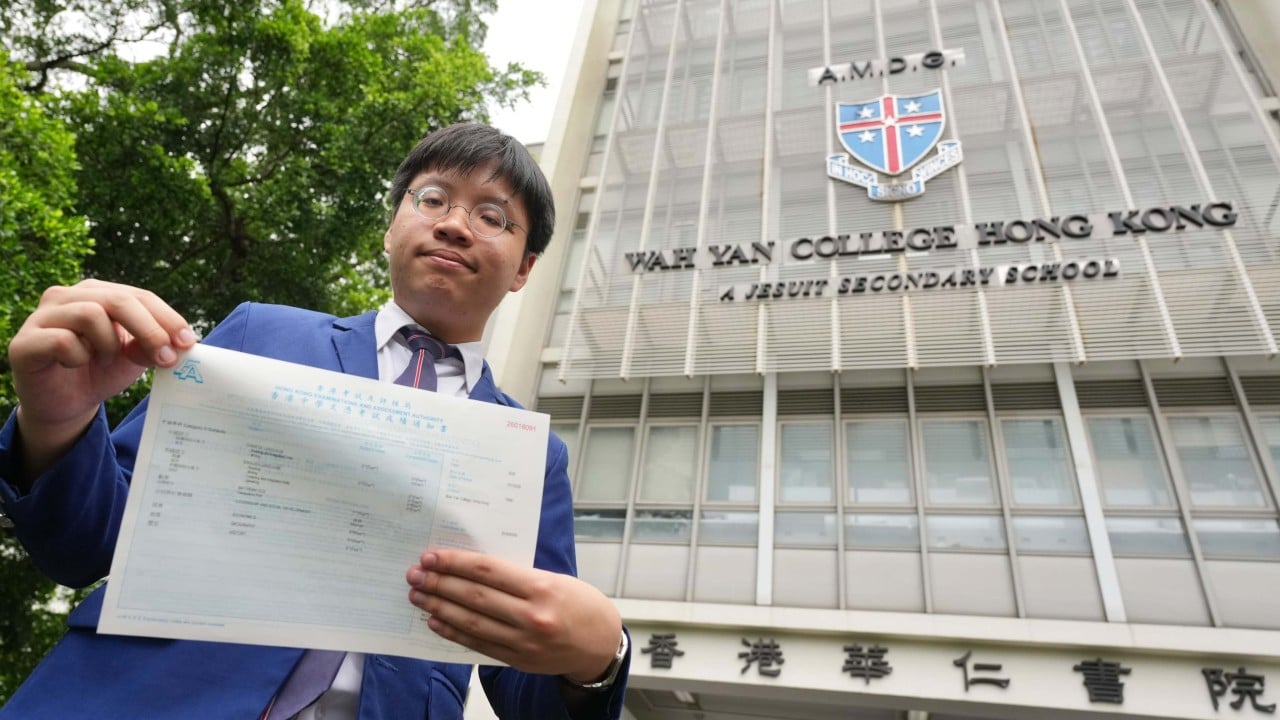
In Hong Kong, academic excellence functions as a highly concentrated, risk-averse financial asset. Every year, the release of the Hong Kong Diploma of Secondary Education (HKDSE) results serves as a sorting mechanism for the city's top-tier intellectual capital. In 2026, where a record 24 candidates achieved perfect scores, the predominant career path remains remarkably uniform: the pursuit of clinical medicine.
This concentration of elite talent is not merely a reflection of individual altruism or personal preference. It is the logical output of a highly rational economic optimization problem solved by students, families, and academic institutions. To understand why Hong Kong's most capable minds systematically default to medicine, one must analyze the underlying risk-reward calculus, the structural limitations of the local economy, and the unique market protections granted to the medical profession. Meanwhile, you can find similar events here: The India EU Trade Agreement Is a Dead End and Everyone Knows It.
The Expected Utility Model of Academic Career Selection
The decision-making process of a top-scoring HKDSE candidate can be modeled as a utility maximization function. Let the expected utility $U$ of a career path $a$ be defined as:
$$U(a) = P(a) \cdot W(a) + S(a) - C(a) - \gamma \cdot \sigma(a)$$ To see the full picture, we recommend the detailed report by Associated Press.
Where:
- $P(a)$ is the probability of successfully entering and completing the career pathway.
- $W(a)$ is the discounted lifetime financial compensation.
- $S(a)$ is the social capital and prestige yield.
- $C(a)$ is the upfront friction, including tuition costs and psychological labor.
- $\sigma(a)$ represents the volatility or downside risk of the industry (career instability, economic cycles).
- $\gamma$ is the risk-aversion coefficient of the student and their family unit.
1. Minimizing Volatility ($\sigma$) and Maximizing Certainty ($P$)
For a student achieving the highest possible marks (such as 5** in six or more subjects), the probability of admission to local medical programs is near 100%. Once admitted, the completion rate of medical school in Hong Kong is exceedingly high, and post-graduation employment is virtually guaranteed by the public healthcare infrastructure.
In contrast, high-growth alternatives such as technology entrepreneurship or quantitative finance present high volatility ($\sigma$). A career in software engineering or deep tech is highly dependent on macroeconomic cycles, venture capital availability, and global competition. By choosing medicine, the candidate eliminates market-driven career volatility.
2. The Lifetime Wealth Function ($W$)
In most developed markets, the income gap between senior medical specialists and elite corporate professionals (investment bankers, corporate lawyers, technology executives) is relatively narrow, or favors the corporate sector at the fat tail. In Hong Kong, the starting salary of a public hospital intern and the rapid scaling of medical officer pay scales far outpace starting salaries in other sectors.
Furthermore, the private medical market operates with highly inelastic demand. Once a specialist transitions to private practice, their earning potential matches or exceeds that of partner-level corporate professionals, with none of the associated corporate vulnerability or ageism.
The Monopolistic Architecture of Hong Kong Medicine
The structural dominance of medicine as a career choice is sustained by deliberate policy design and regulatory protections. The high return on academic capital invested in a medical degree is protected by three structural barriers.
Regulatory Licensing Restraints
The Medical Council of Hong Kong maintains stringent licensing requirements for non-locally trained doctors. This regulatory barrier shields local graduates from direct global competition. While other elite professions (finance, technology, management consulting) recruit globally—meaning local graduates must compete with Ivy League, Oxbridge, and top mainland Chinese talent—the local medical market is structurally protected. The local medical graduate operates within a highly insulated domestic labor cartel.
The Public-Private Bifurcation
The healthcare infrastructure in Hong Kong is split into a heavily subsidized public sector (the Hospital Authority) and a highly profitable private sector. The public sector operates as a mandatory, high-volume residency and training pipeline. It absorbs almost all graduates, provides rapid clinical exposure, and guarantees structured salary progression. Once clinical competence is achieved, physicians can transition to the private sector, where they can capture consumer surplus through unregulated fee-for-service models. This private transition option represents a free, highly valuable call option embedded in every local medical degree.
Low Capital Intensity of Entry
Unlike launching a technology startup or a quantitative fund, which requires significant venture capital or institutional backing, a private medical practice is highly decentralized and requires minimal initial capital expenditure. The primary input is the doctor’s personal labor and reputation. Therefore, the path to wealth creation in medicine is highly repeatable and self-funding, which minimizes the barrier of entry for students from middle-class backgrounds.
The Opportunity Cost to Hong Kong's Tech and R&D Ecosystems
The systemic funneling of the top 0.01% of academic achievers into clinical medicine imposes a significant opportunity cost on the broader Hong Kong economy. The city has repeatedly expressed ambitions to transition into an international innovation and technology hub. However, an innovation ecosystem requires a critical mass of exceptional talent to take asymmetric risks.
[Elite Academic Talent]
       │
       ├─► Medicine (90% Selection of Top Scorers) ──► Risk-Averse, High-yield Local Utility
       │
       └─► Tech/R&D (Fringe Selection) ──────────────► High Volatility, Exported to Global Hubs (e.g., Oxford)
The systemic diversion of talent away from STEM and into clinical practice creates several structural weaknesses.
The Talent Deficit in Emerging Technologies
While top scorers occasionally opt for fields like computer science, they frequently choose to study abroad (for example, at institutions like Oxford). The domestic technology sector lacks the structural incentives to retain them. Because the local economy lacks a deep, multi-stage venture capital ecosystem and scaled domestic technology firms, the risk-adjusted return of studying computer science locally is profoundly unfavorable compared to medicine.
Capital Allocation Mismatch
Hong Kong's private equity and family office capital is highly concentrated in real estate, finance, and wealth preservation. It is not structurally aligned to fund early-stage, high-risk research. Because the capital market does not reward domestic R&D, the labor market reflects this by undervaluing research scientists. The starting salary of a PhD researcher in Hong Kong is a fraction of the starting salary of an entry-level medical officer, cementing the talent flight from hard sciences.
The Limits of the Caring Doctor Thesis
Public discourse frequently attributes the medical preference of top scorers to altruistic motivations, often framed around the desire to be "caring doctors". While individual empathy is undoubtedly genuine, treating it as the primary driver of talent allocation obscures the structural realities of the public health system.
The operational reality of Hong Kong’s public hospitals is characterized by extreme patient volume, brief consultation windows, and severe administrative burdens. The system is designed for high-throughput clinical triage, not prolonged empathetic patient engagement.
Therefore, a misalignment exists between the altruistic aspirations of entering students and the industrial efficiency required by the public system. The "caring doctor" narrative serves as a socially acceptable, highly prestigious framing that aligns with cultural expectations of filial piety and public service, while simultaneously securing the household's financial future.
Strategic Interventions to Redistribute Intellectual Capital
If the Hong Kong administration aims to diversify its economic base and build a credible global technology presence, it cannot rely on public relations campaigns urging students to choose alternative fields. It must alter the parameters of the career utility equation.
- Equalizing the Financial Floor for R&D: The government must subsidize early-career salaries for PhDs and deep-tech researchers to match the starting baseline of public medical officers. If the income disparity between a starting researcher and a starting doctor remains over 150%, talent will continue to default to clinical practice.
- Creating Institutional Venture Pipelines: Establish joint commercialization vehicles between local universities and international venture funds. This would provide top-tier science and engineering graduates with structured, well-capitalized pathways to build high-growth enterprises locally, raising the expected value ($W$) of non-medical STEM careers.
- Recalibrating Medical Admissions Criteria: Transition medical school admissions away from a pure reliance on high-stakes academic examinations. Incorporating multi-dimensional, non-cognitive assessments can decouple perfect academic scores from automatic medical school admission, encouraging students with diverse intellectual strengths to pursue varied career paths without feeling they are wasting their academic performance.
Without these structural adjustments to the risk-adjusted returns of alternative industries, the systematic concentration of Hong Kong’s elite intellectual capital in clinical medicine will persist as a highly rational, self-perpetuating equilibrium.