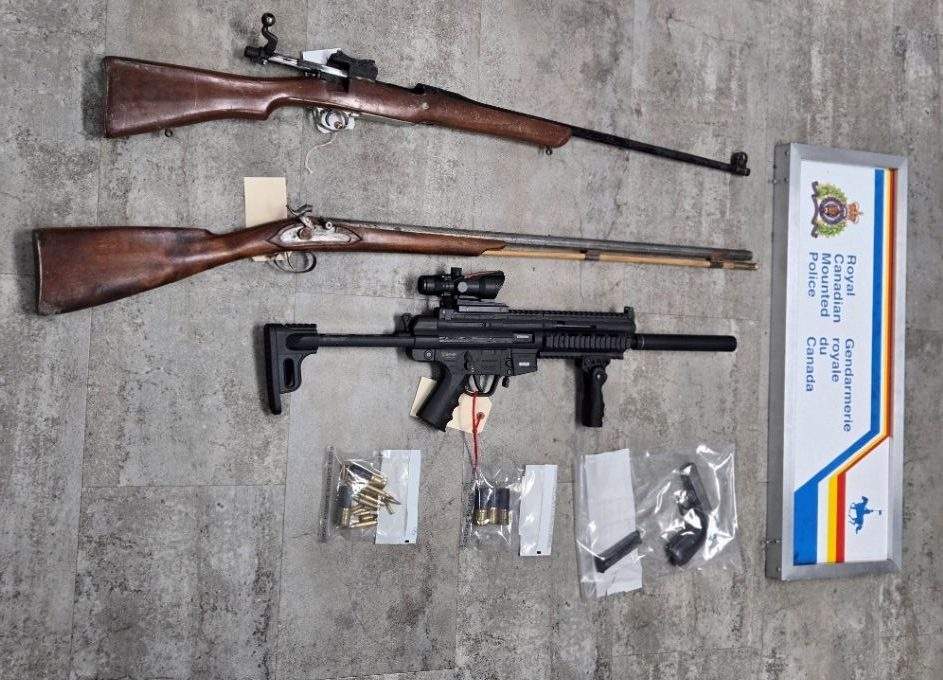
Another headline ripples through the Canadian press, identical in its rhythm to a hundred that came before it. The Royal Canadian Mounted Police (RCMP) announce a significant seizure in South Saskatchewan. A laundry list of seized items is displayed on a folding table: restricted firearms, high-capacity magazines, ammunition, and perhaps a handful of illicit substances. The immediate media consensus locks into place. The narrative is comforting, familiar, and fundamentally wrong: a dangerous supply line has been cut, a major trafficking node dismantled, and public safety instantly improved.
This is a profound misunderstanding of how the illicit arms trade actually operates in North America.
When law enforcement and media outlets focus entirely on the physical seizure of a specific cache, they mistake the symptom for the disease. They treat a highly fluid, decentralized market as if it were a rigid corporate supply chain. In reality, intercepting a single collection of firearms in rural Saskatchewan does nothing to alter the structural incentives, the economic realities, or the cross-border flow of illegal weapons.
To truly understand why these high-profile busts fail to dent the availability of illegal firearms, we have to look past the folding tables and examine the cold mathematics of the black market.
The Myth of the Centralized Gun Kingpin
The standard media narrative relies on the trope of the centralized weapons kingpin—a shadowy figure orchestrating massive shipments of firearms across provincial borders. This model makes for great television, but it bears no resemblance to reality.
I have spent years analyzing illicit trade corridors, tracing how contraband moves through distributed networks. The modern weapons trade does not rely on massive, centralized organizations. It relies on the "straw purchasing" pipeline and the decentralized, low-level courier.
In Canada, and particularly across the vast, porous border with the United States, weapons trafficking is heavily characterized by small-scale, repeating patterns. This is often referred to by analysts as the "ant trade." Individual actors or small groups procure two, three, or four firearms at a time. They exploit fragmented regional oversight, regional variations in gun laws, and the sheer impossibility of searching every vehicle on thousands of kilometers of highway.
When the RCMP bust a local distributor in Saskatchewan, they are not cutting the head off a snake. They are clearing out a single bucket from a fast-flowing river. The underlying demand remains entirely untouched, and the decentralized nature of the supply network means another micro-courier is already filling the void before the police press release is even drafted.
The Substitution Effect in Illicit Markets
The lazy consensus assumes that if you remove twenty firearms from the street, there are twenty fewer crimes committed. This logic ignores a basic principle of black-market economics: the substitution effect.
When local enforcement actions create a temporary, localized shortage of a specific illicit commodity, the market adapts instantly.
- Price Scaling: The street price of available firearms ticks upward, increasing the profit margins for competing traffickers and incentivizing new actors to enter the market.
- Source Shifting: If cross-border corridors face brief resource tightening, domestic sourcing increases. This includes a rise in targeted residential break-ins looking for legal, licensed firearms owners, or the staging of fraudulent thefts.
- Technological Pivots: The rapid evolution of additive manufacturing and hybrid firearms production—specifically CNC-milled receivers and 3D-printed components—means that domestic production capabilities can scale up when traditional supply lines face friction.
The hard truth nobody wants to admit is that a seizure is simply a cost of doing business for the broader market. It is an operational tax. Just as a legitimate retail corporation factors shoplifting into its annual budget, organized crime networks factor law enforcement interdictions into their profit models.
Dismantling the Premise of the "Weapons Seizure"
If you look at the queries surrounding these events, people consistently ask versions of the same question: "How can law enforcement stop the flow of illegal guns into our communities?"
The premise of the question is fundamentally flawed because it views the problem strictly through the lens of supply. You cannot police your way out of a supply-and-demand equation when the supply side is infinitely adaptable and heavily subsidized by the largest civilian firearm market on earth directly to the south.
True disruption requires moving away from the reactive, seizure-heavy model that dominates current law enforcement public relations. Instead, intelligence assets must be deployed toward the financial and digital choke points that make the trade profitable.
Instead of hunting for the physical metal after it has already crossed borders and entered local communities, intervention must focus on the digital infrastructure of the trade. The modern illicit arms transaction relies on specific communication platforms, digital escrow systems, and localized distribution networks that leave distinct behavioral and financial footprints. Tracing the capital flight—how the money leaves local communities and enters the hands of suppliers—is vastly more effective than staging a photo-op with a dozen seized shotguns.
The downside to this approach? It is invisible. It requires long-term, quiet, sophisticated intelligence work that does not produce a dramatic headline or a neat quote for the evening news. It requires admitting that success cannot be measured by the weight of steel confiscated on a Tuesday afternoon in a rural province.
Stop celebrating the folding table. The moment law enforcement displays their latest prize to the cameras, the market has already compensated, adapted, and moved on.