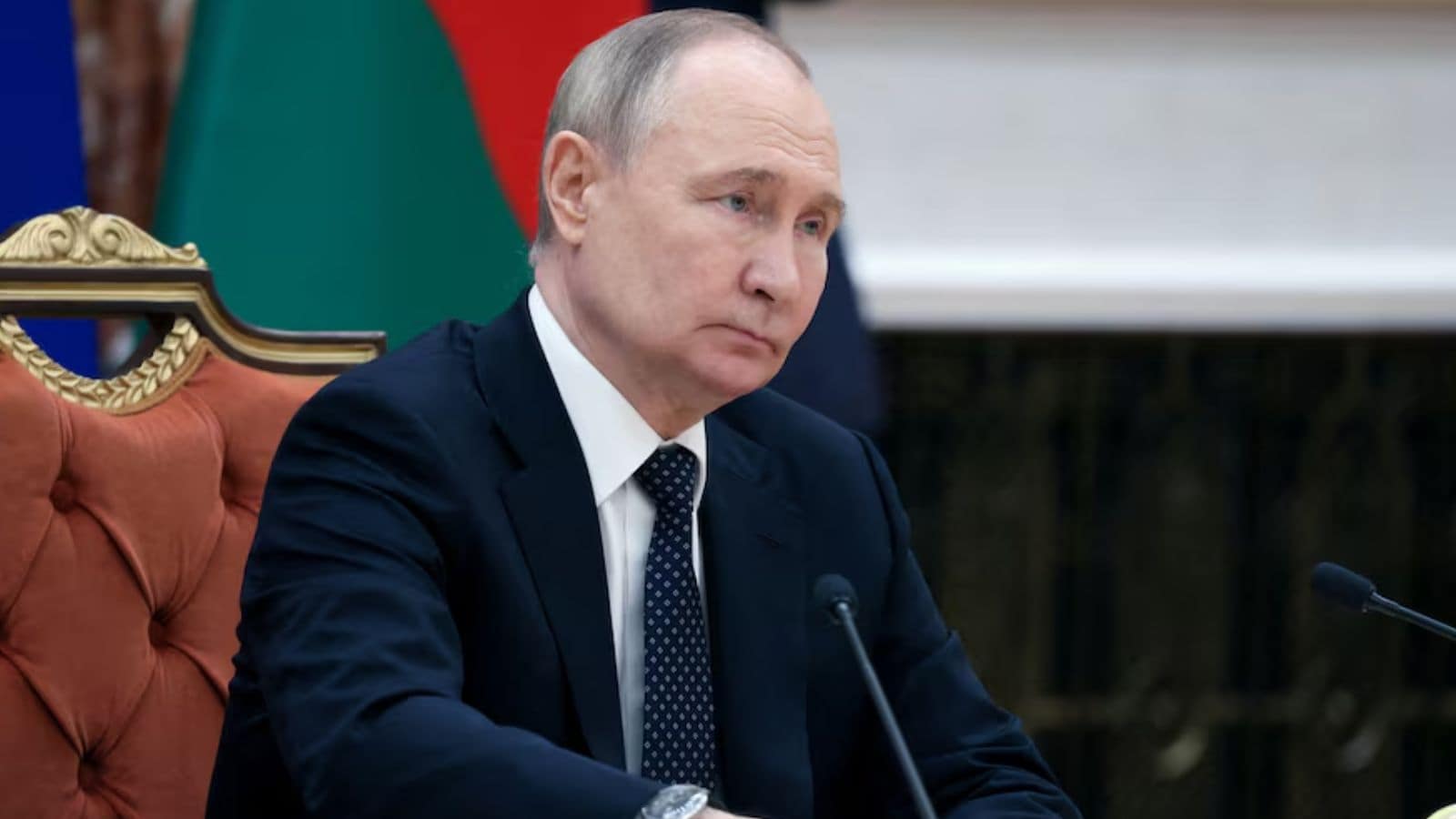
Every time a barrage of missiles hits Ukrainian infrastructure, the headlines read like grief-stricken poetry written by algorithm. Eleven dead. A cynical birthday gift to Vladimir Putin. The moral outrage is instantaneous, predictable, and entirely useless for understanding why the bloodshed keeps accelerating.
We are fed a steady diet of emotional shorthand because nuance requires admitting that war does not run on birthdays or poetic malice. It runs on logistics, domestic political signaling, and the cold mathematics of attrition. When analysts reduce strategic military choices to petty personal spite, they do not just simplify the conflict; they blind us to the actual mechanics driving the war room decisions in Moscow and Kyiv.
Stop treating state violence like a petty office dispute. If you want to survive the next phase of this geopolitical earthquake, you have to look past the moral horror and examine the structural incentives that make these strikes inevitable.
The Birthday Gift Fallacy And The Comfort Of Trivializing The Enemy
Attaching a psychological motive like spite or ego to a strategic missile campaign serves a comforting psychological purpose for the West. It turns a nuclear-armed autocrat into a petty villain from a mediocre screenplay. If Putin is just lashing out because it is his birthday or because he is having a bad week, then his actions are irrational, emotional, and inherently unstable.
That framing is dangerous. It is also factually bankrupt.
Military planning in prolonged wars does not defer to astrological signs or calendar milestones. When Russian command orders a coordinated strike package across multiple Ukrainian oblasts, the timing is dictated by stockpile aggregation, intelligence cycle maturation, weather windows, and the depletion curves of air defense interceptors.
I have watched strategists in defense think tanks twist themselves into knots trying to find psychological explanations for military timetables that were driven entirely by supply chain deliveries of microelectronics or the seasonal freeze of mud. When you attribute mass casualty events to personal malice, you miss the cold, mechanical reality: these strikes are calibrated responses to shifts in battlefield momentum and diplomatic stalemates.
Putin does not need a birthday excuse to bomb a power station. He does it because the structural cost of doing so remains lower than the domestic political cost of stopping. Until Western commentators understand that cruelty in war is systematic rather than emotional, our predictions will remain completely worthless.
The Air Defense Myth And The Attrition Trap
The lazy consensus in mainstream reporting relies on a comforting narrative about air defense. Every time Patriot or NASAMS batteries intercept a high percentage of incoming ordnance, networks celebrate a triumph of Western technology. When a few slip through and kill civilians, the coverage laments a tragic gap in the shield.
Both reactions miss the forest for the shrapnel.
Modern air defense is an asymmetric financial disaster for the defender. Firing a million-dollar interceptor missile at a modified geriatric cruise missile or a low-cost loitering munition is a win for the attacker, even if every single drone falls out of the sky. The macroeconomic math of war dictates that the side with the larger industrial base will eventually bankrupt the side relying on donated, exquisite-tier hardware.
Ukraine's defenders are performing tactical miracles with hardware that took decades to engineer. Yet, focusing solely on the interception rate ignores the operational goal of the strikes. The objective has never been purely about body counts or immediate tactical destruction. It is about economic bleeding.
Every power substation hit requires specialized replacement parts that take months to manufacture. Every alarm that sends millions of civilians into freezing metro stations grinds down the national industrial productivity a fraction of a percent at a time. The cumulative psychological and economic drag is the real weapon.
Pretending that a successful interception rate means the threat is neutralized is like celebrating catching 90 percent of the incoming knife thrusts while ignoring that your hands are bleeding out. The math does not care about your morale.
The Domestic Political Feedback Loop Inside Russia
To understand why these strikes persist despite international condemnation, you have to look at the domestic audience in Moscow. Western media treats these campaigns as messages sent to Washington, London, or Kyiv. They are primarily domestic television broadcasts.
In a hyper-managed information space, the regime must continuously demonstrate forward momentum. When ground offensives bog down in muddy trenches or turn into meat-grinders for marginal territorial gains, the air war becomes the proxy for progress. It provides visible, high-impact footage for evening news broadcasts, reassuring a skeptical domestic populace that the state retains the initiative.
This is the grim feedback loop of modern authoritarian warfare. The harsher the international sanctions, the more the regime leans into nationalist theater. The more military failures accumulate on the front lines, the more pressure mounts on the aerospace forces to deliver cinematic demonstrations of reach.
If you think Western economic sanctions are going to cause a sudden popular uprising that stops the bombing, you do not understand the resilience of police states under siege. Sanctions often tighten the grip rather than loosening it, because external threats validate internal crackdowns. The political utility of a missile strike is measured in domestic compliance ratings, not international goodwill.
The Uncomfortable Truth About Escalation Dominance
The most glaring blind spot in contemporary analysis is the refusal to confront the reality of escalation dominance. For years, Western policy has operated on a magical thinking framework: provide just enough aid to keep Ukraine in the fight, but not enough to provoke a catastrophic Russian response.
That middle ground is a trap. It guarantees a protracted, low-efficiency slaughter rather than a decisive outcome.
By slow-walking critical capabilities and placing artificial restrictions on how Western weapons can be used against staging grounds inside Russian territory, allies created a strategic purgatory. Russia understands this hesitation better than we do. Moscow treats Western self-deterrence as a permanent shield, allowing them to calibrate their aggression just below the threshold that would trigger a systemic Western military intervention.
When an 11-person casualty event is processed by the news cycle as a tragic anomaly rather than a predictable symptom of a half-measured proxy conflict, the public is being lied to by omission. The war is brutal because it is designed to be protracted by actors who are unwilling or unable to commit to total victory on either side.
What Real Deterrence Looks Like
If we want to stop waking up to casualty tolls from overnight bombardments, we have to abandon the language of moral outrage and adopt the language of systemic disruption.
First, stop analyzing state violence through the lens of individual psychology. Drop the birthday narratives, the pop-psychology diagnoses of dictators, and the naive assumptions that dictators care about reputational damage in Davos.
Second, recognize that defensive shields alone cannot win a war of attrition. You cannot intercept your way to victory against an opponent willing to weaponize demographic and industrial depth. True deterrence requires shifting the cost equation entirely—meaning the removal of all restrictions on striking the logistics hubs and airfields from which these murderous missions launch.
The alternative is an endless loop of condemnation, candlelight vigils, and tactical stagnation. War is not a morality play. It is a competition of violence and logistics. Until our strategies reflect that ruthless mechanical truth, the body counts will keep climbing, no matter whose birthday it is.


