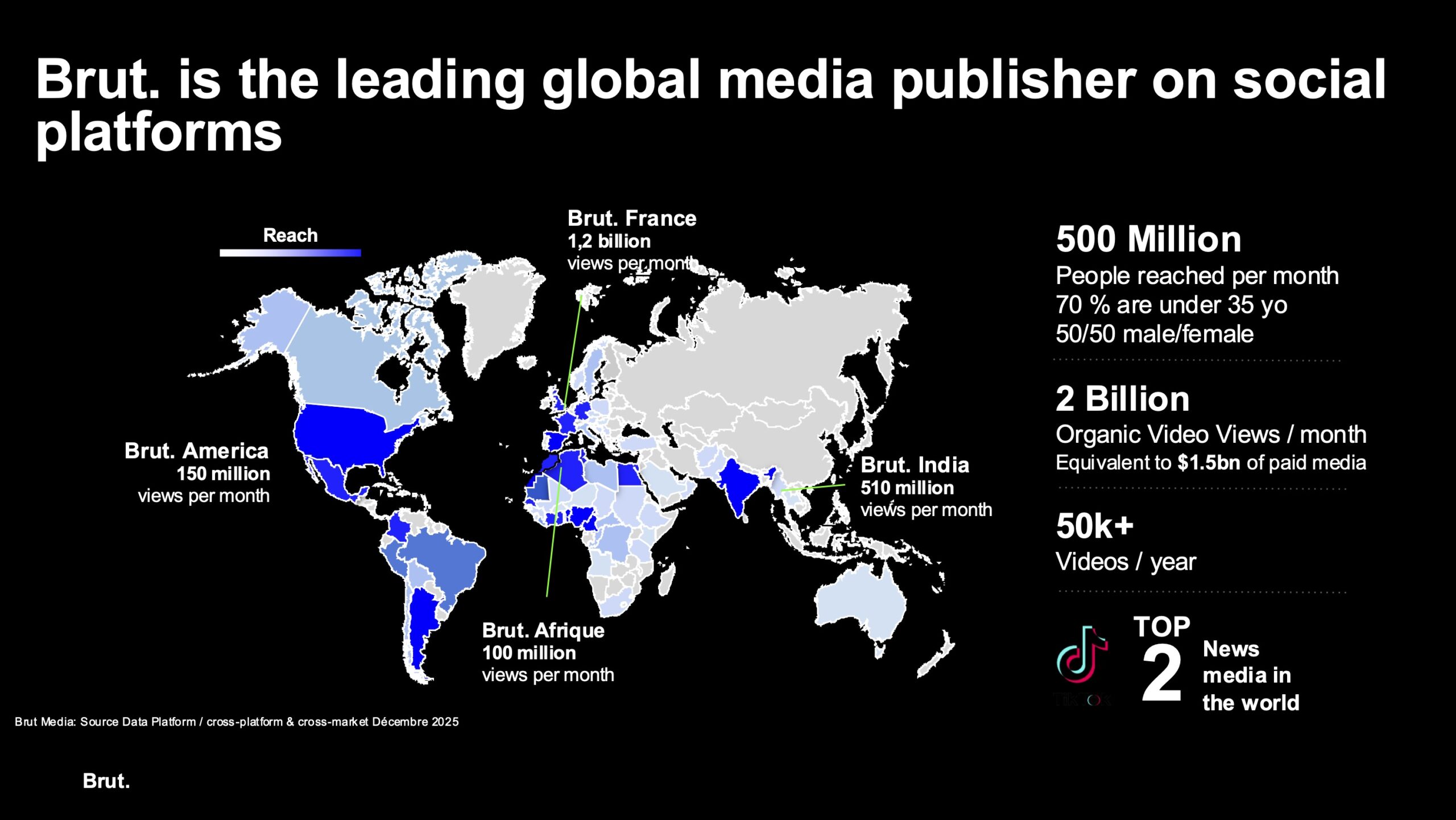
Traditional newsrooms are old boys' clubs dying in slow motion. They sit in glass towers, scratching their heads over churn rates, wondering why twenty-somethings treat their homepage like a toxic waste dump. Every quarterly report reads like a post-mortem for an industry that refused to read the room.
Then you look at Brut. You might also find this connected coverage interesting: Why Elon Musk Thinks Zohran Mamdani Is Dead Wrong About NYC Grocery Stores.
While legacy publications bleed subscribers and lay off veterans, Brut built a juggernaut by fundamentally rewriting how stories are pitched, produced, and consumed. The media establishment dismisses them as a social media anomaly. That is a fatal mistake. Brut discovered a formula for connecting young journalists with young audiences that traditional newsrooms refuse to replicate because it requires admitting their entire editorial hierarchy is broken.
The Architecture of Youth Disconnect
Walk into any legacy newsroom at nine in the morning. You will find a row of tired editors arguing over wire copy, debating whether a Senate subcommittee hearing deserves the lead spot over a geopolitical crisis. They are optimizing for an audience that died off a decade ago. As highlighted in latest articles by Harvard Business Review, the implications are widespread.
Young audiences do not read homepage grids. They do not care about the inverted pyramid structure taught in journalism schools since the Truman administration. They encounter the world through vertical feeds, fragmented narratives, and personality-driven commentary. When legacy media tries to capture this demographic, the result is embarrassing. You get forced slang, awkward TikTok dances by anchors who look physically ill, and condescending explainers that treat young adults like children.
Brut avoided this trap by throwing out the old playbook. They did not try to force young people into the traditional news format. They built a production pipeline that matches how digital natives actually consume information.
Legacy Media Pipeline: Wire Copy -> Senior Editor Approval -> Homepage Grid -> Desktop Reader
Brut Pipeline: Field Reporter -> Mobile-First Vertical Video -> Algorithmic Distribution -> Direct Engagement
The difference is structural. Legacy outlets treat digital platforms as dumpsters for print articles. Brut treats platforms as the primary destination, tailoring every frame for mobile consumption from the moment a reporter steps into the field.
Breeding Ground for a New Generation of Reporters
The crisis in modern journalism is not just about declining trust. It is about a talent bottleneck. Newsrooms are shrinking, meaning veteran mentors have no time to train incoming reporters. Young journalists are thrown into the fire with zero guidance, churning out aggregated clickbait just to hit daily quotas.
Brut took a radically different approach to talent acquisition and development. Instead of hiring polished anchor clones from mid-market television stations, they scouted digital creators, activist-journalists, and domain specialists who already understood how to talk to an audience without a teleprompter.
They gave these young reporters ownership over their beats. If a twenty-four-year-old reporter is passionate about climate policy or labor rights, Brut does not bury their work behind a paywall. They hand them a camera, a microphone, and editorial freedom. The reporter becomes the brand.
This model creates radical authenticity. Young viewers can smell institutional spin from a mile away. When a reporter speaks directly to the camera with raw footage behind them, unvarnished by corporate PR polish, it cuts through the noise. It is journalism built on proximity rather than distance.
The Economics of Vertical Distribution
Everyone talks about pivoting to video. Few understand the cash burn required to do it right. Traditional outlets fail because their cost structures are bloated. They maintain expensive bureaus, massive legacy printing contracts, and layers of middle management that add zero value to the final product.
Brut built their financial engine around efficiency and platform-native monetization. They understood that the traditional subscription model is fundamentally broken for people under thirty. You cannot expect a college student or gig-economy worker to drop twenty dollars a month on a paywalled news site when information flows freely across social feeds.
Instead, Brut monetized attention at scale through brand partnerships, native video advertising, and multi-platform distribution deals. They go where the eyeballs are, whether that is Instagram, TikTok, Snapchat, or dedicated streaming channels.
Critics argue that relying on social media giants for distribution leaves publishers vulnerable to algorithmic whim. That is a fair critique. Algorithm changes can slash referral traffic overnight. But Brut mitigated this risk by building direct brand equity. People do not search for the news outlet first; they look for the Brut logo because they trust the messenger.
Replicating the Blueprint Without Losing Your Soul
If legacy newsrooms want to survive the decade, copying Brut's aesthetic is not enough. Slapping subtitles on a talking head video will not save a dying publication if the underlying culture remains toxic and insular.
Transformation requires structural overhaul. It demands dismantling the wall between the newsroom leadership and the digital natives who understand modern distribution. It means trusting young journalists to lead investigative projects instead of treating them as cheap labor for social media chores.
The blueprint is right there in plain sight. It requires courage to abandon legacy ego and the discipline to build for an audience that owes traditional media nothing.
The clock is ticking down for the old guard. Adapt or become a case study in corporate irrelevance.