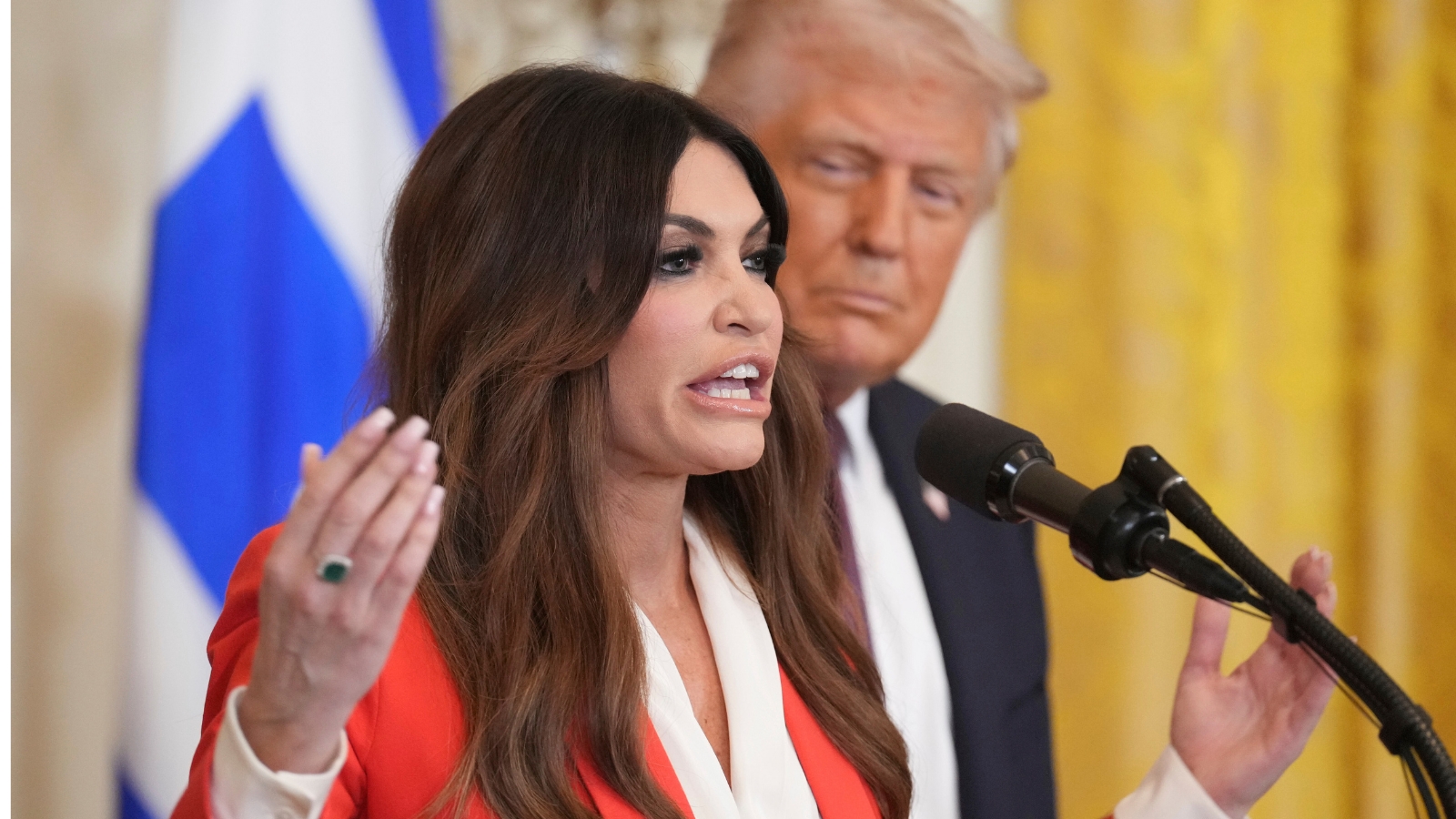
Every standard profile of Kimberly Guilfoyle follows a predictable template. Pundits love to treat political figures as cartoon characters, reducing complex trajectories to cable news soundbites, high-profile breakups, and superficial tabloid observations. The lazy consensus across mainstream media treats her tenure in the public eye as a series of social accidents or superficial alignments. That framing is not just lazy. It is fundamentally blind to how modern political influence operates.
I have spent years watching political operatives and media personalities try to decode the inner machinery of Washington and Mar-a-Lago, and the observer class routinely mistakes proximity for power and performance for policy. When George Washington University or a mainstream wire service writes about a high-profile diplomatic firing or a personal connection to the Trump family, they frame it through the lens of high school clique drama. They miss the entire structural reality.
Let us dismantle the narrative.
The Tabloid Smoke Screen
The headline-driven media wants you to focus on the dating history, the fashion choices, and the theatrical rallies. It makes for easy reading. It generates clicks. But it completely obscures the actual operational value of figures like Guilfoyle in the ecosystem of modern political communication.
When George Bush or Bill Clinton navigated the corridors of power, public relations was managed through slow, institutional channels. Today, political survival requires an entirely different set of mechanics. It demands total-market saturation, direct-to-consumer messaging, and an absolute immunity to institutional shame.
Guilfoyle understood this long before the legacy networks caught on. Her background as a prosecutor combined with her years inside television broadcasting created a hybrid skill set that traditional consultants still fail to replicate. While critics dismiss her speeches as performative outrage, those speeches function as high-yield fundraising engines. They mobilize donors in zip codes that elite Washington reporters have never visited.
Look at the obsession with diplomatic appointments, such as the frequent shuffling of ambassadors to Greece or other strategic European posts. The media treats these slots as traditional rewards for donors or career foreign service veterans. But the diplomatic corps has undergone a massive structural shift. Traditional ambassadors now compete with informal, high-access influencers who bypass the State Department entirely to shape foreign perception through digital channels.
When an ambassador gets pulled or reassigned, the media scrambles to find personal vendettas or palace intrigue. They ignore the boring, structural truth: institutional churn in diplomatic posts often reflects a shifting internal mandate regarding who controls the narrative abroad.
The Myth of the Establishment Playbook
The core misconception is that Washington runs on polite institutional norms where credentials and quiet consensus dictate outcomes. Anyone who has spent more than twenty minutes inside a federal agency knows this is a comforting fairy tale told to journalism students.
Washington runs entirely on narrative dominance and resource allocation.
When critics target public figures for being too loud or too unorthodox, they are usually betraying their own provincial view of power. They believe that if someone does not operate with the quiet decorum of a 1990s Senate committee room, they are illegitimate. This is a fatal analytical error. In an era where attention spans are measured in seconds, quiet decorum is just a polite way of becoming irrelevant.
Guilfoyle’s career trajectory proves that modern political survival depends on building an independent audience base that cannot be canceled or gatekept by legacy media institutions. When you control your own megaphone, you do not need the approval of the editorial board at a major newspaper to set the agenda.
Admittedly, this approach carries a heavy downside. Relying on hyper-personalized, high-volume political combat creates an environment where nuance goes to die. It turns governance into constant warfare, making compromise nearly impossible and eroding the institutional trust required for long-term statecraft. But acknowledging that downside does not mean we get to pretend the old rules still apply. They do not.
Decoding the Real Power Matrix
To understand why certain figures remain central to political movements despite constant media hostility, you have to look at transactional utility.
Political movements do not survive on polite policy papers. They survive on energy, money, and absolute loyalty. When traditional commentators analyze a speech, they look at syntax, tone, and whether it appeals to the median voter in a suburban swing district. That is the wrong metric. They should be looking at conversion rates, donor list growth, and baseline emotional resonance with the core base.
Imagine a scenario where a political campaign relies solely on traditional, focus-grouped messaging to appease institutional critics. It sounds safe on paper. In reality, it produces flatlined enthusiasm and dry fundraising coffers. The populist wave that reshaped American politics over the last decade did not happen because candidates used measured language. It happened because they attacked the sacred cows of both political parties with unvarnished aggression.
Guilfoyle’s longevity in this space is a case study in audience alignment. She recognized that the old gatekeepers—network executives, Washington insiders, elite social circles—had lost their monopoly on validation. Once you stop caring what people in Georgetown dinner parties think about you, you are entirely un-cancellable.
The Uncomfortable Truth About Political Access
People love to ask how someone moves from the courtroom to television to the inner circle of a presidential campaign. They look for secret handshakes or hidden conspiracies.
The reality is far more mundane and much more brutal. It is about execution under extreme public scrutiny and an absolute willingness to absorb incoming fire without flinching. Most people cannot handle the psychic weight of a hostile national media cycle for forty-eight hours, let alone four decades. Those who can survive it—and use it to fundraise—become permanent fixtures of the political landscape, regardless of how many hit pieces are published against them.
The next time you read a breathless article about who is up and who is down in Washington, ask yourself a simple question. Are the authors describing how power actually works, or are they just projecting their own nostalgia for a political era that is never coming back?
Stop looking for the polite norms of the past. Look at who commands attention, who moves money, and who refuses to apologize. That is where the power is.