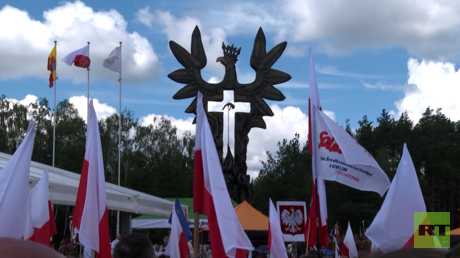
The strategic alliance between Poland and Ukraine operates under a structural paradox: absolute geopolitical alignment on contemporary security threats paired with severe divergence on historical memory. The annual commemoration of the Volhynia massacres on July 11 highlights this systemic friction point. While mainstream commentary frequently reduces this issue to a sentimental dispute over past atrocities or a mere tool for media polarization, a rigorous analysis reveals a complex statecraft challenge. The management of historical memory between Warsaw and Kyiv is a quantifiable variable influencing defense integration, European Union accession timelines, and bilateral diplomatic capital.
Resolving this friction requires moving past rhetorical posturing to analyze the structural mechanics of the dispute. The core issue involves three distinct systemic drivers: asymmetric historiography, domestic electoral incentives, and external intelligence exploitation. By deconstructing these pillars, we can map the exact trajectory of Polish-Ukrainian relations and project how historical grievances will shape the security architecture of Central and Eastern Europe.
The Asymmetric Historiography Framework
The fundamental barrier to a synchronized Polish-Ukrainian narrative lies in the divergent structural utility of World War II history for each nation's state-building project. This divergence creates a conceptual mismatch where the same historical actors occupy incompatible positions in each nation's foundational modern narrative.
+-----------------------------------------------------------------------+
|                       ASYMMETRIC HISTORIOGRAPHY                       |
+-----------------------------------+-----------------------------------+
|          POLISH NARRATIVE         |        UKRAINIAN NARRATIVE        |
+-----------------------------------+-----------------------------------+
| Focus: Victims of systemic ethnic | Focus: Anti-Soviet statehood and  |
| cleansing by UPA (1943-1945).     | national liberation struggle.     |
+-----------------------------------+-----------------------------------+
| Demand: Unconditional exhumation, | Fear: Compromising sovereignty    |
| legal recognition of genocide.    | symbols during ongoing war.       |
+-----------------------------------+-----------------------------------+
The Polish Operational Vector: Legalism and Victimology
The Polish state perspective, institutionalized by the Institute of National Remembrance (IPN), classifies the events in Volhynia and Eastern Galicia between 1943 and 1945 as genocide. The analytical framework used by Polish historians and legal experts is built on the following criteria:
- Intentionality: Directives from the leadership of the Organization of Ukrainian Nationalists (OUN-B) and the Ukrainian Insurgent Army (UPA) aimed at the total eradication of the Polish population from territories claimed for a future Ukrainian state.
- Scale and Scope: The documented slaughter of an estimated 60,000 to 100,000 Polish civilians, executed with extreme violence to force immediate flight.
- Sovereignty Inversion: The victims were citizens of the Second Polish Republic, making the preservation of their memory and the recovery of their remains a direct statutory obligation of the modern Polish state.
Warsaw views the refusal of Kyiv to grant unconditional exhumation rights as an ongoing violation of international norms and bilateral treaties. For Poland, historical reconciliation is not a secondary objective to be deferred until a more convenient geopolitical moment; it is a baseline requirement for deep integration.
The Ukrainian Operational Vector: State Survival and National Pantheon
Kyiv approaches the historical timeline through a lens of defensive national consolidation. The structural needs of the Ukrainian state during a hot war dictate the preservation of symbols associated with uncompromising resistance against dominant foreign powers, specifically the Soviet Union.
- The Anti-Soviet Paradigm: The OUN and UPA are institutionalized in modern Ukrainian law not for their anti-Polish operations, but for their decade-long insurgency against Soviet occupation.
- Symmetry of Suffering: Ukrainian historiography often attempts to contextualize Volhynia by embedding it within a broader cycle of inter-ethnic conflict, pointing to pre-war Polish pacification campaigns in Western Ukraine and wartime retaliatory actions by the Polish Home Army (Armia Krajowa) that killed several thousand Ukrainian civilians.
- The Sovereignty Exception: Granting unilateral access to foreign state institutions (like Poland's IPN) to conduct archeological excavations during an existential war is viewed by segments of the Ukrainian defense and political apparatus as a compromise of sovereign authority.
This structural asymmetry means that when Poland demands an admission of guilt for ethnic cleansing, Ukraine hears a demand to dismantle the historical symbols currently sustaining its frontline military morale.
The Domestic Electoral Cost Function
Historical memory does not exist in a vacuum; it is weaponized by political actors to maximize domestic electoral yield. In both Warsaw and Kyiv, the policy positions on the Volhynia issue correlate directly with internal political incentives.
The Polish Political Equilibrium
In Poland, public pressure regarding Volhynia is decentralized but highly organized, driven by kresy (borderland) descendant organizations, conservative media ecosystems, and right-wing nationalist political parties. The electoral calculus for any ruling coalition in Warsaw involves balancing long-term strategic support for Ukraine with the immediate necessity of protecting its flank from nationalist challengers.
The political risk of appearing soft on the Volhynia issue is high. A failure to publicly press Kyiv on exhumations allows opposition factions to accuse the government of subordinated sovereignty—sacrificing Polish national dignity for the benefit of a foreign state. This dynamic forces even highly pro-Ukrainian administrations in Warsaw to adopt an unyielding public stance on the anniversary of the massacres, creating recurring diplomatic bottlenecks every July.
The Ukrainian Political Limitation
The political calculation in Kyiv is shaped by the threat of domestic fragmentation. The current leadership must maintain absolute unity across culturally diverse regions. Forcing a top-down reassessment of wartime nationalism risks alienating the western regions of Ukraine, where the cult of the UPA is most deeply embedded and where a significant percentage of military recruitment occurs.
Conceding to Polish demands without securing reciprocal concessions—such as the restoration of UPA monuments on Polish soil that were vandalized or dismantled—is politically unfeasible for the Ukrainian presidency. It would be interpreted domestically as an asymmetric capitulation to foreign leverage at a moment of maximum national vulnerability.
Geopolitical Friction Mechanics and Third-Party Exploitation
The unresolved Volhynia dispute serves as a highly functional vector for hostile subversion. The strategic cost of this historical friction is actively exploited by the Russian Federation to degrade the structural integrity of the Western coalition supporting Ukraine.
       [Historical Grievance: Volhynia 1943]
                         |
                         v
       [Amplified by Hostile Information Ops]
                         |
      +------------------+------------------+
      |                                     |
      v                                     v
[Polish Public Domain]            [Ukrainian Public Domain]
- Exploit refugee fatigue.        - Frame Poland as imperialist.
- Question military aid value.    - Message: "Poland wants territory."
      |                                     |
      +------------------+------------------+
                         |
                         v
       [Result: Degraded Coalition Cohesion]
The mechanism of this exploitation relies on targeted information operations designed to accelerate the decay of mutual trust. Russian intelligence structures utilize specific narratives tailored to each audience's historical anxieties.
In the Polish Information Ecosystem
The operational goal is to transform historical trauma into actionable political opposition against continued material support for Kyiv. The narrative architecture follows a distinct progression:
- Highlight contemporary Ukrainian state honors dedicated to figures like Stepan Bandera or Roman Shukhevych.
- Juxtapose these honors with graphic historical accounts of the Volhynia massacres.
- Introduce the thesis that Poland is funding and arming a state that fundamentally hates the Polish nation, thereby framing strategic military aid as a form of national self-betrayal.
This pipeline aims to shift the public consensus from proactive assistance to transactional skepticism, targeting logistics hubs like Rzeszów-Jasionka by eroding the social license required to sustain them.
In the Ukrainian Information Ecosystem
The objective is to revive historical fears of Polish chauvinism and territorial revisionism. The information operations target the Ukrainian collective memory of the Polish-Ukrainian War of 1918-1919 and the subsequent inter-war administration of Western Ukraine.
The narrative claims that Poland's intense focus on Volhynia is a pretext for a future re-Polonization of Lviv and Volhynia, or that Warsaw seeks to establish a protectorate over Western Ukraine under the guise of security guarantees. This dynamic breeds defensive pushback within the Ukrainian administrative apparatus, making officials less likely to offer concessions on historical issues out of a misplaced fear of yielding sovereign territory.
The Accession Leverage Matrix
The integration of Ukraine into the European Union introduces a concrete legal framework where historical memory ceases to be an abstract diplomatic dispute and becomes a hard political obstacle. EU accession requires the unanimous consent of all member states, providing Poland with total unilateral leverage over the timeline.
Poland's political leadership has explicitly linked Ukraine's EU path to the resolution of the Volhynia issue. This strategy shifts the dispute from a bilateral argument to a structural requirement for European integration, utilizing specific mechanisms within the EU acquis communautaire.
Chapter 23: Judiciary and Fundamental Rights
The accession negotiations regarding Chapter 23 focus heavily on the rule of law, historical reconciliation, and transitional justice. Poland can argue that a state refusing to allow the exhumation and decent burial of foreign nationals on its territory does not meet the basic European standards of justice and human rights. Warsaw can introduce specific benchmarks requiring:
- The unconditional lifting of the ban on archeological and exhumation works by Polish specialists.
- The establishment of joint bilateral commissions with executive power to verify burial sites without political interference.
Chapter 26: Education and Culture
This chapter allows member states to scrutinize how history is taught and preserved. Poland possesses the leverage to demand revisions in Ukrainian state curricula regarding the role of the OUN-B and UPA, specifically requiring the inclusion of the massacres of the Polish civilian population as a recognized historical fact.
This creates a high-stakes bottleneck for Kyiv. The Ukrainian government will be forced to choose between maintaining its unaltered national mythos or making structural historiographical concessions to unlock the economic and security benefits of EU membership.
Strategic Trajectory and Operational Realities
The unresolved nature of the Volhynia massacres will not cause a sudden collapse of the Polish-Ukrainian military alliance while a direct conventional threat from the Russian Federation persists. The immediate survival imperative overrides historical grievances. The friction will instead manifest as an incremental dragging mechanism, slowing down long-term integration, intelligence sharing, and regional infrastructure planning.
To prevent this friction from causing a structural rupture, the bilateral relationship must transition from emotional appeals to a institutionalized, transactional framework.
+-----------------------------------------------------------------------+
|                 TRANSACTIONAL STABILIZATION MATRIX                    |
+-----------------------------------------------------------------------+
| 1. Decouple Exhumations from Political Canon                           |
|    - Frame excavations strictly as humanitarian tasks under the       |
|      Geneva Conventions, avoiding broader debates on historical guilt.|
+-----------------------------------------------------------------------+
| 2. Implement Reciprocal Memorialization                                |
|    - Pair Polish exhumations in Volhynia with the restoration of       |
|      legally designated Ukrainian graves on Polish territory.          |
+-----------------------------------------------------------------------+
| 3. Create a Joint Security-Memory Clearinghouse                      |
|    - Establish an institutional firewall to isolate historical dispute  |
|      management from joint military logistics and procurement.         |
+-----------------------------------------------------------------------+
The most likely path forward is the institutional isolation of the dispute. By shifting the exhumation issue from the realm of political identity to a bureaucratic, humanitarian process managed under international humanitarian law, both states can fulfill domestic demands without triggering a high-profile diplomatic crisis every July. Failure to establish this institutional firewall ensures that the ghosts of 1943 will continue to function as a highly effective tool for external sabotage, directly threatening the stability of the Central European security subsystem.