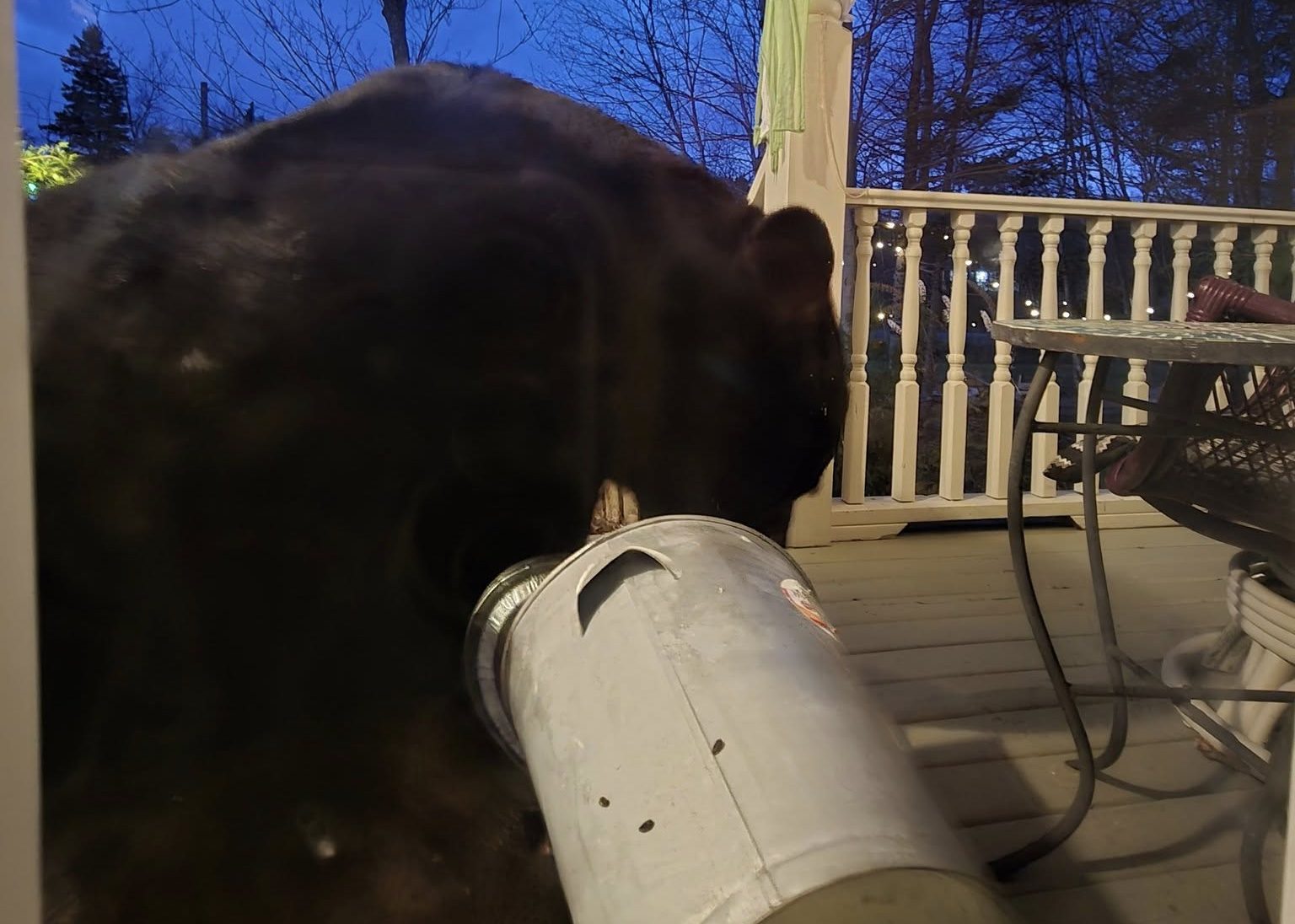
The persistence of a limping black bear within the suburban density of Hammonds Plains, Nova Scotia, represents a failure of standard biological containment protocols against an adaptable biological agent. While public discourse focuses on the "freedom" of the animal, a rigorous analysis reveals a complex intersection of sensory advantages, topographical challenges, and the limitations of passive capture technology. The bear, colloquially identified as "Limpy," has successfully mitigated its mobility deficit by exploiting the specific architectural and ecological features of the suburban-wildland interface.
The Triad of Containment Resistance
The failure to secure the specimen can be categorized into three distinct operational bottlenecks:
The Mobility-Resource Trade-off: The bear’s physical impairment—a pronounced limp—serves as a counterintuitive survival mechanism. In a deep wilderness setting, this injury would be a terminal disadvantage. However, in a suburban environment, the high caloric density of anthropogenic food sources (garbage, bird feeders, compost) eliminates the need for high-speed pursuit or long-range foraging. The bear has optimized its energy expenditure to match its reduced mobility, effectively turning a residential neighborhood into a low-effort feeding ground.
Sensory Superiority in Fragmented Habitats: Black bears possess an olfactory acuity approximately seven times greater than a bloodhound's. In the dense, humid air of coastal Nova Scotia, scent molecules from bait traps are competing with the background noise of dozens of individual residential attractants. This "signal-to-noise" problem renders standard culvert traps less effective. The bear is not "smart"; it is simply responding to a saturated sensory environment where the risk-to-reward ratio of a metal enclosure is unfavorable compared to an unsecured green bin.
Topographical Asymmetry: The Hammonds Plains area is characterized by significant greenbelt fragmentation. Small pockets of dense brush provide perfect cover-in-place locations. For capture teams, these pockets are too small for efficient aerial surveillance but too dense for rapid ground intervention. The bear utilizes these "micro-refuges" to break the line of sight, resetting the search clock every time it moves more than 50 meters into the brush.
The Cost Function of Passive Capture
Wildlife management agencies primarily rely on culvert traps—large, cylindrical metal structures with a pressure-plate mechanism. The efficiency of these units is governed by the Formula of Trap Success, where the probability of capture ($P_c$) is a function of the Attractant Gradient ($A_g$) over the Environmental Resistance ($E_r$) and the Specimen's Neophobia ($N$).
$$P_c = \frac{A_g}{E_r + N}$$
In the Nova Scotia case, $E_r$ is exceptionally high due to the abundance of natural and human-provided alternatives. Furthermore, $N$ (neophobia, or the fear of new objects) is heightened in this specific bear. Having likely encountered human structures or experienced previous failed capture attempts, the bear displays a high degree of "trap shyness." This behavior is not reflective of cognitive reasoning but is a result of negative reinforcement or lack of positive reinforcement from similar metallic structures in the past.
Chemical Immobilization Constraints
The public often questions why tranquilizer darting is not utilized immediately. The operational risks of chemical immobilization in a suburban zone are significant.
- Induction Latency: A darted bear does not drop instantly. The drug requires a five-to-ten-minute induction period. In a suburban grid, a bear can cover several hundred meters in that window, potentially collapsing in a swimming pool, under a deck, or in the path of a vehicle.
- Dose Accuracy: Without an accurate weight, a dose may be sub-lethal (leading to an aggressive, disoriented predator) or lethal.
- The Safety Perimeter: Maintaining a 360-degree clear zone in a residential area to prevent the bear from fleeing into traffic during the excitation phase of the drug is logistically intensive.
Structural Vulnerabilities in Suburban Planning
The persistence of "Limpy" highlights a fundamental flaw in modern residential development: the creation of "Edge Effects" that favor opportunistic generalists.
Suburban Nova Scotia utilizes a "sprawl-and-patch" model. This provides bears with high-quality "edge" habitat where forest meets lawn. These zones offer the highest diversity of plant life and the easiest access to high-fat human waste. The bear is essentially trapped in a loop of high-reward behavior.
The Resource Concentration Bottleneck occurs when a single neighborhood provides more kilocalories per square kilometer than 100 square kilometers of deep woods. Until the local population achieves 100% compliance with bear-resistant waste management, the Attractant Gradient will always favor the bear remaining in the suburb.
The Dynamics of Public Perception vs. Biological Reality
The "Limpy" narrative has been romanticized by local social media, creating a "folk hero" status that actively complicates management. This creates two distinct risks:
- Intentional Interference: Residents may actively hide the bear’s location or provide food to "help" the injured animal. This disrupts the caloric-stress needed to drive the bear into a trap.
- Desensitization: As the bear remains in the area without a violent incident, residents lower their guard. This "habituation" is a one-way street. Once a bear loses its natural aversion to humans, the probability of a high-energy conflict increases exponentially. The bear's limp, while evoking sympathy, makes it more likely to defend a food source aggressively because it knows it cannot flee efficiently.
Technical Barriers to Relocation
Relocation is often presented as a "holistic" solution, but data suggests it is frequently a deferred death sentence for the animal.
- Homing Instinct: Black bears possess a sophisticated internal navigation system. Relocations under 100 kilometers often result in the bear returning to its original territory within weeks.
- Territorial Conflict: Dropping an injured bear into a new territory forces it to compete with established, healthy males. An impaired bear like "Limpy" would be at a severe disadvantage in securing mating rights or prime foraging grounds.
- The "Problem" Export: If the root cause—unsecured attractants—is not fixed, the removal of one bear simply creates a vacuum that the next opportunistic bear will fill.
Evaluation of the "Free" Status
The term "remains free" is a biological misnomer. The bear is currently "locked" into a cycle of suburban dependency. It is constrained by its injury and the high-density food sources of the Hammonds Plains area. True freedom for a large carnivore involves the ability to range across vast territories and engage in natural foraging behaviors without human interface.
The current stalemate is a result of the bear's tactical adaptation to a low-risk, high-reward environment. The Department of Natural Resources and Renewables (DNRR) is operating within a limited tactical framework: they cannot use high-force extraction without risking public safety, and their passive tools are being out-competed by the neighborhood's own waste management failures.
Tactical Realignment for Containment
To move beyond the current impasse, the strategy must shift from passive trapping to a multi-phase exclusion model.
- Phase 1: Caloric Deprivation: Total removal of all secondary attractants within a 2-kilometer radius of the last sighting. This increases the relative value of the bait inside the culvert trap.
- Phase 2: Acoustic Aversion: If the bear is spotted outside of a trap-ready zone, non-lethal deterrents (rubber slugs, noise makers) should be used to re-establish the bear's fear of human spaces. This counters the habituation cycle.
- Phase 3: Thermal Mapping: Utilizing FLIR-equipped drones during the pre-dawn hours to identify the specific micro-refuge where the bear bed-downs. Knowing the exact resting location allows for a coordinated, multi-point perimeter if immobilization is attempted.
The containment of the specimen is not a matter of "catching" an animal; it is the systematic closing of the caloric and topographical loopholes that the animal is currently exploiting. Until the neighborhood is hardened against wildlife entry, the bear is not an intruder—it is a logical consequence of the environment.
The most effective strategic play is the immediate implementation of a localized "Hard-Waste Mandate." By artificially creating a food desert within the suburb, the bear’s internal cost-benefit analysis will shift. The metabolic demand of maintaining its current weight will eventually outweigh the perceived risk of the culvert trap. Capture is inevitable only when the suburban environment becomes more energetically expensive than the containment vessel.