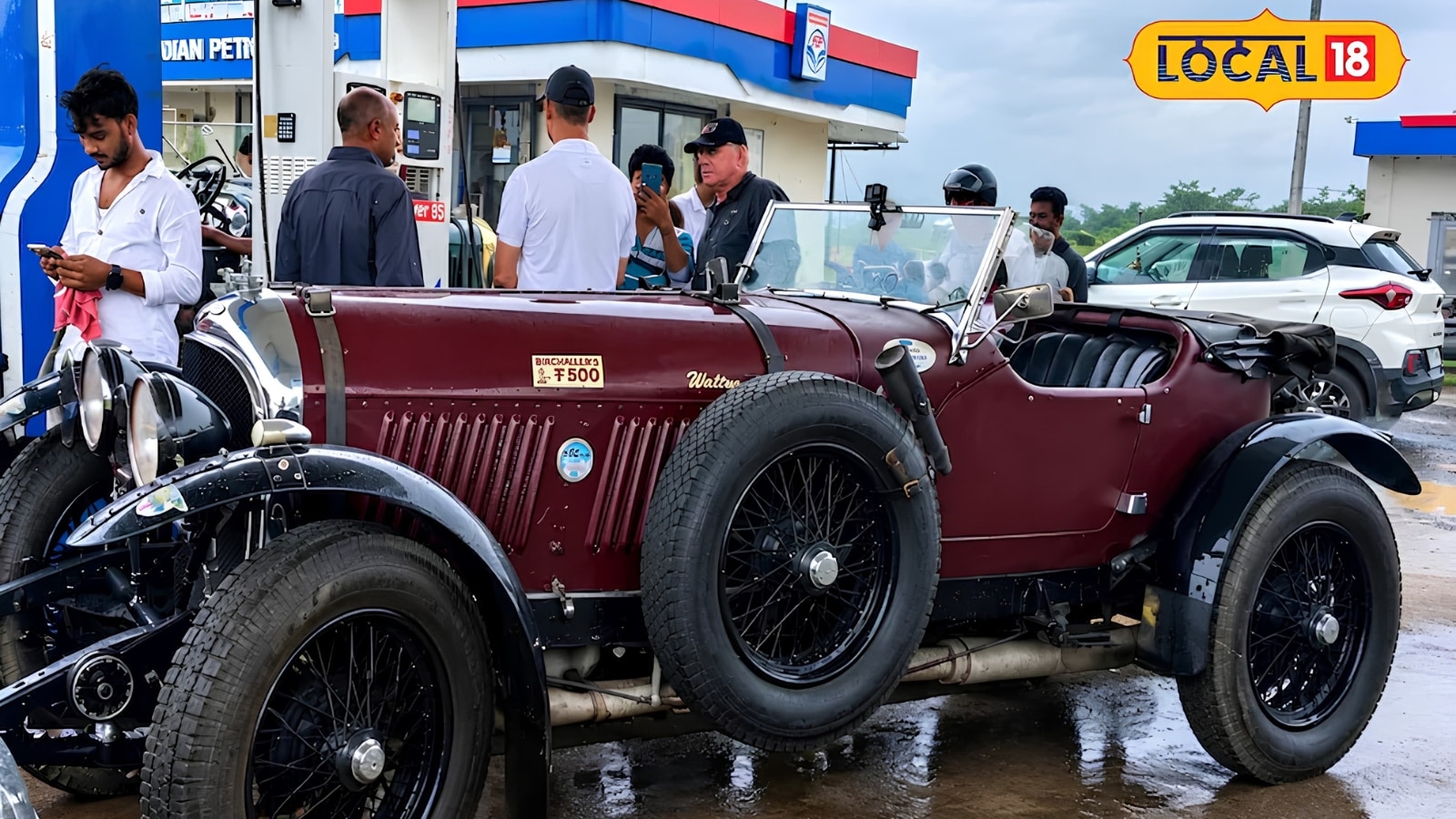
Transcontinental expeditions utilizing a century-old mechanical platform require a calculated trade-off between historical fidelity and operational survival. When two drivers pilot 1926 Bentleys across multiple jurisdictions from London to the cultural coordinates of Santiniketan, they are not merely performing a leisure transit; they are executing a stress test on mechanical resilience, border friction management, and supply chain continuity. This analysis dissects the core variables that dictate success or failure in heritage automotive logistics, breaking down the mechanical degradation vectors, route topology constraints, and logistical redundancies required to traverse thousands of miles of shifting terrain in non-synchronized machinery.
The Mechanical Cost Function of Pre-War Architecture
Operating a vehicle manufactured in 1926—such as a vintage Bentley 3-Litre or early derivative—imposes rigid physical parameters on an expedition. Modern automotive travel relies on standardized electronic engine management, sealed cooling systems, and widespread high-octane fuel availability. Pre-war machinery operates under entirely different thermodynamic and metallurgical principles.
The primary variable governing mechanical longevity is thermal management. Early cast-iron blocks and white-metal journal bearings possess low tolerance for thermal shock. Traversing varied elevations, from damp European lowlands to arid continental plateaus, subjects the engine to drastic ambient temperature swings. Without computerized fuel injection or pressurized closed-loop cooling, the operator must manually monitor oil pressure, coolant temperature, and ignition advance curves.
The maintenance schedule of a 1926 Bentley is continuous rather than periodic. The total cost function of the journey is dictated by three primary factors:
- Tribological Limits: Vintage lubrication relies on splash feed or low-pressure oil distribution, demanding frequent oil changes using high-zinc mineral oils to prevent catastrophic bearing failure under sustained load.
- Fuel Octane Sensitivity: Low compression ratios of the era (often around 4.5:1 to 5.3:1) permit the use of lower-quality fuels, but modern unrefined or contaminated fuel supplies introduce particulate blockages in vintage SU or Smith carburetors, requiring inline filtration retrofits that do not compromise period aesthetics.
- Drivetrain Stress: Non-synchromesh gearboxes require double-clutching precision. Driver fatigue directly correlates with transmission degradation; missed shifts translate immediately to shock-loading on the propeller shaft and differential teeth.
Neglecting these mechanical baselines transforms a cross-continental voyage into an exercise in high-cost recovery towing.
Geopolitical Friction and Route Topology
Mapping a overland route from the United Kingdom to West Bengal demands a granular understanding of border administration, road surface physics, and political volatility. A journey of this magnitude must bypass impassable terrain while minimizing bureaucratic drag at international boundaries.
The corridor from Western Europe through Eastern Europe, the Middle East, Central Asia or the Persian Gulf, and into the Indian subcontinent exposes vehicles to radically divergent road surfaces.
[London] -> [European Pavement Grid] -> [Balkan/Anatolian Elevation Shifts]
         -> [Arid Sub-Continental Infrastructure] -> [Santiniketan]
Each transitional zone introduces specific friction coefficients:
- Pavement Degradation: Smooth tarmac gives way to corrugated dirt tracks, shale, and deep ruts. Rigid beam axles and leaf spring suspension configurations transmit high-frequency vibration directly to the chassis frame and bodywork rivets.
- Administrative Latency: Carnet de Passages en Douane (CPD) documentation must be meticulously managed. Pre-war vehicles lack modern digital identification tags; customs officials frequently require physical chassis and engine number verification against paper dossiers, increasing border dwell times.
- Fuel and Fluid Logistics: Access to correct-viscosity lubricants and clean fuel in remote sectors requires pre-positioning supplies or carrying emergency reserves, increasing gross vehicle weight and accelerating suspension wear.
Logistical Redundancy and Field Triage
The success of a vintage transcontinental expedition is inversely proportional to its reliance on external support networks. Because official dealership networks for 1926 components do not exist, the expedition team must function as an itinerant machine shop.
Weight and space constraints inside a vintage Bentley cabin or rear deck limit the quantity of spares. Therefore, expedition planners must apply a failure-mode-and-effects analysis (FMEA) to determine which parts are critical spares versus weight liabilities.
- High-Probability Failure Items: Ignition coils, points, spark plugs, rubber fuel lines, and gasket material take precedence. These components have finite lifespans under continuous vibration and thermal cycling.
- Low-Probability, High-Impact Items: Crown wheels, pinions, and half-shafts are heavy and bulky. Rather than carrying duplicates, teams rely on metallurgy knowledge and local fabrication capabilities in transit hubs to weld or machine temporary fixes if failure occurs.
- Tire Management: Bias-ply tires mounted on beaded-edge or wire wheels behave differently than modern radials. Punctures are more frequent on sharp unpaved tracks, requiring inner-tube patch kits, portable vulcanizers, and bead-breaking tools designed for vintage rims.
Field triage under adverse weather or roadside conditions requires splitting diagnostic labor. While one operator inspects fuel delivery systems and ignition timing, the other assesses structural integrity, spring shackle wear, and steering box play.
Cultural Navigation and Destination Mechanics
The endpoint of this specific expedition—Tagore's Santiniketan in West Bengal—shifts the initiative from a pure mechanical endurance test to a deliberate cultural alignment. Rabindranath Tagore’s Visva-Bharati University represents an intellectual bridge between East and West, making the choice of a British-engineered vehicle from the 1920s a potent historical motif.
However, cultural navigation requires operational discipline. Arriving in populated municipal zones with vintage machinery creates distinct crowd-control and security challenges. Low-speed cooling efficiency drops significantly in congested traffic environments, where ambient airflow over the radiator core is near zero. Idling a 1926 engine in high-temperature urban centers risks vapor lock and localized overheating.
Expedition leaders must manage local media engagement and public transit schedules to ensure that the physical arrival does not compromise the operational integrity of the vehicles just meters away from the destination finish line. Public exhibition requires secure parking parameters, immediate post-run diagnostic checks, and a structured protocol for handling curious crowds without risking damage to exposed bodywork, brass fittings, and vintage paintwork.
Strategic Action for Heritage Transit Execution
To replicate or scale an expedition of this caliber, project architects must bypass romanticized assumptions and adopt a systems-engineering framework.
- Phase One: Conduct metallurgical and fatigue testing on all critical stress components (steering arms, stub axles, and wheel hubs) using non-destructive testing (NDT) methods such as magnetic particle inspection before departure.
- Phase Two: Establish supply-chain waypoints at 1,500-mile intervals, pre-shipping specialized consumables and high-zinc lubricants to trusted agents or mechanical workshops along the route corridor.
- Phase Three: Establish strict daily operating hour caps to mitigate driver fatigue and prevent thermal degradation of the engine block and transmission components.
The viability of moving pre-war mechanical assets across continents relies entirely on rigorous preparation, disciplined field maintenance, and an unyielding respect for the physical limitations of vintage automotive engineering.