The strategic posture of India regarding United States trade negotiations has shifted from reactive bargaining to a "wait and watch" methodology. This transition is not a sign of diplomatic inertia but a calculated response to a structural change in American trade jurisprudence following the Supreme Court’s recent rulings on tariff authority. To understand the current impasse, one must deconstruct the logic of trade leverage through three primary lenses: the erosion of executive certainty in Washington, the diversification of India’s supply chain dependencies, and the specific cost functions of reciprocal protectionism.
The Constitutional Shift in American Trade Authority
The primary bottleneck in current Indo-US negotiations stems from a realignment of how tariffs are enacted and challenged within the American legal system. Historically, the executive branch wielded significant discretionary power under Section 232 of the Trade Expansion Act of 1962 and Section 301 of the Trade Act of 1974. Recent judicial scrutiny has introduced a layer of "legal volatility" that makes any long-term bilateral agreement inherently unstable.
From the perspective of Indian trade officials, signing a comprehensive trade deal requires a "Predictability Premium." If the US executive branch can no longer guarantee the immunity of specific tariff exemptions from judicial overrule or legislative clawback, the value of any concession offered by India diminishes. This creates a high-stakes waiting game where India’s Ministry of Commerce and Industry must weigh the immediate benefits of market access against the long-term risk of "snap-back" tariffs triggered by domestic US litigation.
The Three Pillars of Indian Trade Sovereignty
India’s current negotiation strategy is built upon three distinct pillars that allow for extended periods of "strategic patience."
- Domestic Market Insulation: Unlike smaller export-led economies, India’s GDP growth is heavily driven by internal consumption. This provides a buffer against external trade shocks, allowing negotiators to prioritize "Quality of Access" over "Speed of Agreement."
- Multilateral Diversification: The acceleration of Free Trade Agreements (FTAs) with the UAE, Australia, and the ongoing negotiations with the UK and EU serve as a hedging strategy. By reducing the relative share of the US in India’s total trade basket, the Indian government reduces the leverage the US can apply during bilateral talks.
- The Regulatory Floor: India has established a "regulatory floor" regarding data localization and agricultural protections. These are non-negotiable variables in the Indian trade equation. US demands for deeper penetration into these sectors often hit a wall because the political cost of concession outweighs the economic gain of lower industrial tariffs.
Deconstructing the Tariff Cost Function
The "wait and watch" approach is essentially a calculation of the net economic drain of existing tariffs versus the potential disruption of a flawed trade deal. We can define the trade-off through a simple logical framework:
The Net Benefit of Negotiation (NBN) is equal to the Expected Market Gains (EMG) minus the Regulatory Compliance Costs (RCC) and the Sovereignty Risk Factor (SRF).
$$NBN = EMG - (RCC + SRF)$$
In the current environment, the SRF is at an all-time high due to the US Supreme Court’s involvement in trade definitions. If the US cannot provide a stable regulatory environment, the NBN becomes negative for India. Consequently, the most rational move is to maintain the status quo. This is not a delay tactic; it is an optimization of national interest under conditions of high external uncertainty.
The Impact of Integrated Supply Chains on Negotiation Leverage
A significant factor missed by standard reporting is the role of Global Value Chains (GVCs). As India integrates more deeply into the electronics and semiconductor assembly lines, the nature of its trade with the US becomes more "intra-firm" rather than "inter-country." This change alters the mechanics of tariffs.
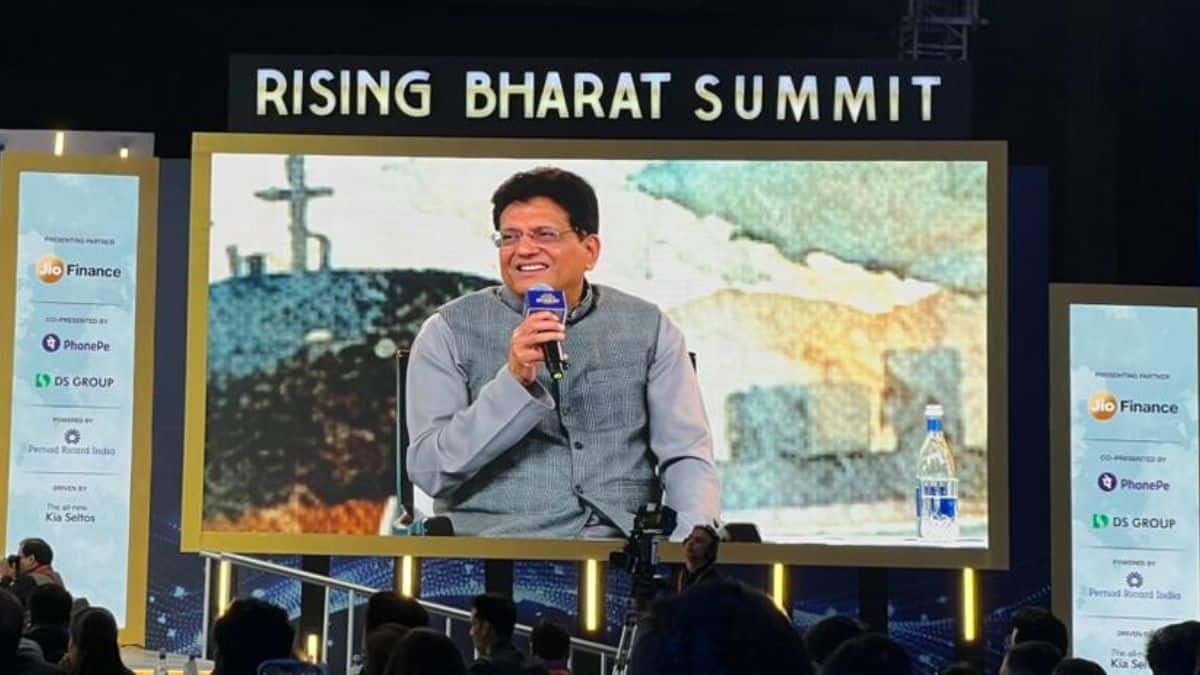
When a US-based multinational produces components in India for re-export to the US or third-party markets, a tariff on Indian goods acts as a tax on the US company's own supply chain. This creates a domestic lobby within the US that advocates for Indian interests more effectively than any Indian diplomat could. Minister Piyush Goyal’s emphasis on "waiting" leverages this internal American tension. The longer the US maintains high tariffs on Indian inputs, the higher the operational costs for US tech giants, eventually forcing a softening of the US negotiating position from within.
Barriers to Entry and the Asymmetry of Information
The "wait and watch" stance also addresses the asymmetry of information regarding the "Make in India" initiative's long-term success. The US wants to lock in trade terms while India is still in a growth phase. India, conversely, wants to delay final agreements until its manufacturing base has reached a scale where it can compete on a more equal footing.
The primary sectors under friction include:
- Medical Devices: US firms seek lower price controls; India prioritizes public health affordability.
- Digital Services: The US seeks unrestricted data flows; India demands localized storage for security and tax jurisdiction.
- Dairy and Agriculture: A sensitive sector for India’s massive rural voting bloc, where US industrial farming models threaten the livelihoods of millions of small-scale Indian farmers.
Each of these sectors represents a "bottleneck" where the marginal cost of a concession is exponentially higher for India than for the US.
The Logistics of the "Wait and Watch" Strategy
To execute this strategy, the Indian government has institutionalized a feedback loop between the Department of Commerce and industry leaders. This operational synergy ensures that when a US tariff ruling occurs, the immediate impact on Indian exporters is quantified within days.
If the impact is below a certain threshold—the "Tolerance Limit"—India chooses not to escalate. If it exceeds that limit, India uses "targeted reciprocity" rather than broad-spectrum retaliation. This surgical approach minimizes collateral damage to the Indian economy while signaling to the US that India is prepared for a prolonged period of friction.
The Structural Impossibility of a "Quick Win"
The pursuit of a "Mini-Trade Deal" has often been cited as a potential solution, but this overlooks the legal reality of World Trade Organization (WTO) compliance. Under Article XXIV of the GATT, any trade agreement must cover "substantially all trade" to be legal. A "mini-deal" focused only on a few sectors would be vulnerable to challenges from other trading partners.
Therefore, the choice is binary: either a full, comprehensive FTA or no deal at all. Given the vast differences in labor standards, environmental regulations, and intellectual property frameworks, a full FTA is years away. The "wait and watch" approach is a recognition of this binary reality. It moves the conversation away from false hopes of an immediate breakthrough and toward a realistic management of a permanent trade tension.
Strategic Recommendation for Market Participants
The optimal move for businesses operating in this corridor is to de-risk their operations from bilateral political outcomes. Do not build business models that rely on the removal of GSP (Generalized System of Preferences) benefits or a sudden reduction in Section 232 duties.
The focus must shift toward:
- Value-Added Differentiation: Compete on quality and specialized IP rather than price points that are sensitive to 10%–15% tariff fluctuations.
- Regional Hubbing: Utilize India’s FTAs with other nations (like the UAE or Australia) to route goods or manage assembly in a way that optimizes the "Rules of Origin" across a broader network.
- Localizing Supply: For US firms in India, shifting from an "export-only" mindset to a "local consumption + export" model mitigates the impact of US-bound tariffs by amortizing costs across India’s growing domestic market.
The era of "easy trade" is over. Success in the Indo-US corridor now requires a sophisticated understanding of the "Legal-Trade Nexus"—where Supreme Court rulings in Washington are just as important as production costs in Gujarat. The government’s "wait and watch" is a signal to the market: the price of India's cooperation has gone up, and the US has yet to meet the new valuation.
Would you like me to analyze the specific impact of these trade tensions on the Indian semiconductor sector?