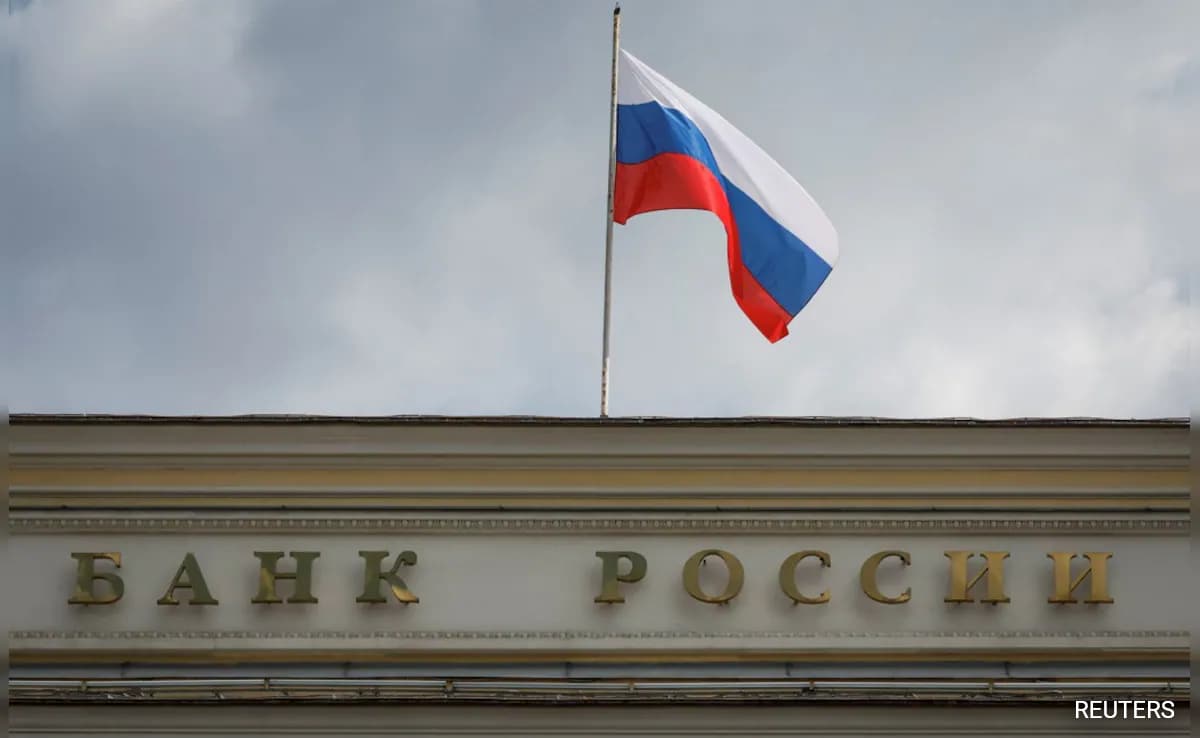
The Russian Federation’s decision to implement a six-month ban on gasoline exports, effective April 1, is not a reactionary measure but a calculated intervention in a tightening domestic energy balance. This policy addresses a convergence of seasonal demand surges, infrastructure vulnerability, and a specific tax-subsidy friction known as the "damper mechanism." To understand the implications of this ban, one must dissect the three primary pressures currently deforming the Russian downstream sector: the maintenance cycle of aging refineries, the logistics of a wartime economy, and the arbitrage incentives created by global price disparities.
The Maintenance Bottleneck and Infrastructure Vulnerability
The timing of the ban aligns with the spring agricultural season and the subsequent summer travel peak, periods where Russian domestic demand traditionally increases by 10% to 15%. However, the supply side is currently constrained by two distinct types of outages. For a closer look into this area, we suggest: this related article.
- Scheduled Turnarounds: Russian refineries typically undergo intensive maintenance in the spring. These "turnarounds" involve the deep cleaning and upgrading of secondary processing units, such as fluid catalytic crackers (FCC) and reformers, which are essential for high-octane gasoline production.
- Unscheduled Kinetic Disruptions: Recent drone strikes on major refining hubs—including facilities in Ryazan, Nizhny Novgorod, and Kirishi—have taken significant capacity offline. When a primary distillation unit is damaged, the entire downstream flow is throttled.
Unlike crude oil, which can be redirected to international markets via pipeline or tanker with relative ease, gasoline requires specific storage and transport conditions. The loss of refining capacity cannot be offset by increasing crude exports if the goal is to prevent a domestic fuel "famine." The ban acts as a temporary reservoir, forcing every drop of produced fuel to remain within the internal distribution network (Transnefteprodukt).
The Damper Mechanism and Price Arbitrage
The Russian government utilizes a complex fiscal tool called the "damper" to insulate domestic pump prices from international volatility. Under this system, the state compensates oil companies when global prices are higher than a fixed domestic benchmark. Conversely, if domestic prices are higher, oil companies pay into the budget. For further details on this topic, comprehensive coverage is available at Financial Times.
This creates a precarious equilibrium. When the government attempted to cut damper payments in late 2023 to save budget funds, oil companies responded by pivoting toward exports to maximize margins, leading to localized shortages and price spikes. The April 1 ban removes the "export" variable from the profit equation entirely. By legally prohibiting the exit of fuel, the state neutralizes the incentive for companies to chase higher international cracks, effectively forcing a supply glut that keeps the "Stock Exchange" (SPIMEX) prices suppressed.
The cost function of this policy is borne primarily by the refiners. While the ban stabilizes inflation—a critical political objective—it erodes the CAPEX (Capital Expenditure) capabilities of the oil majors (Rosneft, Lukoil, Gazprom Neft). These firms are currently facing a "scissor effect": rising costs of Western-sanctioned spare parts for refinery repairs and capped revenues on their finished products.
Strategic Logic of the Six-Month Window
A six-month duration is mathematically significant. It covers the entirety of the high-intensity agricultural cycle—from spring sowing to autumn harvest—and the peak "motoring season."
- Inventory Accumulation: The ban allows the Ministry of Energy to rebuild primary stocks. Russia aims to maintain gasoline reserves at approximately 1.9 million to 2.1 million metric tons.
- Refinery Restoration: The window provides a buffer for engineering teams to source non-Western components (often via "parallel imports" through Turkey or China) to repair damaged crackers.
- Political Buffer: Historically, fuel price inflation is a primary driver of public discontent in the Russian interior. By ensuring 100% domestic retention, the state creates a psychological floor for the economy.
Exceptions and Geopolitical Leverage
The ban is not absolute. It excludes member states of the Eurasian Economic Union (EAEU), including Belarus, Kazakhstan, Armenia, and Kyrgyzstan, as well as specific intergovernmental agreements such as those with Mongolia and Uzbekistan.
This selective permeability serves two functions. First, it prevents the total economic collapse of satellite economies that are entirely dependent on Russian refined products. Second, it maintains Russia's role as the regional "energy guarantor." However, the volume allowed to these nations is strictly capped based on historical consumption data to prevent "re-exporting"—a practice where a country like Kazakhstan might buy cheap Russian fuel only to sell it at a premium to the European or Central Asian market.
The Refined Product Balance Sheet
To quantify the impact, one must look at the production-to-export ratio. Russia produces roughly 43 million to 45 million tons of gasoline annually. Under normal conditions, about 10% to 12% of this is exported. While a 10% shift might seem marginal in a global context, in a closed loop, it represents the difference between a 5% price increase and a 20% price spike at the pump.
The risk of this strategy lies in storage saturation. If refining remains at high levels but exports are blocked, and domestic consumption does not rise fast enough to meet the surplus, refineries may be forced to "throttle back" or shut down distillation units because there is nowhere to put the finished product. This is known as "tank-topping."
Strategic Play
Market participants should anticipate a temporary softening in global light-distillate margins as other producers (primarily in the Middle East and India) move to fill the vacuum left by Russian volumes in Africa and Southeast Asia. However, the internal Russian market will enter a period of artificial hibernation. For the Russian state, the priority is clear: the preservation of internal socio-economic stability outweighs the loss of foreign currency earnings from gasoline exports.
The most critical variable to monitor over the next 90 days is the "refinery run rate." If the run rate drops significantly despite the ban, it indicates that the structural damage from recent disruptions is more severe than the Ministry of Energy is admitting, potentially necessitating an extension of the ban into the winter of 2026.
Monitor the SPIMEX (St. Petersburg International Mercantile Exchange) daily wholesale prices for Regular 92 and Premium 95. A failure of these prices to stabilize within the first 30 days of the ban would signal a catastrophic failure in the domestic logistics chain, likely forcing the government to implement even more draconian measures, such as the direct nationalization of fuel distribution hubs.
Would you like me to analyze the specific impact of this export ban on the Mediterranean gasoline crack spreads?