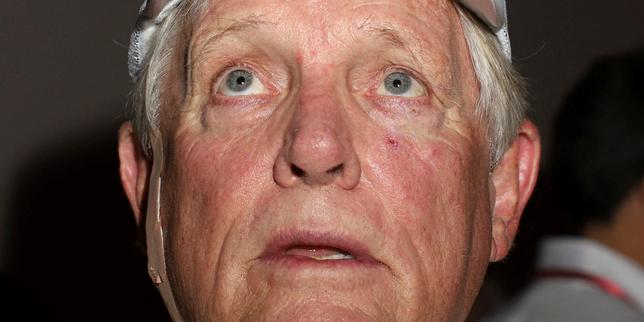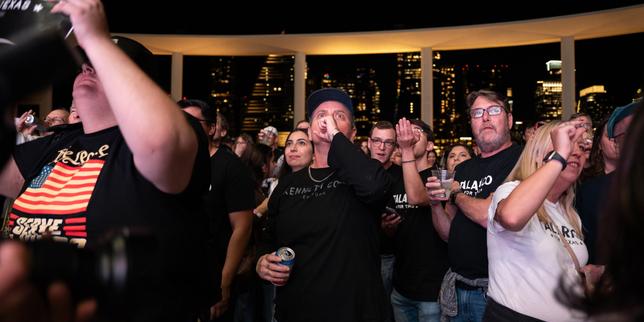
In safe partisan districts, general elections do not function as contests of persuasion; they operate as structural ratification events for intra-party governing theories. On November 3, 2026, Democratic nominee Micah Lasher captured New York's 12th Congressional District in Manhattan, framing the victory as the start of a process to "take the country back" amid voter demands for executive accountability. Surface-level election coverage treats such Election Day remarks as standard campaign rhetoric, missing the underlying institutional calculus driving both the candidate's positioning and the electorate's behavior.
The Structural Divergence Between Primary Selection and General Ratification
To understand the political dynamics of NY-12 in 2026, an analyst must separate the two distinct phases of the electoral funnel. Because major political forecasters—including the Cook Political Report, Sabato's Crystal Ball, Inside Elections, and Decision Desk—classified NY-12 as a Solid or Safe Democratic seat, the decisive competition occurred on June 23, 2026. In that Democratic primary, Lasher defeated a crowded field that included Alex Bores, George Conway, and Jack Schlossberg.
By the time voters arrived at the polls on November 3 to choose among Lasher, Republican and Conservative Party nominee Caroline Shinkle, and independent candidates Karen Ortiz and Wilneida Negron, the structural outcome was heavily predetermined by partisan registration imbalances. Yet turnout and voter sentiment on Election Day revealed a specific demand function. When a district's partisan lean removes general-election suspense, voter motivation shifts from candidate selection to signal transmission. Voters use the ballot box to register frustration over macroeconomic pressures, foreign policy trajectories, and executive branch overreach, demanding that their incoming representative act as an institutional counterweight in Washington.
The Three Pillars of the NY-12 Voter Demand Function
Electoral commentary frequently reduces voter interviews to disconnected anecdotes about high grocery prices or dissatisfaction with leadership. Organizing these signals into an analytical framework exposes three distinct, interacting pressures operating on a newly elected member of Congress from Manhattan:
- Macroeconomic Cost-of-Living Friction: Voters consistently cite localized inflation—specifically daily household expenses such as groceries, housing supply constraints, and childcare costs—as immediate failures of federal stewardship. In high-cost urban districts, national macroeconomic indicators often diverge from household liquidity, creating acute sensitivity to federal fiscal and regulatory policy.
- Institutional Accountability and Executive Check: A primary driver of midterm opposition turnout is the perception that the incumbent presidential administration operates without sufficient legislative restraint. Voters explicitly frame congressional representation not merely as a conduit for local constituent services, but as an investigative and legislative brake on the executive branch.
- Systemic Renewal Versus Institutional Mastery: Electorates experiencing prolonged political friction exhibit a dual, often contradictory impulse. One segment demands "new people, new ideas" to disrupt perceived stagnation across both city and federal leadership. Conversely, the primary electorate selected a candidate whose core pitch centered on operational experience—having served in the New York State Assembly and held senior executive and legislative affairs roles under Mayor Michael Bloomberg, Attorney General Eric Schneiderman, and Governor Kathy Hochul.
The Cause-and-Effect Chain of Opposition Positioning
Standard political reporting captures what a candidate says on Election Day—such as promising to begin taking the country back—without mapping the operational constraints that govern how a freshman representative translates rhetoric into legislative leverage.
When an opposition party candidate wins a safe district on an accountability platform, three structural mechanisms immediately take effect:
- The Oversight Escalation Loop: Candidates who campaign on fighting "fire with fire" and opposing executive policies face immediate pressure from their base to prioritize high-visibility oversight, subpoena power, and legislative resistance. However, in the U.S. House of Representatives, individual freshman members possess near-zero unilateral investigative authority unless their party holds the chamber majority and assigns them to key committees such as Judiciary, Oversight, or Ways and Means.
- The Redistricting and Structural Power Play: Prior to the general election, Lasher positioned himself around structural counter-measures, including supporting efforts to allow New York to redraw congressional lines in response to mid-decade redistricting in Texas. This illustrates a shift in Democratic institutional strategy: moving away from unilateral procedural restraint toward symmetrical partisan hardball. The cause-and-effect relationship is direct—perceived structural advantages gained by Republicans in state legislatures trigger retaliatory institutional maneuvers in Democratic-controlled states.
- The Affordability Delivery Bottleneck: Campaign platforms promising to expand the national housing supply, subsidize childcare, raise the federal minimum wage, and protect Medicaid or Affordable Care Act subsidies encounter severe veto points in a divided federal government. Even when a representative possesses deep familiarity with state-level legislative mechanics, translating state-level administrative execution into federal statutory law requires navigating Senate filibuster thresholds and presidential veto threats.
Operational Limitations of the Accountability Mandate
Treating an Election Day victory in a safe district as a blank check for systemic change ignores four hard constraints that limit freshman congressional efficacy:
- Seniority-Based Committee Allocation: The House of Representatives operates on an entrenched seniority and leadership-deference model. A first-term member swearing in on January 3, 2027, regardless of prior state assembly or gubernatorial staff experience, enters at the bottom of the committee hierarchy. Influence over major appropriations or investigative agendas requires years of institutional accumulation.
- The Minority-Majority Asymmetry: If the opposition party holds the House majority, a member's oversight capacity expands dramatically through committee chairmanships and floor control. If the party remains in the minority, oversight is restricted to floor speeches, minority-day hearings, and public messaging—activities that satisfy media demand for confrontation but rarely alter executive branch execution.
- Jurisdictional Mismatch on Local Costs: Voters frequently punish or reward federal candidates based on hyper-local cost-of-living pressures and state-level governance. Yet housing production in New York City, municipal transit reliability, and local tax burdens are predominantly governed by state statutes in Albany and municipal zoning boards, not federal legislation. A U.S. Representative has limited direct levers to lower local grocery or housing prices within a single two-year term.
- Coalition Friction Within the Caucus: Safe urban districts reward ideological clarity and aggressive opposition, whereas congressional majorities are won and lost in swing suburban and rural districts. Strategies designed to satisfy Manhattan voters—such as aggressive confrontation with the White House or expansive federal social spending—can create electoral liabilities for front-line colleagues defending marginal seats, forcing party leadership to moderate floor votes.
Tactical Blueprint for Translating District Mandates into Legislative Output
For an incoming representative entering Congress in January 2027 under high expectations for executive accountability and economic relief, relying solely on floor rhetoric yields diminishing returns. Maximizing institutional impact requires a disciplined, four-step operational sequence:
- Target High-Leverage Committee Assignments: Rather than pursuing broad, diffuse issue portfolios, focus political capital on securing seats on committees with direct jurisdiction over urban infrastructure, tax policy, or executive oversight. Administrative veterans gain influence fastest by mastering technical markup processes where most members lack procedural preparation.
- Convert State-Level Policy Mechanics into Federal Statutory Riders: Use prior executive and state legislative experience to draft narrow, technically sound statutory language—such as targeted tax credits for housing conversion or federal matching funds for childcare—that can be attached to must-pass omnibus appropriations or reconciliation bills, bypassing standalone legislative gridlock.
- Synchronize Federal Oversight with State Attorneys General: When federal legislative avenues are blocked by a divided government or presidential vetoes, coordinate congressional information-gathering with state-level enforcement agencies. State attorneys general possess independent standing to challenge federal regulatory actions in court, creating a two-front institutional check that does not rely on federal executive cooperation.
- Calibrate Constituent Metrics Around Tangible Deliveries: Counter voter cynicism regarding institutional stagnation by establishing clear, public benchmarks for federal grant acquisition, constituent casework resolution, and specific regulatory interventions. Separating symbolic national messaging from measurable district-level capital inflows prevents the erosion of local trust when broad national legislation stalls.
Strategic Forecast for the 120th Congress
Incoming urban representatives elected on anti-administration waves will face an immediate credibility test once the 120th Congress convenes in January 2027. Rhetoric centered on taking the country back mobilizes base turnout in November, but legislative survival and long-term influence depend on navigating institutional bottlenecks. Expect legislators with deep state-level administrative backgrounds to outperform pure media-focused newcomers by focusing on procedural leverage, appropriations riders, and coordinated state-federal legal challenges rather than relying exclusively on symbolic floor confrontation.