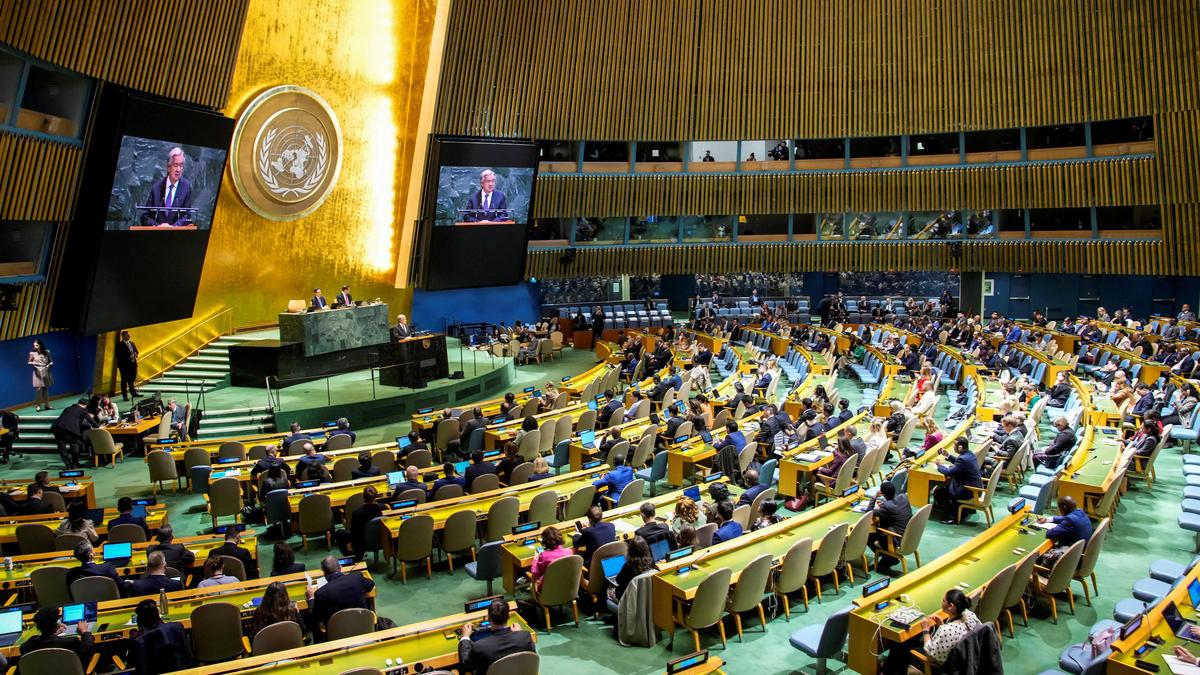
The global transition away from hydrocarbons is currently trapped in a zero-sum geopolitical feedback loop. While international summits increasingly frame fossil fuel phase-outs as a moral or environmental imperative, the underlying friction is purely structural, rooted in the divergent economic incentives of petrostates versus net importers. To understand why UN-led negotiations frequently result in deadlock, one must dissect the three specific frictions: sovereign wealth preservation, energy density dependency, and the asymmetric cost of capital.
The fundamental problem is not a lack of consensus on climate science, but a direct conflict between short-term fiscal solvency and long-term atmospheric stabilization. For a state whose GDP is 40% dependent on crude exports, a "phase-out" is not a policy shift; it is an existential threat to the social contract.
The Trilemma of National Energy Security
The transition away from fossil fuels is governed by three competing variables that rarely align within the timeframe of a standard diplomatic summit. These variables form a trilemma where only two can typically be optimized at once:
- Affordability: Providing low-cost energy to maintain industrial output.
- Reliability: Ensuring base-load power that does not fluctuate with weather patterns.
- Sustainability: Reducing the carbon intensity of the energy mix.
Developing nations prioritize affordability and reliability to lift populations into the middle class. Developed nations, having already secured the first two through a century of coal and gas, prioritize sustainability. This creates a fundamental disconnect in the negotiation room. When a draft text suggests "abating" fossil fuels rather than "phasing them out," it is an attempt to preserve the "Affordability" and "Reliability" pillars for emerging economies that lack the sovereign debt capacity to overbuild renewable infrastructure.
The Problem of Sunk Cost in Infrastructure
National economies are physically hard-coded into their energy sources. A gas-fired power plant has an operational lifespan of 30 to 40 years. If a country commissioned a fleet of these plants in 2018 to meet rising demand, they are now carrying billions in unamortized debt. Forcing an early retirement of these assets results in "stranded assets," which can trigger banking crises in smaller economies. The UN deadlock persists because the current framework lacks a credible mechanism to compensate for this lost capital value. Without a "Sunk Cost Exit Fund," the incentive for these nations to sign a phase-out agreement is zero.
The Divergent Physics of Power Density
A significant portion of the diplomatic stalemate involves a misunderstanding of energy density and its relationship to industrial scaling. Fossil fuels are highly concentrated forms of energy. Replacing them requires an order-of-magnitude increase in mineral extraction and land use.
The transition is moving from a fuel-intensive system to a material-intensive system.
- Hydrocarbon Model: High operational expenditure (buying fuel) but lower relative capital expenditure for the machinery.
- Renewable Model: Near-zero operational expenditure but massive upfront capital expenditure (buying minerals like lithium, cobalt, and copper).
This shift creates a new form of "Green Geopolitics." Countries rich in hydrocarbons view the transition as a transfer of power to countries that control the mineral supply chain or the processing capacity—largely China. In this context, "ditching fossil fuels" is interpreted by many negotiators as trading one form of energy dependency for another. The deadlock deepens because the parties are not just debating carbon; they are debating the future of global trade dominance.
The Asymmetric Cost of Capital
The most significant barrier to a global agreement is the "Weighted Average Cost of Capital" (WACC). This is a technical metric that explains why a solar farm in Germany is viable while the same farm in Nigeria is not.
In stable, high-income economies, the cost of borrowing for a green project might be 3% to 5%. In many of the countries being asked to "ditch" fossil fuels, the risk premium on their debt can drive the cost of capital to 15% or 20%. Because renewable energy projects require nearly all their lifetime costs to be paid upfront (the "CapEx Heavy" problem), high interest rates make green energy prohibitively expensive compared to building a small coal plant or using existing diesel generators.
Until the international financial architecture addresses this disparity—perhaps through first-loss guarantees or massive concessional lending—deadlock is the logical outcome. A country cannot vote for its own bankruptcy in the name of a global collective good.
The Rhetorical Shell Game: Abated vs Unabated
Negotiation texts often pivot on the word "unabated." This term functions as a pressure valve for the deadlock.
- Unabated Fossil Fuels: Burning coal, oil, or gas without capturing the carbon emissions.
- Abated Fossil Fuels: Using Carbon Capture and Storage (CCS) to mitigate the impact.
Petrostates push for the "unabated" distinction because it allows them to maintain their core export business under the guise of future technological fixes. However, the current reality of CCS technology is one of high cost and limited scale. Currently, global CCS capacity accounts for less than 0.1% of annual emissions. Relying on "abatement" as a strategy for a total phase-out is a mathematical gamble.
The tension arises because net-zero advocates view CCS as a niche tool for "hard-to-abate" sectors like cement or steel, while fossil fuel producers view it as a lifeline for the entire industry. This is not a semantic disagreement; it is a fundamental clash over whether the future energy mix is "Zero Carbon" or "Low Carbon."
The Volatility of the Social Contract
Internal domestic politics exert a gravitational pull on international negotiations. No head of state will agree to a deal that guarantees domestic energy price spikes or job losses in key industrial hubs.
Consider the "Yellow Vest" phenomenon or recent farmer protests in Europe. These are clear indicators of the "Political Carrying Capacity" for climate policy. When international talks demand a rapid exit from fossil fuels, negotiators are looking over their shoulders at their domestic electorate. If the cost of the transition is perceived as being unfairly distributed, the resulting populist backlash can lead to a total reversal of climate commitments.
The UN deadlock is often a reflection of this internal fragility. Negotiators are forced to prioritize "National Interest" (protecting current jobs and prices) over "Global Interest" (mitigating long-term climate risk).
The Logistics of the Grid Bottleneck
Even if a total phase-out were agreed upon tomorrow, the physical reality of grid synchronization creates a hard limit on the speed of the transition. Our current grids were designed for centralized, synchronous generation (large turbines spinning at a constant rate). Wind and solar are decentralized and asynchronous.
The transition requires:
- Massive Overbuilding: Because renewables are intermittent, you must build 3x to 4x the capacity of a fossil fuel plant to ensure the same "Firm Capacity."
- Long-Duration Storage: Moving energy from a sunny afternoon to a cold winter night requires battery or hydrogen technology that does not yet exist at the necessary scale.
- Transmission Expansion: Most renewable resources are located far from population centers (e.g., offshore wind or desert solar), requiring thousands of miles of new high-voltage lines.
The deadlock in talks often stems from the fact that these physical constraints are ignored in the high-level political text. Developing nations, in particular, realize that "ditching fossil fuels" without a concomitant "Grid Modernization Marshall Plan" would lead to frequent blackouts and industrial collapse.
The Strategic Path Forward
To break the stalemate, the negotiation framework must move away from binary "Phase-out vs Phase-down" rhetoric and toward a Decarbonization Risk Management model.
The focus must shift to the following three levers:
- Capital De-risking: Establishing a global insurance mechanism that lowers the WACC for green projects in the Global South to parity with the Global North. This removes the "poverty trap" of expensive green debt.
- Sector-Specific Mandates: Instead of an aggregate fossil fuel target, negotiations should focus on specific industrial sectors (e.g., a global ban on new sub-critical coal plants) where alternatives are already commercially viable.
- Technology Transfer for Hard-to-Abate Sectors: Establishing a "Green Patent Pool" that allows developing nations to access electrolyzer and CCS technology without the prohibitive licensing costs that currently protect Western and Chinese intellectual property.
The deadlock is not a failure of will; it is a failure of the current multilateral model to account for the physical and financial laws of the energy system. True progress occurs only when the cost of the "new" is lower than the cost of the "old," inclusive of the cost of capital. Until that threshold is crossed globally, international summits will remain a theater of incrementalism.
The immediate strategic play for any stakeholder—be it a corporation or a state—is to hedge against this continued volatility by diversifying into transition-ready infrastructure while simultaneously maximizing the efficiency of existing fossil assets. Expect the "abatement" loophole to remain the primary vehicle for consensus for at least the next decade, as it is the only path that allows both sides to claim a victory without committing to immediate economic disruption.