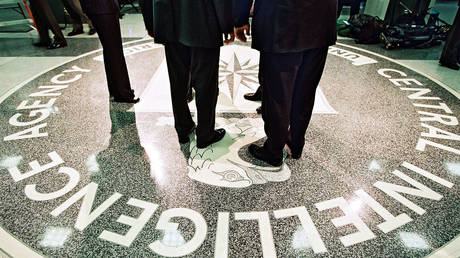
Congressional oversight initiatives targeting historical intelligence operations frequently collide with systemic information asymmetry. The House Oversight Committee hearing, "Mind Control and Accountability: Uncovering the Truth of the CIA's MKULTRA Project," highlights the friction between legislative disclosure mandates and institutional preservation mechanisms. While political discourse often frames these disclosures around narrative shock value, a rigorous evaluation requires an understanding of the structural pipelines, asset transfers, and operational methodologies that defined behavioral engineering programs from 1953 through 1973.
The core analytical problem is not merely historical exposure but the tracking of institutional continuity. The integration of foreign technical assets into early Cold War intelligence frameworks established a baseline for subsequent behavioral research. By disassembling these programs into their component architectural layers, the underlying mechanics of state-sponsored human experimentation become measurable.
The Paperclip Pipeline and Operational Transfer Dynamics
The structural foundation of post-World War II behavioral research relied heavily on the acquisition of human capital via Operation Paperclip. Rather than inventing methodologies entirely de novo, early intelligence frameworks utilized pre-existing experimental data derived from wartime clinical environments.
This transfer of operational knowledge can be categorized into three distinct input vectors:
- Methodological Replications: The utilization of specific chemical compounds, such as mescaline, under variables originally established in field trials at concentration camps like Dachau.
- Personnel Integration: The direct employment of specialized foreign researchers (e.g., Kurt Blome) into Western biological warfare and defense infrastructure, establishing an intellectual bridge between late-1940s projects like Project Artichoke and the formal authorization of MKUltra on April 13, 1953.
- Institutional Alignment: The synchronization of military objectives with academic and clinical sub-contractors, isolating elite institutional leadership from direct exposure while maintaining absolute control over the research output.
This pipeline created a continuous loop where wartime methodologies were stripped of overt ideological branding and repurposed for Cold War strategic utility. The primary objective shifted from racial-ideological experimentation to defensive and offensive psychological insulation against perceived Soviet, Chinese, and North Korean interrogation capabilities.
The Organizational Architecture of Behavioral Subprojects
MKUltra operated not as a monolithic program but as a highly decentralized venture capital network for behavioral modification. The program distributed its $10 million budget—equivalent to approximately $87.5 million when adjusted for inflation—across a highly diversified portfolio of research environments.
The structural distribution of the 150 identified subprojects reveals a deliberate diversification strategy across multiple sectors:
Institutional Breakdown of Experimental Subprojects
| Sector | Operational Mandate | Consent Paradigm |
|---|---|---|
| Academic Research (Universities) | Theoretical behavioral modeling, chemical synthesization, baseline psychoactive testing. | Mixed (Human volunteers vs. compartmentalized unwitting subjects). |
| Correctional Facilities (Prisons) | Long-term, high-dose chemical saturation, chronic administration variables. | Coercive (Incarcerated populations subjected to artificial incentive structures). |
| Clinical Environments (Hospitals) | Deep-sleep therapy, electroshock application, sensory deprivation matrices. | High Vulnerability (Psychotic and psychiatric patients). |
| Clandestine Operations (Safehouses) | Field testing of surreptitious delivery mechanisms, operational validation. | Absolute Non-Consent (Unwitting civilian targets managed by federal narcotics agents). |
The administrative execution of these subprojects demonstrates a distinct separation of funding from visibility. By utilizing front organizations, the Central Intelligence Agency exploited a structural bottleneck: academic researchers generated peer-reviewed literature and experimental data while remaining entirely oblivious to the military or intelligence intent of their primary benefactors.
The Data Elimination Bottleneck and Evidence Reconstruction
The primary barrier to comprehensive quantitative analysis of MKUltra is the deliberate destruction of the agency’s original administrative archive. In 1973, CIA Director Richard Helms ordered the destruction of the project's primary files. This action created an irreversible data deficit, forcing modern investigators to rely on secondary and tertiary evidence pools.
[Helms Destruction Order (1973)] ──> Structural Data Deficit
                                           │
  ┌────────────────────────────────────────┴────────────────────────────────────────┐
  ▼                                                                                 ▼
[1977 FOIA Discovery]                                                     [Historical Reconstruction]
(20,000 Financial/Chit Records)                                            (Litigation & Testimony)
The 1977 Freedom of Information Act (FOIA) discovery of a 20,000-document cache consisting almost exclusively of financial records and misfiled budget chits allowed for an economic reconstruction of the program. Analysts could map out the flow of capital to specific institutions, revealing the geographic and fiscal scale of the experiments despite the total absence of accompanying clinical case files or localized medical logs.
The second path relies on historical reconstruction via litigation and testimony, such as the 1975 Church Committee and Rockefeller Commission hearings. The core limitation of this data pool is its reliance on human memory and the strategic testimonies of survivors and direct operators, like technical director Sidney Gottlieb. This creates a permanent methodological gap: while the economic footprint of the program is verifiable, the precise human toll, dose-response relationships, and long-term casualty rates remain mathematically unquantifiable.
Structural Geopolitics and the Normalization of Immorality
The historical rationalization for the execution of MKUltra provides a clear case study in bureaucratic threat-inflation and moral insulation. Testimony from the House Oversight Committee underscores an enduring operational mindset where existential state threats are leveraged to bypass fundamental ethical constraints.
The decision-making calculus of early program directors operated on a simple cost-benefit function:
$$C_{\text{immoral}} < B_{\text{existential}}$$
Where the ethical cost of violating individual human rights ($C_{\text{immoral}}$) was perceived as structurally insignificant compared to the existential benefit of securing a geopolitical advantage ($B_{\text{existential}}$) during a period of perceived nuclear asymmetry and counter-intelligence paranoia. This framework explains why vulnerable demographics—specifically incarcerated populations, psychiatric patients, and racial minorities—were disproportionately selected as experimental subjects. The lack of legal or social recourse among these groups minimized the strategic risk of public exposure or institutional accountability.
The legacy of this approach persists within modern oversight debates. Legislative pushes to declassify the remaining tranches of Nazi-linked name files and cold-war intelligence archives serve as a critical check on this historical momentum. Without systemic transparency, the operational frameworks developed under extreme conditions risk remaining embedded in the deep infrastructure of national security organizations, ready to be reactivated during future geopolitical crises.
House Oversight Committee MKUltra Hearing
This live broadcast of the House Oversight Committee hearing provides direct legislative context and testimony regarding the ongoing declassification efforts and historical accountability of the MKUltra program.