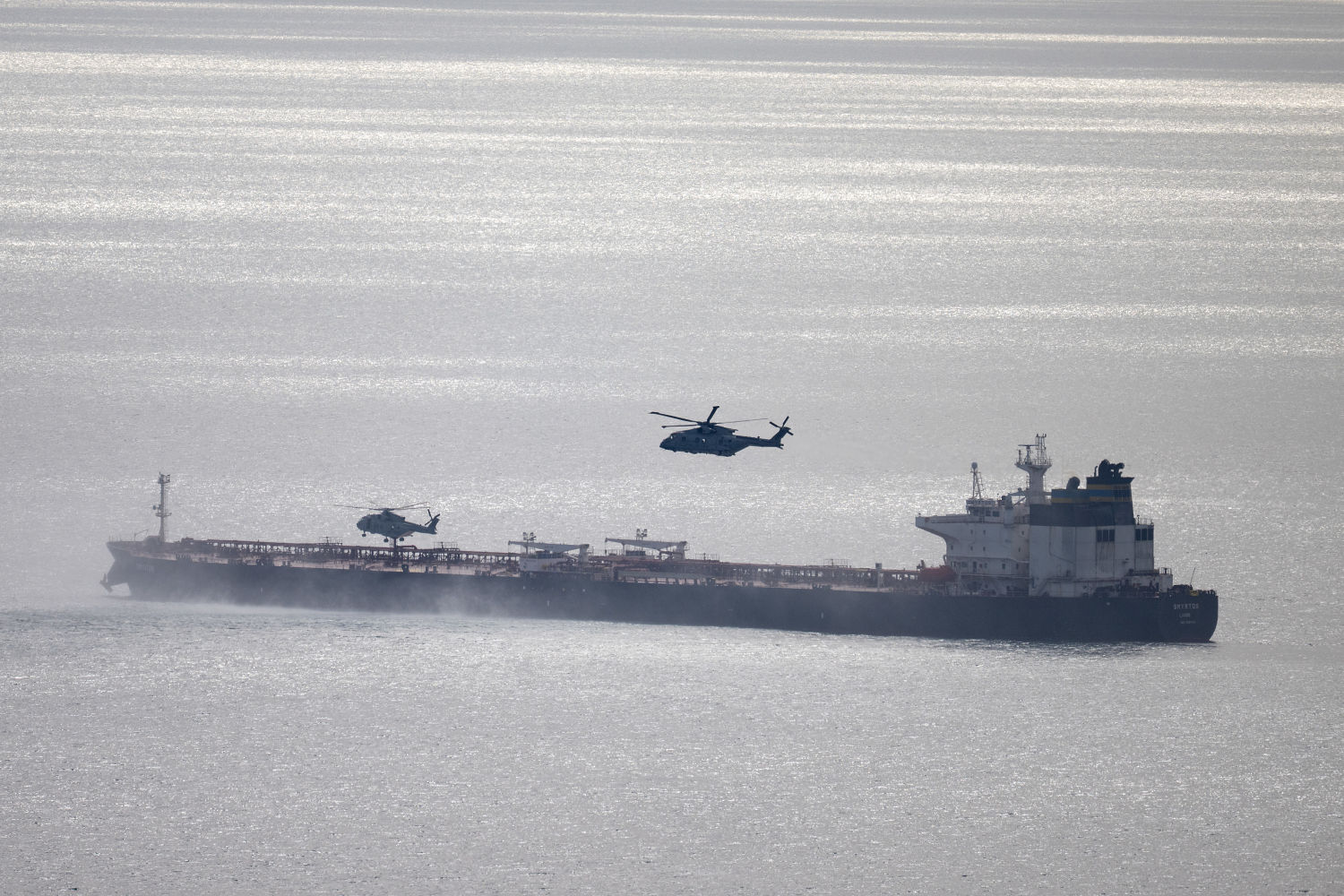
The recent deployment of United Kingdom maritime forces to intercept a non-compliant oil tanker in the English Channel exposes a critical vulnerability in the enforcement of global energy sanctions. This operational friction point is not an isolated law enforcement incident; it is a structural clash between sovereign maritime jurisdiction and the highly adaptive logistics of state-backed sanctions evasion.
To evaluate the long-term viability of western economic pressure, analysts must move past surface-level news reports and dissect the underlying operational variables. The strategic reality dictates that intercepting a vessel within an international shipping lane involves a complex calculation of international law, physical naval capabilities, and the shifting risk tolerance of gray-market maritime operators.
The Tri-Layered Operational Architecture of Shadow Fleets
Sanctions evasion at sea relies on a deliberate, three-part system designed to obscure ownership, reduce financial liability, and bypass the traditional maritime insurance ecosystem. When western naval assets counter these vessels, they are attempting to disrupt a highly optimized logistics network structured around three distinct layers.
+-----------------------------------------------------------------+
|                   REGULATORY ARBITRAGE LAYER                    |
| Flag-of-convenience registries (e.g., Gabon, Cook Islands, Panama) |
+-----------------------------------------------------------------+
                                |
                                v
+-----------------------------------------------------------------+
|                     FINANCIAL OBFUSCATION LAYER                 |
| Shell companies, non-Western P&I clubs, asset-shifting networks |
+-----------------------------------------------------------------+
                                |
                                v
+-----------------------------------------------------------------+
|                    TACTICAL ANONYMITY LAYER                     |
| AIS disabling, dark ship-to-ship transfers, aging hulls          |
+-----------------------------------------------------------------+
1. The Regulatory Arbitrage Layer
Shadow fleet vessels systematically exploit flag-of-convenience (FOC) registries. By registering hulls in states with minimal regulatory oversight or limited enforcement capacity, operators shield themselves from direct flag-state intervention. When an interception occurs in international choke points like the English Channel, the legal status of the vessel hinges entirely on the sovereign rights of the coastal state versus the freedom of navigation guaranteed under the United Nations Convention on the Law of the Sea (UNCLOS).
2. The Financial Obfuscation Layer
The physical vessel is merely the visible component of a network of shell companies. Ownership structures are regularly dissolved and reconstituted across jurisdictions outside the reach of G7 sanctions. This layer decouples the physical cargo from the ultimate economic beneficiary, meaning the seizure or delay of a single hull represents a calculated, manageable cost of doing business rather than a systemic failure for the exporter.
3. The Tactical Anonymity Layer
At the sea-surface level, shadow tankers manipulate their Automatic Identification System (AIS) transponders. This involves spoofing location data, broadcasting false identities, or going completely dark during critical transit windows. The tactical goal is to force maritime security agencies to rely on costly aerial reconnaissance, satellite synthetic aperture radar (SAR), and physical naval patrols to maintain situational awareness.
Jurisdictional Boundaries and the Interdiction Cost Function
The English Channel is one of the world's most heavily trafficked maritime choke points, governed by strict international legal frameworks. A coastal state cannot arbitrarily seize commercial shipping without triggering severe diplomatic and legal counter-effects. The decision matrix for a naval intercept relies on balancing three distinct legal and operational zones.
Territorial Waters (Within 12 Nautical Miles)
Within this zone, the coastal state exercises full sovereignty, subject to the right of innocent passage. If a shadow fleet tanker exhibits behavior that is prejudicial to the peace, good order, or security of the coastal state—such as violating environmental regulations or failing to report hazardous cargo—the state possesses clear legal authority to intervene, board, and detain the vessel.
The Contiguous Zone (12 to 24 Nautical Miles)
Here, a state can enforce customs, fiscal, immigration, and sanitary laws. Interceptions in this zone require verifiable evidence that the vessel intends to infringe upon these specific domestic laws within the state's territory. Shadow fleet operators exploit this by ensuring their transit paths remain strictly outside territorial limits, relying on the legal protections of transit passage through international straits.
The High Seas and Exclusive Economic Zones (EEZ)
Beyond territorial limits, the principle of freedom of navigation dominates. Interdiction requires a specific legal trigger, such as the right of approach under Article 110 of UNCLOS, which covers suspicions of piracy, slave trading, unauthorized broadcasting, or flying without nationality (stateless vessels). If a shadow tanker has successfully obscured its registry to the point of statutory statelessness, it inadvertently grants western navies the legal mandate to board and verify its documentation.
The operational expenditure of executing a physical intercept increases non-linearly based on distance from the coast and the level of vessel non-compliance.
$$\text{Total Interdiction Cost} = C_{\text{readiness}} + C_{\text{transit}} \cdot (d) + C_{\text{engagement}} \cdot (\tau)$$
Where $d$ represents distance from port, $\tau$ represents the duration of the non-compliant standoff, and the engagement coefficient scales rapidly if the target vessel utilizes passive resistance tactics.
Environmental Liability and the Sovereign Risk Asymmetry
The most significant systemic vulnerability highlighted by shadow fleet transits is the transfer of catastrophic environmental risk from the exporter to the coastal states along the transit route.
Traditional global maritime commerce relies on Protection and Indemnity (P&I) clubs, primarily based in Western Europe, to pool risk and provide multi-billion-dollar insurance policies covering oil spills and maritime disasters. The shadow fleet operates entirely outside this ecosystem, utilizing under-capitalized, state-backed, or non-transparent insurers.
- Hull Age and Structural Integrity: The average age of shadow fleet tankers significantly exceeds the standard retirement threshold for Tier-1 commercial fleets. Many are over 15 years old, lacking the structural redundancy and rigorous maintenance schedules enforced by major international classification societies.
- The Sovereign Indemnity Void: In the event of a catastrophic hull failure or collision in a high-density zone like the Dover Strait, the non-Western insurance entities backing these vessels lack the capital reserves—and the legal obligation under Western jurisdictions—to pay for large-scale environmental remediation.
- The Tactical Leverage Dilemma: This creates a stark asymmetry. If a coastal state's navy attempts a forced boarding of an uncooperative, poorly maintained tanker, any tactical mishap resulting in a structural breach or grounding creates an immediate ecological disaster for that coastal state. The shadow fleet operator leverages this risk aversion, knowing that Western forces will prioritize environmental safety over aggressive containment.
Network Adaptation Under Sanctions Pressure
Interdictions create a temporary bottleneck, but they do not break the supply chain. Instead, they trigger a predictable, systemic reallocation of maritime assets. The shadow fleet functions as a dynamic network that routes around regulatory blockages.
[Naval Interdiction at Choke Point]
                 |
                 v
[Increased Risk Premium & Transit Cost]
                 |
                 v
[Network Re-routing / Alternative Hubs Developed]
                 |
                 v
[New Shell Corporations Established Outside Western Jurisdiction]
                 |
                 v
[Resumed Flow at New Equilibrium Price]
When enforcement intensifies in the English Channel, the network adapts through specific operational adjustments.
The first adjustment is the shifting of ship-to-ship (STS) transfer hubs. If a geography becomes high-risk, operators move their transfer points to the exclusive economic zones of countries less willing to enforce G7 price caps, or to deep-water areas beyond the reaches of national coast guards.
The second adjustment is the inflation of the maritime risk premium. The cost of chartering a shadow tanker rises to compensate for the potential of naval delays, asset seizures, or regulatory blacklisting. This increased friction deflates the net margins of the exporting state, yet it rarely drops low enough to halt the trade entirely, as long as global demand maintains a viable clearing price for the underlying commodity.
Strategic Deployment Protocols for Coastal Enforcement
To counter an adaptive maritime adversary, enforcement agencies must shift from reactive, event-driven interceptions to a continuous, proactive denial strategy. The objective is not to seize every non-compliant hull—an operationally impossible task given global shipping volumes—but to alter the cost-benefit equation for the entities financing these transits.
- Implement Statutory Environmental Inspections: Coastal states must maximize their domestic legal frameworks to mandate strict structural and insurance verifications for all high-risk vessels entering their contiguous zones. Failure to provide verifiable proof of sovereign-backed capital reserves for oil pollution liability should result in an immediate denial of transit rights based on imminent environmental threat.
- Synchronize Multi-Domain Surveillance Intelligence: Naval forces must integrate satellite radar tracking with automated behavioral analysis. By flagging vessels that exhibit anomalous speed variations, unexpected course deviations, or inconsistent AIS broadcasting patterns, maritime security centers can deploy intercept assets preventatively, neutralizing tactical anonymity before the vessel enters dense shipping lanes.
- Target the Financial Infrastructure Rather Than the Hulls: Physical interdiction is a costly, high-risk mechanism. Long-term degradation of the shadow fleet requires targeting the onshore maritime service providers, flag registries, and shell company directors that facilitate the operations. Neutralizing a single FOC registry or blacklisting a primary bunkering agent disrupts more cargo capacity than a physical naval standoff in a high-traffic strait.