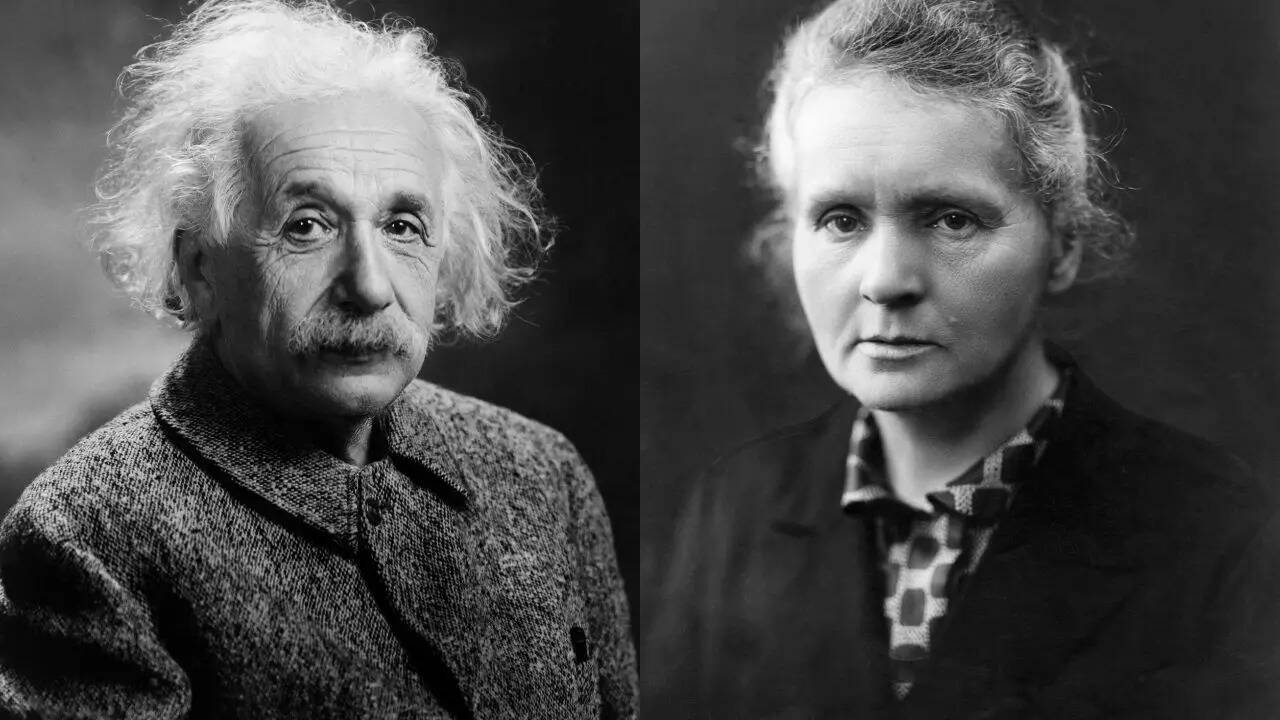
The 1911 Solvay Conference serves as a high-pressure laboratory for observing the intersection of extreme professional achievement and systemic social volatility. While the historical record often focuses on the "Solvay Council" as a gathering of physics elites, the specific crisis surrounding Marie Curie during this period reveals a sophisticated model of peer-to-peer crisis management. When external socio-political pressures threaten to devalue a high-output individual, the intervention strategies employed by peers—most notably Albert Einstein—provide a blueprint for maintaining intellectual continuity under duress.
The Triad of Volatility: Media, Social, and Institutional Pressures
The controversy facing Marie Curie in 1911 was not a singular event but a confluence of three distinct pressure vectors. Analyzing these vectors clarifies why a purely technical or scientific defense would have been insufficient.
- The Institutional Barrier: Curie’s rejection by the French Academy of Sciences represented a formal systemic exclusion. This was not a meritocratic failure but a structural one, driven by xenophobia and gender-based gatekeeping.
- The Media Feedback Loop: The "Langevin Affair"—a publicized romantic involvement with physicist Paul Langevin—served as the catalyst for a tabloid-driven reputational assault. This created a high-noise environment that obscured her empirical contributions.
- The Psychological Cost Function: For a researcher, the cognitive load required to manage a public scandal directly cannibalizes the mental bandwidth necessary for high-level theoretical work. The cost of the controversy was the potential stagnation of radiochemical research.
The Einstein Intervention: A Framework for Radical Support
Albert Einstein’s correspondence to Curie during this period is frequently cited for its warmth, but a structural analysis reveals it as a targeted strategy of identity re-anchoring. Einstein identified that the primary threat to Curie was not the scandal itself, but the internalization of the "rabble's" judgment.
Objective Reality vs. Subjective Noise
Einstein’s logic operated on a binary: the "base" behavior of the public versus the immutable laws of physics. By framing the public as "reptiles" and the media as "contemptible," he attempted to decouple Curie's professional identity from her social standing. In strategy consulting terms, this is a rebranding of the stakeholder. If the stakeholders (the public) are redefined as irrelevant to the core mission (science), their feedback no longer requires a response.
The "Don't Read the Comments" Protocol
Einstein explicitly advised Curie to ignore the noise. This was not a passive suggestion but a functional requirement for maintaining her "intellectual output."
- Avoidance of Defensive Posture: Defending oneself against irrational actors validates their standing to judge. Einstein recognized that engagement would only provide more data points for the media to distort.
- Prioritization of Core Competencies: He redirected her focus toward her "intellectual powers," emphasizing that her value was derived from her ability to solve complex problems, not her ability to navigate Parisian social hierarchies.
The Cost of Professional Isolation
The Curie-Einstein dynamic highlights the necessity of a "High-Trust Peer Network." In any competitive field, the risk of a "cascading reputational failure" is high when an individual is isolated.
The Network Effect of Credibility
When Einstein—an emerging authority of immense caliber—validated Curie, he provided a buffer against institutional exclusion. This created a micro-environment where scientific discourse could continue despite the macro-environment’s hostility. The Solvay Conference acted as this physical micro-environment.
Within the conference, the "Currency of Achievement" was the only valid tender. The logic was simple:
- Variable A: Public Opinion (Highly Volatile, Low Accuracy)
- Variable B: Peer Recognition (Low Volatile, High Accuracy)
By maximizing the value of Variable B, the scientific community effectively hedged against the risks posed by Variable A.
The Physics of Reputation Management
We can model the impact of public scandal on professional output through a simple decay function. If $R$ represents the perceived value of a professional and $S$ represents the intensity of a social scandal, the traditional view suggests $R$ decreases as $S$ increases.
However, Einstein’s approach introduces a third variable, $C$ (Peer Cohesion).
$$R = \frac{Output}{S - C}$$
If $C$ is sufficiently high, the impact of $S$ is neutralized. This is why the Solvay group did not distance themselves from Curie. To do so would have weakened the entire collective’s autonomy against external social pressures. They understood that if a Nobel laureate could be discarded due to tabloid pressure, no member of the intellectual elite was safe from similar systemic shocks.
Structural Lessons for Modern High-Stakes Environments
The Curie-Einstein interaction provides three tactical takeaways for contemporary leaders and high-performers navigating public-facing crises:
- Identify the Signal-to-Noise Ratio: Distinguish between legitimate professional critique and "contemptible" noise. The former requires an iterative response; the latter requires total non-engagement.
- Deploy Peer Validation Early: Do not wait for the scandal to subside to support a high-performing peer. The intervention is most effective when the pressure is at its peak, as it prevents the internalization of the crisis.
- Maintain Operational Continuity: The most effective "revenge" or rebuttal is continued high-level output. Curie winning her second Nobel Prize in Chemistry (1911) while the scandal raged was the ultimate empirical proof of her resilience.
The strategic play here is the deliberate narrowing of one’s feedback loop. In an era of hyper-connectivity, the ability to selectively ignore the "reptilian" elements of public discourse is no longer just a psychological asset; it is a prerequisite for sustained excellence in any complex field. The goal is to build a professional architecture where the "Cost of Scandal" never exceeds the "Value of Contribution."
The final move for any high-performer facing systemic bias or coordinated character assault is the Radical Pivot to Output. By making the controversy a footnote to a massive achievement (such as a second Nobel or a breakthrough discovery), the individual shifts the narrative from "Victim of Circumstance" to "Insurmountable Force." Total absorption in the work isn't just a coping mechanism—it's the only sustainable defense.