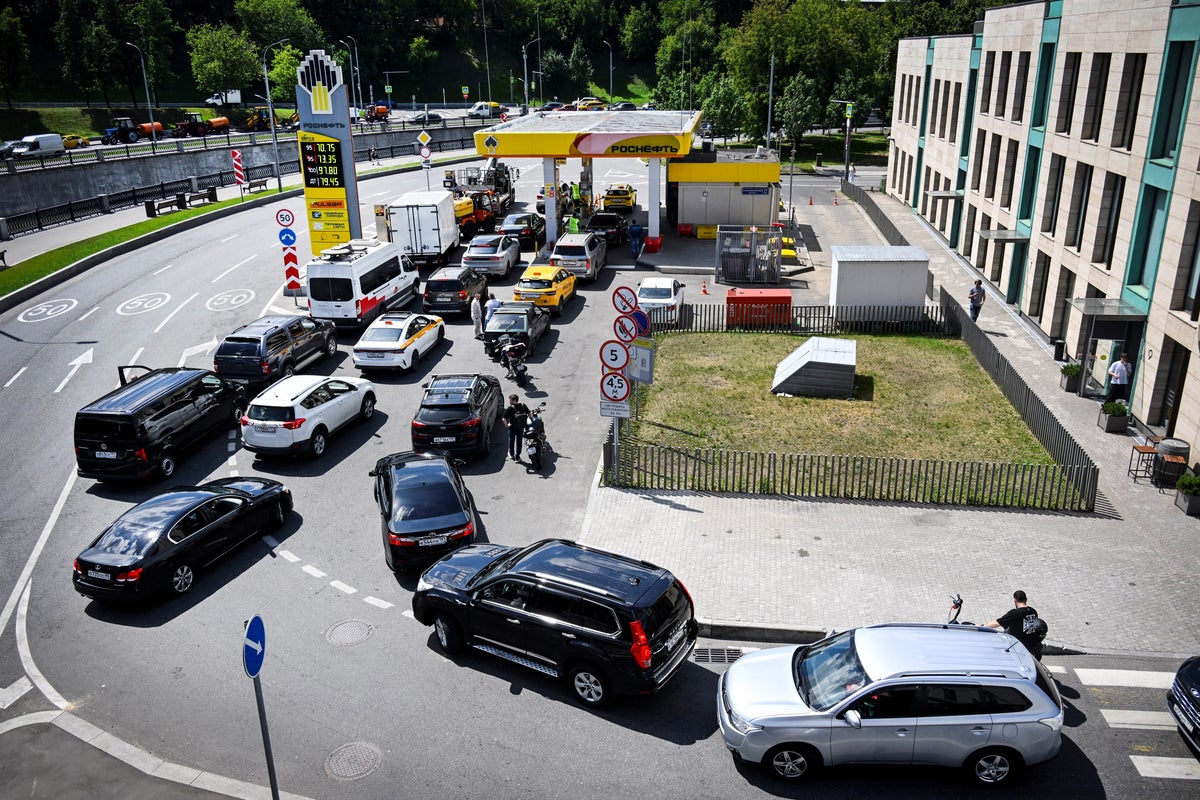
The paradox of a primary global hydrocarbon exporter experiencing localized domestic fuel depletion challenges conventional economic assumptions. When an energy-producing nation faces retail gasoline and diesel deficits, the root cause rarely stems from a scarcity of raw extraction. Instead, the friction occurs within a highly constrained downstream supply chain, distorted by state pricing mechanisms, fiscal interventions, and physical logistical bottlenecks. Understanding this phenomenon requires isolating the specific economic and structural variables that govern the transition from crude oil at the wellhead to refined product at the pump.
The vulnerability of a domestic fuel market under systemic stress can be mapped across four distinct structural vectors: export parity economics, refining capacity constraints, transport infrastructure friction, and state-mandated regulatory distortions. When these vectors misalign, localized shortages emerge irrespective of total national crude production volumes. Meanwhile, you can explore other developments here: Why Media Celebrations of the Miami Cocaine Bust Miss the Real Supply Chain Reality.
The Export Parity Framework and Netback Asymmetry
The fundamental economic driver behind domestic supply diversion is the netback pricing differential. Refiners operate as margin-maximizing entities, evaluating the profitability of selling a metric ton of fuel domestically versus exporting it to international markets. The netback price represents the effective revenue earned from an export sale after deducting transport costs, export duties, and port handling fees.
$$Netback = P_{global} - C_{transport} - T_{export} - C_{handling}$$ To understand the complete picture, check out the excellent analysis by NPR.
A structural imbalance occurs when global prices ($P_{global}$) rise or the national currency depreciates, significantly inflating the export netback relative to state-controlled or consumer-sensitive domestic retail prices. When the domestic price ceiling falls below the export netback, refiners face an opportunity cost for every liter of fuel sold within the country.
This divergence creates a powerful incentive for wholesale diversion. Refiners maximize profit by routing marginal production toward international maritime terminals rather than domestic bulk plants. The state typically attempts to correct this via a dampening mechanism—a subsidy paid to refiners to offset the gap between international parity and domestic caps. However, when the fiscal architecture alters or delays these subsidy payments, the financial equilibrium collapses. Refiners react by curbing domestic supply or increasing wholesale prices to unbranded independent fuel stations, triggering immediate retail deficits. Independent stations, lacking the vertical integration of state-backed majors, find themselves unable to procure wholesale product at prices that permit profitable retail operations.
Refinery Degradation and Technological Bottlenecks
The secondary vulnerability resides within the physical processing plants. Transforming crude oil into high-octane gasoline and ultra-low-sulfur diesel requires sophisticated secondary refining units, specifically catalytic crackers, hydrocrackers, and reformers. These units are highly capital-intensive and rely on continuous, highly calibrated maintenance schedules.
The imposition of international trade restrictions on industrial components introduces a progressive degradation vector into the refining sector. Modern refining operations depend on complex distributed control systems, proprietary catalysts, and specialized rotating equipment sourced from international engineering firms.
When access to these supply chains is severed, minor mechanical failures escalate into prolonged operational outages. A breakdown in a single fluid catalytic cracking unit can instantly reduce a refinery’s high-octane gasoline output by 50 percent or more. This creates a highly fragile domestic supply baseline where unexpected outages cannot be easily mitigated by importing replacement components.
The maintenance backlog accumulates over time. Refiners are forced to extend the operational cycles of degrading equipment, increasing the statistical probability of catastrophic failure or unplanned shutdowns. When multiple facilities undergo concurrent unplanned maintenance, regional supply drops precipitously, outstripping the buffer capacity of local strategic reserves.
Logistics Friction and Rail Network Saturation
Moving refined product from processing hubs to regional distribution centers introduces a profound logistical challenge, particularly in geographically vast nations where production centers are isolated from primary consumption zones. Refined fuels are highly dependent on rail infrastructure and specialized rolling stock, namely tank cars.
The efficiency of this distribution network depends on cycle times—the duration required for a tank car to load at a refinery, transit to a regional depot, discharge its cargo, and return to the refinery. Several systemic factors degrade this efficiency:
- Priority Freight Displacement: When military logistics or bulk commodities like coal claim preferential access to the rail network, civilian fuel shipments are relegated to lower priority tiers, introducing unpredictable transit delays.
- Geographic Asymmetry: Refining centers are frequently located near western production fields or historical industrial hubs, while critical demand surges occur in agricultural regions or far-flung eastern territories.
- Turnaround Degradation: Shortages of locomotive power, spare parts for rolling stock, and specialized yard personnel increase the time tank cars spend idling in switching yards, effectively reducing the active fleet capacity without a nominal reduction in the number of physical cars.
This logistical friction manifests as localized deficits rather than a uniform national shortage. A region located thousands of kilometers from a major refinery may experience dry pumps even while the refining sector operates at high utilization rates. The fuel exists, but the structural throughput capacity of the transport network is insufficient to bridge the spatial gap between supply and demand.
Regulatory Deficits and the Collapse of Independent Retail
State intervention designed to shield consumers from inflationary pressures often accelerates the collapse of retail availability. When the state imposes informal or formal caps on retail fuel prices while allowing wholesale prices to fluctuate based on market realities, it compresses the retail margin to zero or negative values.
Vertically integrated oil companies can absorb downstream retail losses by offsetting them with profitable upstream extraction and export operations. Independent retail networks enjoy no such luxury. Operating strictly on the spread between wholesale procurement and retail distribution, these independent players are forced into a compounding liquidity crisis.
+---------------------------+       +---------------------------+
|   Vertically Integrated   |       |    Independent Retail     |
|         Majors            |       |         Networks          |
+---------------------------+       +---------------------------+
| Upstream Profits Offset   |       | No Upstream Cushion;      |
| Downstream Price Caps     |       | Negative Margins Squeeze  |
| -> Retain Market Share    |       | -> Structural Insolvency  |
+---------------------------+       +---------------------------+
              |                                   |
              v                                   v
+---------------------------+       +---------------------------+
| Maintained Operations at  |       | Station Closures, Local   |
| Selective Stations        |       | Monopolies, Supply Gaps   |
+---------------------------+       +---------------------------+
As independent operators become insolvent or suspend sales to preserve capital, the retail burden shifts entirely to the stations owned by vertically integrated majors. This sudden consolidation of demand overwhelms the remaining retail infrastructure. Long queues form, and stations are forced to implement rationing protocols, limiting the volume of fuel permitted per vehicle. What external observers characterize as a total national exhaustion of fuel is frequently a structural failure of the independent retail sector, caused by unsustainable margin compression.
The Seasonal Confluence and Agricultural Risk
The vulnerability of the domestic fuel supply chain peaks during specific cyclical windows, most notably the agricultural harvesting and planting seasons. Agriculture requires predictable, high-volume deliveries of diesel fuel to rural hubs. This demand is inflexible; a delay of several weeks can jeopardize seasonal crop yields, carrying severe macroeconomic implications for food security and inflation.
When agricultural demand peaks simultaneously with elevated summer driving demand and scheduled refinery maintenance turnarounds, the system faces a tri-factor capacity stress test. The state is forced to choose between prioritizing the agricultural sector via direct administrative allocations or allowing the free market to price out rural consumers.
If the state directs refiners to prioritize agricultural depots, it starves urban consumer stations, leading to highly visible shortages in major population centers. If it permits market pricing, the surging cost of diesel threatens the financial viability of farming enterprises. The resolution of this tension typically involves aggressive, short-term administrative mandates, such as temporary total export bans on refined products.
The Limits of Policy Intervention
Temporary export bans represent a blunt regulatory tool designed to shock the domestic market into equilibrium by trapping all refined molecules within national borders. While highly effective at forcing down domestic wholesale prices in the immediate term, this strategy introduces severe secondary distortions.
The primary limitation of a prolonged export ban is refinery storage saturation. Refineries possess finite on-site storage capacity for finished gasoline and diesel. Once these tanks are full, a refinery cannot simply continue operating at maximum utilization; it must throttle back crude runs.
Reducing refinery throughput decreases the production of all fractions, including heavy fuel oils, aviation kerosene, and petrochemical feedstocks. This reduces the overall efficiency and profitability of the industrial complex, creating a secondary capital shortfall that impairs long-term infrastructure investment.
Furthermore, a sudden halt in export revenues starves the sector of the hard currency required to procure critical equipment components on the grey market. The short-term reduction in retail prices achieved by trapping supply comes at the direct expense of medium-term refining resilience.
The Distressed Equilibrium Forecast
The trajectory of a resource-rich nation suffering from internal fuel distribution crises does not point toward a total economic collapse, but rather toward a permanent, high-friction equilibrium. The domestic market will likely experience recurring cycles of localized scarcity, interspersed with aggressive, short-term state interventions that temporarily stabilize prices before inducing the next supply contraction.
Stabilization cannot be achieved via administrative price controls or export bans. It requires a fundamental restructuring of the domestic incentive framework, specifically aligning the domestic wholesale price index with true refining costs while expanding the logistical capacity of the rail networks. Until the physical throughput constraints and the netback profit asymmetries are directly resolved, the structural vulnerability will persist, rendering the domestic retail market highly susceptible to every minor operational shock, refinery malfunction, or seasonal demand spike.