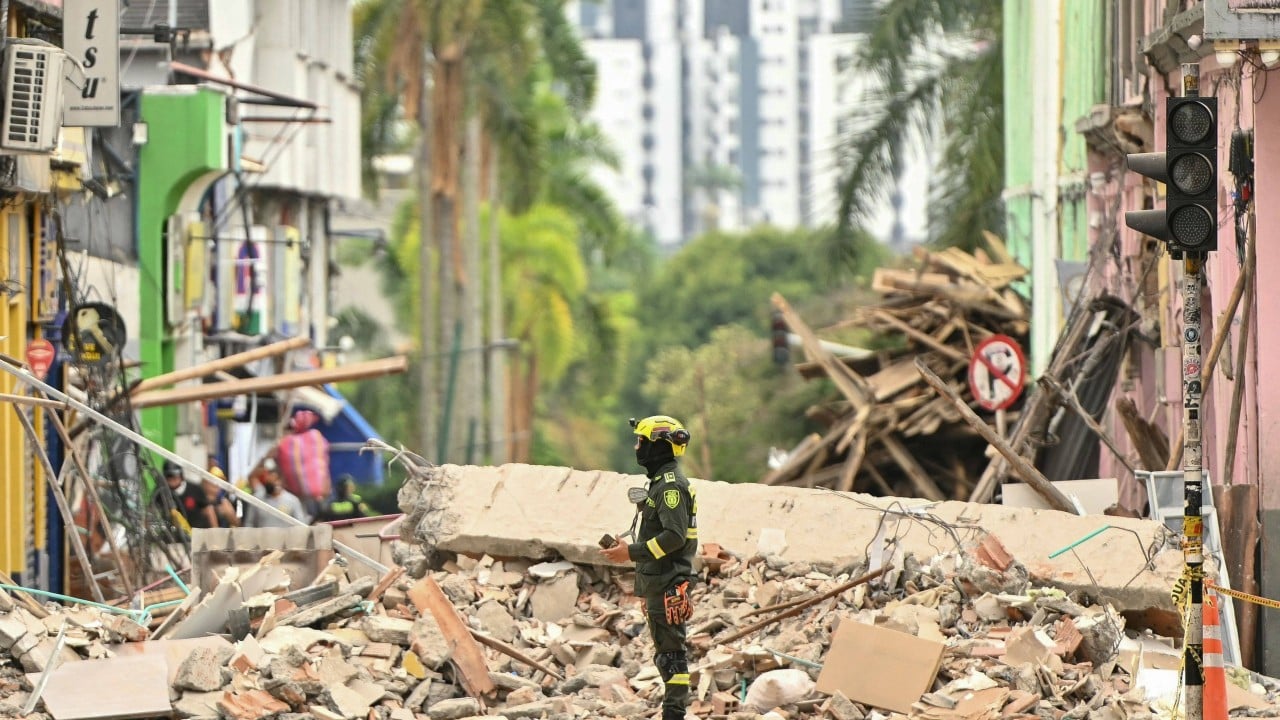
The convergence of a catastrophic 7.4-magnitude seismic event and an escalating bilateral tariff schedule creates an acute macroeconomic vulnerability for Colombia. Following the tremor that devastated western municipalities including Cali and Pereira, newly inaugurated President Abelardo de la Espriella engaged in direct diplomatic channels with Washington to secure a temporary suspension of active trade duties. This policy friction illustrates the structural limits of applying blanket protectionist measures to emerging market economies undergoing localized humanitarian crises.
The Dual Shock Architecture
Economic resilience depends on baseline liquidity and uninterrupted export pathways. When a physical disaster disrupts domestic productive capacity, the cost function of local enterprises shifts instantly. Fixed costs remain static while revenues collapse due to damaged infrastructure, supply chain fragmentation, and workforce displacement.
Superimposing a 12.5 percent duty under Section 301 of the Trade Act of 1974 onto this environment compounds the contraction. While commodities such as oil and coffee retain specific exemptions, secondary manufacturing, light industry, and regional agriculture bear the full incidence of the tax. Exporters facing diminished domestic purchasing power cannot absorb these foreign market entry penalties without severe margin compression or outright insolvency.
[Seismic Impact] ---> [Infrastructure Collapse] ---> [Revenue Freefall]
                                                           |
[Section 301 Tariffs] ---> [Export Margin Compression] <---+
                                                           |
                                              [Liquidity Crisis & Insolvency]
The Mechanics of Trade Policy Friction Under Duress
Understanding the petition for suspension requires analyzing the transmission mechanism of the current tariff regime. The United States administration enacted these levies on approximately 60 nations under Section 301, transitioning from prior Section 122 measures. The stated policy objective targets systemic compliance issues, yet the practical outcome is an immediate tax on foreign exchange generation.
For Colombia, export revenues function as the primary mechanism for debt servicing and capital accumulation. When regional production centers like Risaralda and Valle del Cauca halt operations to manage rescue and recovery phases, export volumes contract endogenously.
- Capital Flight and Cash Flow: Importers in the United States face higher landed costs, leading to volume substitution toward exempt or domestic alternatives.
- Fiscal Deficit Amplification: The national government absorbs the social costs of reconstruction while collecting lower tax revenues from constrained commercial entities.
- Foreign Exchange Depriciation: Reduced trade turnover pressures the local currency, increasing the domestic cost of imported capital goods required for physical rebuilding.
Strategic Interdependence and Diplomatic Leverage
The political alignment between Bogotá and Washington establishes a unique framework for bilateral negotiation. De la Espriella represents a strategic pivot toward alignment with United States security initiatives, integrating into regional security frameworks such as the Shield of the Americas. This diplomatic positioning differentiates Colombia from preceding administrations that faced persistent executive friction with the White House.
However, trade policy execution operates via distinct statutory constraints. Section 301 tariffs are bound by administrative review processes and statutory determinations regarding unfair trade practices or labor standards. Suspending these tariffs requires an executive waiver or a targeted carve-out based on humanitarian hardship rather than a permanent restructuring of trade terms. The economic rationale for Washington to grant a temporary waiver lies in preventing systemic default or severe political destabilization in a key regional partner, which presents a higher long-term cost than short-term tariff revenue foregone.
Structural Interventions for Fiscal Rehabilitation
Granting a temporary tariff suspension acts as an automatic fiscal stabilizer for Colombian enterprises, but long-term recovery necessitates targeted capital allocation. Rebuilding urban centers requires liquidity that commercial banks cannot provide without central bank liquidity facilities and international multilateral backing.
To bypass production bottlenecks, economic planners must decouple emergency reconstruction financing from trade-dependent tax streams. By directing international development loans directly into civil infrastructure rehabilitation, the state can preserve corporate working capital. This prevents secondary corporate defaults that would otherwise outlast the immediate physical damage of the tremor.
Execute a phased structural liquidity injection through targeted emergency credit facilities while maintaining direct bilateral engagement for Section 301 exemptions on non-commodity exports, ensuring that foreign exchange inflows remain intact during the primary reconstruction window.