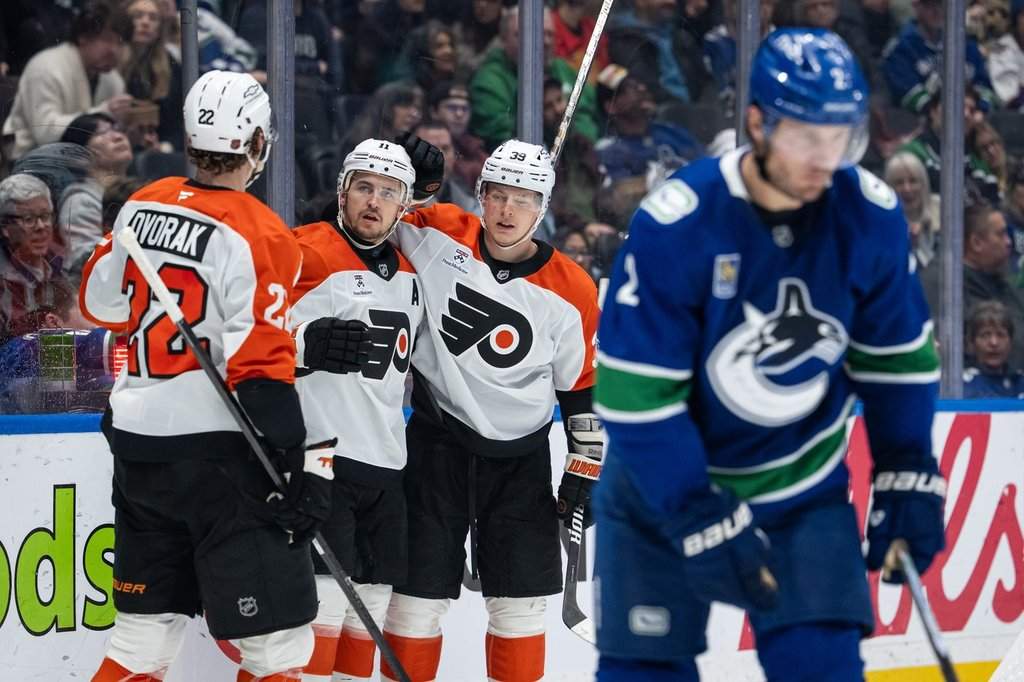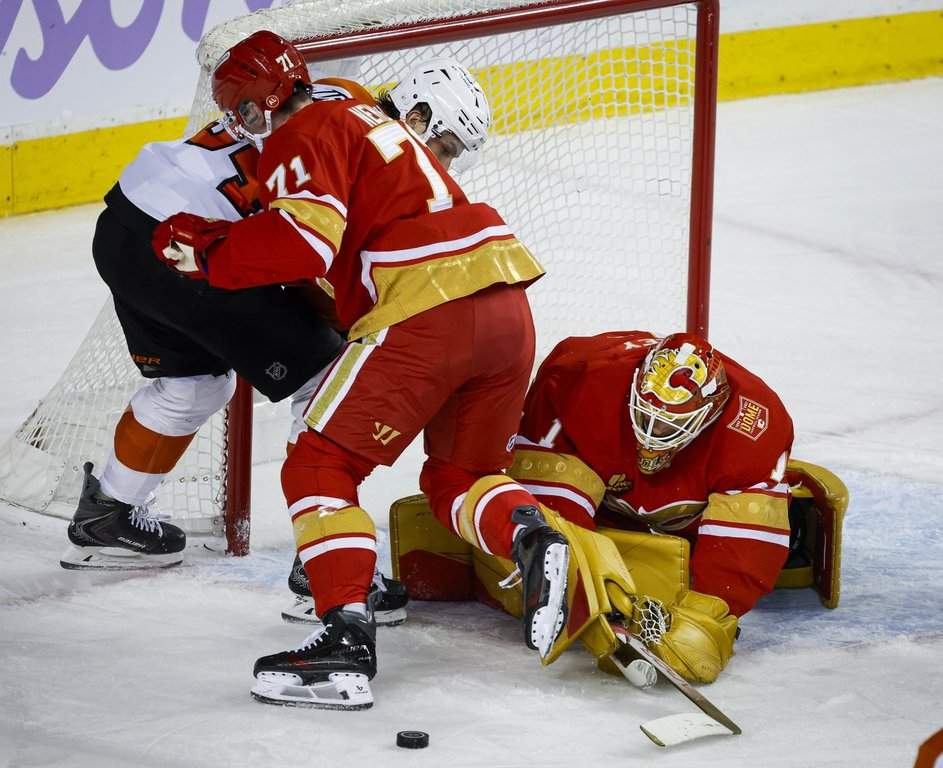
Everybody loves an overtime winner.
It is the cheapest dopamine hit in professional hockey. A young sniper finds soft ice in three-on-three, buries a feed, the Scotiabank Saddledome erupts, and the local beat writers churn out five hundred words of copy praising grit, resilience, and the bright future of the franchise. The standard recap of Calgary’s 4-3 overtime victory over the Philadelphia Flyers follows that exact script. It treats two points in the standings like proof of concept. It celebrates Matt Coronato’s finishing touch as evidence that the Flames are turning a corner.
That consensus is lazy, emotionally driven, and completely divorced from how modern NHL championships are built.
When a rebuilding or retooling hockey club escapes a winnable regulation game by relying on the chaotic coin flip of three-on-three hockey, the front office shouldn't be popping champagne. They should be staring at the film with cold sweat on their foreheads. Winning in overtime against a Flyers squad that plays a heavy, structured, low-event style doesn't validate Calgary's system. It exposes how fragile their five-on-five control actually is—and worse, it threatens the exact draft positioning they desperately need to escape the NHL’s deadliest trap.
The Illusion of the Three-on-Three Coin Flip
Let’s strip away the highlight-reel bias and look at what three-on-three overtime actually represents in the National Hockey League. It is not hockey. It is a fabricated skills competition designed to sell television ad space and prevent ties.
In regulation, hockey is a game of spatial denial, board battles, neutral-zone traps, and line-matching. Five skaters per side clog the middle of the ice, forcing offenses to manufacture high-danger chances through sustained cycle pressure or pristine rush execution. When the horn sounds at sixty minutes tied at three, those rules evaporate. Suddenly, six acres of open ice appear. Defensemen stop defending zones and start chasing shadows. A single blown coverage or a slight edge-work slip turns into a two-on-zero breakaway.
I have sat in front-office war rooms where analytics directors pulled their hair out watching general managers overvalue overtime wins. Over the last decade of tracking data across the league, three-on-three overtime outcomes correlate far closer to random variance and individual shooting luck than they do to sustainable team quality. Expected goals (xG)—a metric that measures the probability of a shot becoming a goal based on distance, angle, and shot type—routinely swings wildly in overtime based on a single puck bounce.
When Matt Coronato steps into open space and beats the Flyers' goaltender, we are seeing an elite individual trait on display. Coronato has an NHL-caliber release. Nobody disputes his shot mechanics or his offensive instincts. What we are not seeing is evidence that the Flames can impose their will over sixty minutes of structured play.
Why Surrendering the "Loser Point" Matters
Look at the macro math of the NHL standings. By failing to close out Philadelphia in regulation, Calgary handed an Eastern Conference opponent a free point while grabbing two for themselves. In a cross-conference matchup, that charity doesn't directly hurt Calgary in the Pacific Division race, which is why casual observers wave it off.
They miss the real damage. The real damage is internal.
- False Confidence in Roster Construction: Coaching staffs use overtime wins to justify keeping veteran placeholders in top-six roles rather than letting young players fail and learn through five-on-five adversity.
- The Illusion of Parity: Because the NHL’s three-point game system artificially compresses the standings, a team sitting four points out of a wild-card spot convinces itself it is a "buyer" or a "holder" at the trade deadline.
- Goaltending Masking: Overtime wins frequently rely on a netminder standing on his head during a frantic three-minute sequence before the winner is scored, hiding porous defensive zone exits.
The Mushy Middle Is Where Franchises Go to Die
If you want to understand why this 4-3 result is dangerous for Calgary, you have to understand the single worst place an NHL organization can exist. It isn't the basement. The basement gets you Connor Bedard, Macklin Celebrini, or Nathan MacKinnon. The basement gives you cost-controlled superstar talent for seven years.
The worst place in hockey is ninth place in the conference. The mushy middle.
For fifteen years, the Calgary Flames have been the poster child for organizational purgatory. Good enough to compete on any given Tuesday. Never quite bad enough to draft a franchise-altering center. Never quite good enough to survive a seven-game war of attrition against true Stanley Cup contenders like Colorado, Dallas, or Edmonton.
Every time a team in transition cobbles together a string of gritty, one-goal overtime victories, the fanbase demands a playoff push. Ownership smells two rounds of home gate revenue. Suddenly, general managers hold onto expiring veteran assets instead of flipping them for first-round picks. They rush prospects. They patch holes with mid-tier free agents on five-year contracts that age like milk.
Let’s run a quick thought experiment. Imagine a scenario where Calgary finishes this season with 88 points instead of 74. On paper, 88 points feels better. The building had more exciting nights. Matt Coronato scored 25 goals, several of them dramatic overtime winners. The local radio hosts talk about "building a winning culture."
Now look at the draft lottery odds for an 88-point team versus a 74-point team. At 88 points, you are picking 14th or 15th overall. You are drafting a solid second-line winger or a second-pair defenseman who might help you in four years. At 74 points, you are picking in the top five, with a legitimate lottery ticket for a generational franchise cornerstone.
"Winning culture" is the most expensive myth in sports. Culture doesn't win the Stanley Cup. Elite, top-end talent wins the Stanley Cup, and culture is simply the byproduct of having three future Hall of Famers on your roster who hate losing. Ask the Pittsburgh Penguins how their culture looked before Mario Lemieux and Sidney Crosby arrived. Ask the Tampa Bay Lightning about their culture before Steven Stamkos, Victor Hedman, and Nikita Kucherov hit their primes.
What Philadelphia Actually Exposed About Calgary
To give the Flyers credit, John Tortorella’s teams rarely beat themselves. Philadelphia plays a north-south, suffocating brand of hockey designed to turn games into mud wrestling matches. Even without elite superstar talent at every position, the Flyers force opponents to earn every inch of neutral-zone ice.
When Calgary gave up three goals in regulation to a Philadelphia roster that historically struggles to finish high-danger chances, the warning lights should have flashed red. Why did the Flyers find enough daylight to push this game past sixty minutes?
- Broken Defensive Zone Exits: Under heavy forechecking pressure, Calgary’s defensemen routinely resorted to glass-and-out clears rather than controlled tape-to-tape breakouts. When you surrender possession voluntarily in the modern NHL, you spend the next forty-five seconds defending in your own zone.
- Slot Coverage Breakdowns: Corsi—a foundational hockey metric that tracks all shot attempts (goals, saves, misses, and blocks) at even strength—tells part of the story, but high-danger shot locations tell the truth. Calgary allowed too many uncontested entries into the royal road—the imaginary line connecting the two faceoff dots through the middle of the slot.
- Second-Period Lethargy: Championship-caliber teams use the long change in the second period to hem opponents in their own end with sustained line changes. Calgary allowed Philadelphia to dictate the tempo during the middle frame, turning a game they should have strangled into a track meet.
Should Fans Actually Celebrate Matt Coronato’s Breakout?
Yes—with a massive caveat.
You cannot separate the player from the environment. Matt Coronato taking over an overtime shift and burying the winner is objectively great for his personal development. Young goal scorers need validation. They need to know their shot beats NHL goaltenders when the pressure spikes. Seeing him rewarded for finding soft ice validates the work he has put into his off-puck movement and release mechanics.
However, celebrating Coronato's development and celebrating the team's 4-3 overtime win are two completely different things. The danger happens when management conflates the two.
If Calgary’s front office watches Coronato score that winner and says, "See? Our core is ready to compete right now," they are committing organizational malpractice. One twenty-something winger with a lethal wrist shot does not fix a lack of center depth. It does not magically create a top-pair puck-moving defenseman.
Look at how the sharpest hockey minds in the industry handle this exact tension. When Joe Sakic rebuilt the Colorado Avalanche, or when Jeff Gorton and Kent Hughes tore down the Montreal Canadiens, they didn't care about overtime wins in November. They evaluated process over results. They celebrated individual growth from young players like Cole Caufield or Nathan MacKinnon even when the team lost 5-3. They understood that developing young stars while simultaneously losing enough games to secure elite draft capital is the golden ratio of a rebuild.
The Brutal Truth About Modern NHL Roster Building
There is a massive gap between how fans watch hockey and how sharp front offices build winners. Fans watch games in isolation. They live and die by the scoreboard on a Wednesday night against the Flyers. Front offices—at least the ones that hoist silver in June—operate on a five-year horizon.
Let’s dismantle the most common arguments defending Calgary’s current trajectory:
- "You can't teach players to lose." Nobody is asking players or coaches to lose. Players play for their livelihoods; coaches coach for their next contracts. Tanking happens in the front office, not the locker room. A sharp general manager strips away the veteran safety nets so the young players play twenty minutes a night, score exciting goals like Coronato did, and still lose 4-3 in regulation because they haven't learned how to manage a third-period lead yet.
- "Getting into the playoffs gives young players valuable experience." Getting swept in four games by a juggernaut like the Edmonton Oilers or Dallas Stars doesn't build character. It bruises egos and costs you ten spots in the first round of the draft. Experience matters when your core is 24 to 27 years old and entering its physical peak, not when you are patching together a roster with duct tape.
- "Anything can happen once you get in." That cliché died in the salary cap era. Since 2005, eighth seeds making Cinderella runs are statistical anomalies, and almost none of them finish the job. The teams that win four rounds of playoff hockey are overwhelmingly top-five regular-season teams with elite center spine depth and top-ten power plays.
The Counter-Argument: The Risk of Perpetual Losing
To be completely transparent, the "embrace the pain and draft high" strategy carries real risks. Look at the Buffalo Sabres or the Detroit Red Wings over the last decade. If you strip a roster down to the studs and lose for too long without strong veteran leadership, losing becomes habitual. Young players develop bad defensive habits because there is no accountability. Confidence erodes. Free agents refuse to sign in your city, and drafted stars demand trades the moment their entry-level contracts expire.
That is the tightrope every NHL general manager walks. You need enough veteran professionalism in the room so that a young sniper like Matt Coronato learns how to prepare like a pro, backcheck with purpose, and handle the media pressure of a Canadian market.
The mistake isn't having veterans. The mistake is letting veterans block ice time and carry the team into the 12th-best record in the conference.
Stop Watching the Scoreboard and Start Watching the Process
If you are a Flames fan, a hockey analyst, or someone trying to evaluate where this franchise actually stands after knocking off Philadelphia 4-3 in overtime, stop looking at the standings. They are lying to you.
Instead, judge Calgary over the next thirty games by three ruthless metrics:
- Five-on-Five High-Danger Chance Share: Are the Flames controlling the middle of the ice when both teams have five skaters on the sheet, or are they relying on perimeter shots and power-play luck to stay afloat?
- Young Core Deployment: When the game is tied with three minutes left in the third period, is Matt Coronato on the ice taking the crucial offensive-zone faceoff, or is he stapled to the bench while thirty-year-old journeymen try to protect a single point?
- Asset Management at the Deadline: When March rolls around and Calgary is hovering three points out of a wild-card spot because of a handful of overtime wins just like this one, does the front office have the stomach to sell high on expiring contracts?
Matt Coronato’s overtime winner against the Flyers gave Calgary two points, a great highlight clip, and a loud night at the Saddledome. What it didn't give them is a blueprint for a championship. Until this organization prioritizes sixty-minute five-on-five dominance and long-term draft capital over cheap three-on-three thrills, nights like this aren't signs of a breakthrough—they are just expensive distractions from the real work that still needs to be done.