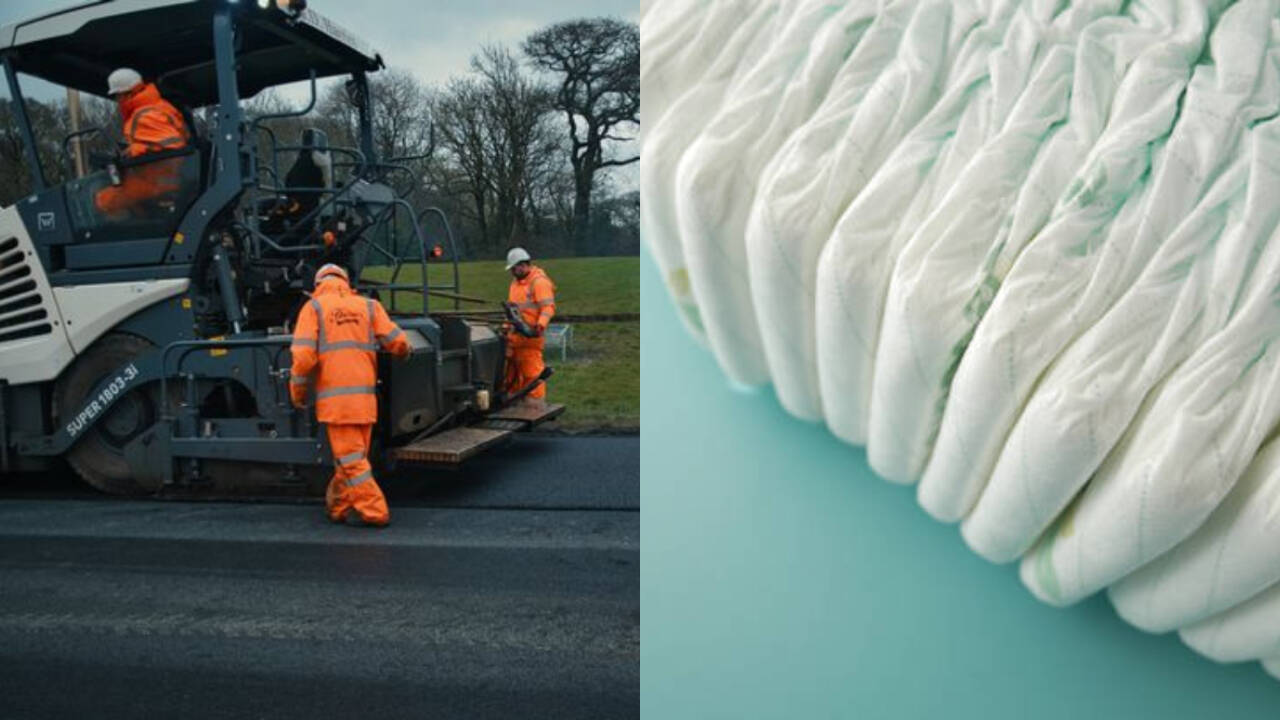
Municipal waste management systems face a structural impasse: high-volume, low-value absorbent hygiene products are chemically engineered to resist degradation, rendering traditional landfill and incineration vectors economically and environmentally inefficient. Municipalities absorb rising gate fees while infrastructure agencies purchase imported virgin polymer and cellulose additives for asphalt reinforcement. Bridging this systemic gap requires evaluating waste streams not through the lens of disposal liabilities, but as decentralized material processing inputs. The Welsh municipal infrastructure trials, which redirected approximately four tonnes of post-consumer absorbent hygiene waste equivalent to 80,000 processed units into Stone Mastic Asphalt mixes, offer a quantifiable case study in localized material substitution.
The Thermodynamic and Mechanical Mechanics of Absorbent Input Substitution
Standard road-surfacing formulations, specifically Stone Mastic Asphalt, rely on stabilizing additives to prevent binder drainage from the aggregate matrix at elevated mixing temperatures. Traditionally, these additives consist of specialized polymer or cellulose fibers imported from industrial manufacturing centers, introducing logistical emissions and currency exposure to regional transit budgets.
Post-consumer disposable hygiene products comprise a composite architecture of superabsorbent polymers, polyolefins, and high-purity cellulose fibers. When processed through specialized hydrothermal washing and mechanical separation systems—such as those operated by regional facilities in Capel Hendre—the output yields uniform fibrous pellets capable of performing the precise structural function of virgin additives.
The mechanical integration operates through a substitution function. The recovered cellulose and plastic micro-fibers disperse within the bitumen binder during high-temperature pugmill mixing. This creates a dense, three-dimensional micro-matrix that enhances rut resistance and tensile strength under dynamic traffic loads without increasing raw material costs. The processing mechanics eliminate the need for chemical binding agents to be manufactured from virgin petrochemical feeds, transferring embodied carbon from a temporary disposal sink into a permanent capital asset.
The Economic Efficiency of Decentralized Waste Processing
Municipalities operate under strict cost constraints where environmental mandates must align with capital expenditure limits. The economic viability of waste-derived asphalt reinforcement depends entirely on logistical density and processing yield.
The primary cost drivers in municipal waste management are collection frequency, transport radius, and tipping fees. By aggregating disposable hygiene products at the municipal level—such as Carmarthenshire County Council collecting millions of units annually—authorities shift material ownership from a disposal cost center to an industrial feedstock.
Transportation efficiency dictates the carbon payback period of any recycled infrastructure input. When processing facilities operate within a constrained geographic radius relative to asphalt plants, the reduction in freight mileage offsets the energy inputs required for washing and pelletizing. The economic equation is bound by a simple threshold:
$$C_{\text{processing}} + C_{\text{transport}} \leq C_{\text{virgin acquisition}} + C_{\text{landfill tax}}$$
When municipal gate fees and avoided landfill disposal penalties are factored into the equation, the cost parity achieved in regional trials demonstrates that circular material integration can match the financial performance of traditional procurement models.
Systemic Bottlenecks and Scaling Limitations
Despite the operational success of localized pilot projects, scaling waste-derived asphalt additives across national infrastructure networks exposes distinct operational friction points.
Contamination represents the primary constraint. Post-consumer hygiene waste streams inherently contain organic matter and variable moisture contents that require rigorous, energy-intensive sanitization protocols before mechanical shredding and polymer extraction can occur. If the chemical composition of the incoming waste stream fluctuates beyond tight tolerances, the resulting pelletized fibers fail to meet the strict tensile specifications required for high-load national highways.
Supply chain fragmentation presents a secondary barrier. While regional authorities in specific jurisdictions maintain advanced separate collection streams for absorbent hygiene products, most metropolitan regions mix these materials into general municipal solid waste. Retrofitting municipal collection infrastructure to segregate hygiene products requires capital expenditure in household-level sorting containers and dedicated collection routes, altering municipal labor allocations.
The geographic distribution of processing infrastructure creates regional disparities. Without localized washing and pelletizing plants situated within economic trucking distance of asphalt mixing facilities, the logistical emissions from transporting wet, low-density waste negate the carbon reduction benefits of the final road surface.
Optimizing Municipal Material Loops
Deploying waste-derived infrastructure additions requires a transition from isolated municipal trials to systematic regional supply chain integration. Regional authorities must mandate minimum recycled-content thresholds in public procurement contracts for Stone Mastic Asphalt, signaling stable long-term demand to private processing operators. Infrastructure planners should prioritize co-locating waste sorting facilities with asphalt batching plants to minimize freight ton-miles and establish closed-loop urban material processing corridors.