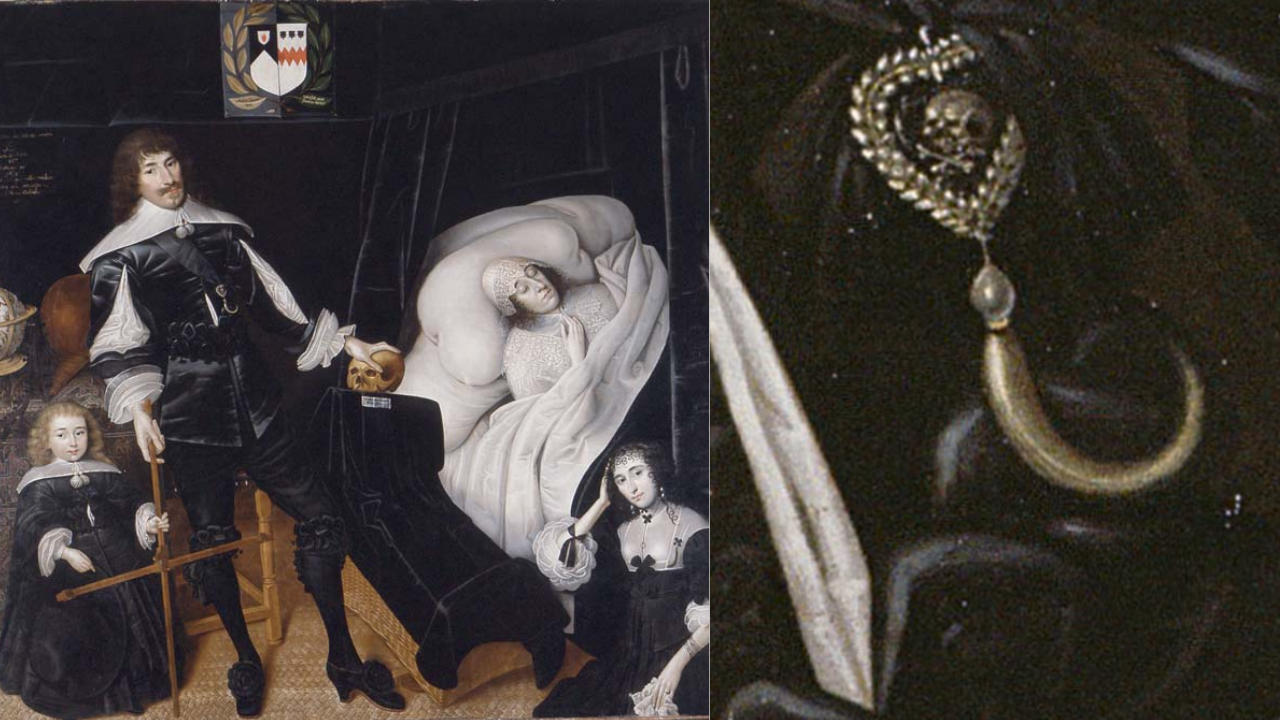
When a four-century-old mourning pendant containing a dead child's hair resurfaces, the initial shock obscures a far more revealing truth: early modern grief was an engineered material system governed by scarcity, lineage, and shifting norms of bodily preservation. This analysis deconstructs the mechanics behind such relics, separates verified historical mechanisms from educated hypotheses about an unverified resurfacing claim, and maps how hair, precious metals, and enamel functioned as instruments of memory and status around the seventeenth century.
Understanding how an artifact like a child's hair pendant operates requires examining three interlocking systems: the Biophysical Durability Framework, the Grief-to-Lineage Cost Function, and the Provenance Verification Bottleneck. Standard media coverage treats a resurfacing relic as a standalone curiosity, flattening complex social pressures into sentimental shock. A rigorous reading restores the structural incentives that made child mortality, hair preservation, and portable jewelry inseparable.
Separating Known Mechanisms From Unverified Claims
An uncorroborated headline about a resurfaced pendant with a dead child's hair presents an immediate evidentiary divide. Verified historical scholarship establishes that hair was used in memorial objects, that infant and child mortality rates were high in early modern Europe, and that lockets and pendants evolved in their designs across centuries. By contrast, any specific resurfacing claim without documented chain of custody, material analysis, and institutional examination remains a hypothesis rather than a settled fact.
The distinction matters because sensationalized reporting frequently conflates plausible categories with confirmed specimens. A piece of jewelry discovered in an attic, estate sale, or private collection might date to the seventeenth century, might contain human hair, or might be a later revival or misattributed object. Treating an unverified find as a confirmed four-hundred-year-old child's relic skips the exact evidentiary steps that separate genuine material history from romantic projection.
In early modern contexts—roughly the late sixteenth through seventeenth centuries—the word "mourning" itself requires precision. While Victorian-era mourning jewelry in the nineteenth century became a standardized, mass-produced commercial category with codified rules of dress and symbolism, earlier memorial and love tokens overlapped in form and function. A pendant holding a lock of hair could commemorate a deceased child, honor a living or departed spouse, or serve as a family keepsake passed down across generations.
Why Hair Anchored Early Modern Memorial Objects
Hair occupies a singular position in material culture because it is biological matter that resists rapid decay without embalming. Soft tissue decomposes quickly, and bones require burial or specialized handling, whereas clean, dry hair retains tensile strength, color, and texture over centuries under stable indoor conditions. For grieving parents in an era where photography did not exist and painted portraits were costly, a lock of a child's hair offered direct physical continuity with the deceased.
This durability created a specific Biophysical Durability Framework with three operational properties:
- Non-invasive harvestability: Clipping a lock of hair required no chemical preservation or structural alteration to the body, making it immediately accessible after death.
- Micro-scale storage efficiency: A small coil or braid occupied minimal volume, allowing makers to seal it inside compact bezels, lockets, or crystal compartments worn close to the body.
- Sensory and visual persistence: Unlike a written epitaph or a family ledger entry, hair preserved an unmistakable physical trait—such as flaxen, auburn, or dark strands—that triggered immediate recognition for those who knew the child.
Hair also carried layered symbolic weight in early modern European thought. It was simultaneously part of the physical body and something that could be cut without pain during life, giving it an ambiguous status between living identity and separable relic. When paired with a child's death, that ambiguity intensified the object's emotional charge: the lock held onto a life cut short while remaining physically intact long after the child's growth had stopped.
The Cost Function of Grief, Craft, and Lineage
Producing a bespoke mourning pendant in the seventeenth century was not a casual purchase; it sat inside a steep Grief-to-Lineage Cost Function. Every input—raw gold or silver, skilled goldsmithing, glass or rock crystal glazing, vitreous enamel, and secure clasp mechanisms—carried substantial economic weight. A family grieving a child faced high baseline mortality alongside real financial constraints, meaning the decision to commission a wearable relic reflected both emotional urgency and household resource allocation.
The cost structure operated across four main variables:
- Material scarcity and bullion value: Gold and silver were stores of wealth as much as decorative metals. Even a small pendant tied up valuable metal and required master-level chasing, engraving, or enameling.
- Specialized artisanal labor: Shaping miniature compartments, fitting crystal covers without crushing delicate hair, and applying fired enamel demanded high skill and time.
- Household vulnerability to child loss: High infant and juvenile mortality meant grief was recurring rather than rare, forcing families to balance memorial spending across multiple children and broader household survival.
- Intergenerational transferability: Because precious-metal jewelry outlived its original owner, a pendant often functioned as a family heirloom rather than a purely private trinket, carrying lineage memory forward.
A useful conceptual example illustrates how these variables collided. Consider a merchant household in seventeenth-century Northern Europe that loses a young child. Commissioning a gold pendant with braided hair and enamel accents turns private sorrow into a durable family asset. Yet if the family later faces financial strain or passes the piece through collateral, inheritance, or estate sales, the pendant's economic value and familial meaning can pull in opposite directions.
This tension exposes a cause-and-effect dynamic that surface-level stories miss: high material value preserves the object physically across centuries, while increasing the likelihood that it changes hands outside the original bloodline. The very metal and craftsmanship that keep a four-hundred-year-old pendant intact also strip away its documented human story when records are lost along the way.
How Provenance Breaks Down Over Four Centuries
When a relic resurfaces after hundreds of years, its value as historical evidence depends on Provenance Verification, where small informational gaps compound over time. Even an authentic seventeenth-century pendant rarely carries an unbroken paper trail from the goldsmith's bench to a modern discovery. Wills were not always detailed enough to describe small jewelry pieces, oral histories shifted as generations passed, and later owners sometimes repurposed or misidentified older items.
Stylistic Dating Versus True Age
Dating an object purely by appearance introduces systematic error. Goldsmiths and jewelers drew on established motifs, and later makers produced revival pieces or altered older frames. A pendant housing hair might combine an older setting with newer hair, or pair newer metalwork with an older core, creating a chronological mismatch that casual inspection cannot resolve.
The Attribution Gap Around "A Dead Child's Hair"
Identifying hair as belonging to a child—and specifically a deceased child—is far harder than confirming that hair is present. Visual inspection can sometimes suggest fine texture typical of youth, and microscopic or chemical analyses can examine strand characteristics or trace elements in certain contexts, yet non-destructive testing on delicate historic pieces faces strict practical limits. Without contemporary inscriptions, family papers, or intact context, the link between a lock of hair, a specific child, and an exact year of death often rests on inference rather than proof.
Why Resurfacing Stories Blur Fact and Speculation
Sensationalized coverage thrives on certainty where only partial clues exist. Calling an item a "400-year-old mourning pendant" with "a dead child's hair" compresses multiple analytical steps—dating, function, demographic attribution, and provenance—into a single dramatic label. A disciplined approach treats each claim as a separate hypothesis requiring independent support.
A Tactical Audit Framework for Evaluating Resurfaced Relics
Anyone evaluating a resurfaced historic memorial object—whether a collector, researcher, editor, or family member—can apply a structured four-step audit before drawing conclusions. The first limitation of any such audit is practical: physical access to the object and primary records is often incomplete, and destructive testing is usually off the table. Even with those constraints, structured triage prevents obvious errors.
- Audit the chain of custody first: Document every known location, owner, sale, and family account backward from the present moment. Map where records exist and pinpoint the exact gaps where provenance breaks.
- Separate physical construction from biological contents: Evaluate the metal, joinery, glazing, and decorative motifs independently from the hair inside. Check for signs of later opening, re-glazing, or replacement that indicate post-production modification.
- Test functional hypotheses against alternatives: Ask whether the object's form fits memorial use, personal keepsake use, or later adaptation. Weigh the evidence for a child's lock against other plausible explanations rather than locking onto the most dramatic story.
- Classify findings by confidence tier: Label each detail as verified through physical or archival evidence, reasonably inferred from context, or purely speculative. Never merge lower-confidence assumptions into the headline claim.
Strategic Recommendation for Handling Unverified Relic Claims
Treat any resurfaced mourning-relic claim as a provenance and verification problem first, and a human-interest story second. Editorial teams, researchers, and collectors gain far more authority by reporting the exact evidentiary boundary—what the physical object and records can prove, what remains unverified, and how early modern memorial objects functioned—than by echoing unsubstantiated age or identity claims. When an artifact's backstory is missing, the sharpest analytical move is to make the gap visible and examine the durable material systems that allowed the object to survive in the first place.