When hundreds of thousands of Americans are sleeping on terminal floors, the guy running Homeland Security probably shouldn't be sipping drinks in a luxury stadium suite.
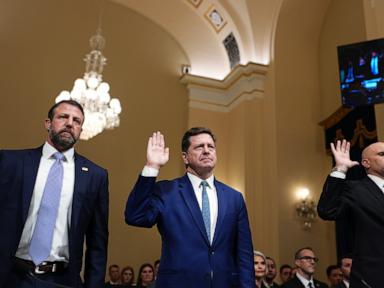
Yet that's exactly where Secretary Markwayne Mullin ended up on Saturday, November 14, 2026. Less than a day after a historic Federal Aviation Administration communications meltdown paralyzed U.S. airspace, Mullin boarded a government aircraft in Washington, D.C., and flew to Baton Rouge to watch the LSU Tigers take on the Texas Longhorns. By Wednesday, November 18, he was sitting before the House Homeland Security Committee defending the decision under oath. If you enjoyed this post, you might want to check out: this related article.
His defense wasn't just tone-deaf. It exposed a glaring disconnect between how Washington elites navigate infrastructure failures and how everyday taxpayers experience them.
The Timeline Behind the November 2026 Ground Stop
To understand why Mullin's trip sparked bipartisan outrage, you have to look at what happened to the national airspace system on Friday, November 13. For another perspective on this development, refer to the recent update from BBC News.
At roughly 3:30 p.m. ET on Friday afternoon, the FAA suffered a severe telecommunications failure. Investigators later traced the chaos to a router configuration issue during an L3Harris equipment upgrade at a radio communications site in El Dorado, Arkansas, and a radar facility in Amarillo, Texas. The malfunctioning equipment flooded the FAA network with roughly 1,000 connection attempts every four to five seconds, overloading air traffic control communications.
For the first time since the September 11 terrorist attacks, the FAA issued a nationwide ground stop.
For four hours and 25 minutes—from 20:54 UTC to 01:19 UTC—commercial departures across the United States came to a dead halt. Flights from 42 Eurocontrol member states bound for the U.S. were suspended. Over 4,000 airborne planes had to be safely guided down while airport concourses turned into makeshift campgrounds.
Even after the FAA lifted the ground stop Friday night, the aviation system didn't magically snap back to normal. Airlines spent the entire weekend digging out of a massive operational hole. According to FlightAware tracking data, carriers logged more than 9,000 canceled flights and 7,000 delays. Commercial crews were out of position, aircraft were stranded at the wrong hubs, and regular families were scrambling for rental cars or burning savings on last-minute hotel rooms.
That was the backdrop when Mullin climbed aboard his government jet on Saturday morning.
Why Mullin Claimed Canceling Would Have Caused Confusion
When House Homeland Security Committee Ranking Member Bennie Thompson pressed Mullin on the optics of the trip during Wednesday's hearing, Mullin didn't apologize. Instead, he rolled out a public-relations excuse that raised eyebrows across Capitol Hill.
Mullin told lawmakers he had weighed canceling the trip around 10 a.m. Saturday. Ultimately, he decided against it because the airspace had been reopened for nearly 24 hours—or 21 hours, as he earlier told CNBC.
"If we canceled something with the airspace completely open, it could bring confusion because I was meeting the governor there," Mullin testified. "I was meeting other people there that would show maybe distrust that we're not even willing to fly."
Let's unpack that logic for a second.
Nobody in Baton Rouge was tracking the DHS Secretary's personal Saturday itinerary to decide whether commercial aviation was safe. Travelers weren't afraid to fly—they literally couldn't get on planes because commercial airlines were still canceling thousands of flights to untangle the Friday backlog. Suggesting that skipping a college football game would trigger a nationwide crisis of confidence in aviation safety doesn't pass the straight-face test.
The Niece Defense and the Hypocrisy Counterattack
Realizing the "public confidence" argument wasn't landing, Mullin quickly pivoted to family loyalty and political counterpunching.
He told Thompson the trip had been planned weeks in advance because he "wanted to be a good uncle and take my little niece who's never been to an LSU game, and she's a huge LSU fan, to a game".
Then he went on the offensive against the committee's Democrats. Mullin accused lawmakers of manufacturing outrage while routinely abusing travel perks themselves. He argued that members of Congress would have taken the exact same trip, labeled it a campaign event, paid for it with campaign funds, or leaned on a state university for free tickets. "This hypocrisy has got to stop if you actually want to look at oversight," Mullin snapped during the exchange.
Even fellow Republicans weren't buying it. Former GOP Representative Barbara Comstock blasted Mullin publicly, questioning why the DHS chief was hanging out in a luxury suite while ordinary travelers slept on airport floors.
Government Aircraft Rules vs. Real-World Optics
To be fair to Mullin on one narrow technical point, his use of a government plane wasn't illegal.
Under federal continuity-of-government protocols, the Secretary of Homeland Security is required to travel on government aircraft equipped with secure communications systems. Even when a cabinet official takes a vacation or attends a family event, they can't simply hop on a commercial Delta or United flight without compromising their ability to respond to a national security emergency.
Here is how those rules actually work in practice:
- Mandatory Secure Transport: Cabinet officials in the national security chain must remain reachable via encrypted channels at all times, which mandates military or DHS executive aircraft.
- Commercial Fare Reimbursement: When a trip is personal rather than official business, the official must reimburse the U.S. Treasury. However, they don't pay the actual $10,000-plus per hour operating cost of a Gulfstream jet—they only pay the equivalent of a standard commercial coach or first-class ticket.
- The Schedule Immunity Advantage: Because Mullin flies on a dedicated government aircraft operated by military or DHS crews, he never faces commercial gate cancellations, crew-rest bottlenecks, or rebooking queues.
Mullin repeatedly emphasized that he reimbursed the government for the personal flight, though neither he nor DHS immediately released the exact dollar amount.
Having legal permission to fly doesn't mean exercising good judgment. While commercial passengers waited in 12-hour customer service lines, Mullin bypassed the entire broken system he had stood at a White House podium explaining just one day earlier alongside Transportation Secretary Sean Duffy.
The Bollinger Shipyards Suite Controversy
The flight itself was only half the problem. Once Mullin touched down in Baton Rouge, where did he watch the game?
Photos and reports confirmed Mullin watched the LSU-Texas matchup from a private luxury box belonging to Ben Bordelon, the CEO of Bollinger Shipyards.
That detail matters enormously for federal ethics oversight. Bollinger Shipyards is a major Louisiana defense and maritime contractor that finalized a massive $2.2 billion Coast Guard icebreaker contract with the Department of Homeland Security earlier in 2026. The U.S. Coast Guard falls directly under Mullin's authority at DHS.
When pressed by CNBC's Joe Kernen and later by lawmakers on Capitol Hill about sitting in a major agency contractor's suite, Mullin tried to distance himself from the arrangement. He claimed he had reached out to state officials and House Majority Leader Steve Scalise to secure tickets he intended to pay for personally, and "they put us in the suite". Mullin insisted no government business was discussed inside the box.
In Washington, ethics rules exist specifically to prevent the appearance of a conflict of interest, regardless of whether contracts get discussed between touchdowns. Accepting high-value luxury suite hospitality from a contractor holding a $2.2 billion award with your own department creates an immediate credibility problem.
Broader Questions About FAA Modernization and Cyber Resilience
Mullin's fiery exchanges over the football trip nearly overshadowed the actual purpose of the November 18 hearing: assessing worldwide threats and America's fragile critical infrastructure.
During the same week as the FAA ground stop, Americans dealt with a string of unsettling technical disruptions, including a major Microsoft outage and online banking glitches. Director of National Intelligence Jay Clayton, testifying alongside Mullin and FBI Deputy Director Christopher Raia, assured lawmakers that the November 13 aviation failure was caused by routine maintenance and technical configuration errors—not a coordinated cyberattack by a foreign adversary.
Still, the incident exposed how vulnerable U.S. aviation infrastructure remains.
During the hearing, Democratic Rep. LaMonica McIver confronted Mullin over his past congressional voting record, pointing out that he voted against the 2021 bipartisan infrastructure law, which allocated $5 billion specifically for FAA facilities and equipment. Mullin countered by noting his subsequent support as a U.S. senator for the FAA Reauthorization Act of 2024, which authorized $17.8 billion for FAA modernization through fiscal year 2028.
Meanwhile, more than 60 major aviation organizations—including Airlines for America, Boeing, and the U.S. Travel Association—have demanded Congress inject at least $30 billion more into air traffic control modernization, with a Senate Aviation Subcommittee hearing scheduled for December 2 to examine the El Dorado router failure.
How to Protect Yourself During Nationwide Ground Stops
Politicians will keep arguing over private jets and committee hearing soundbites, while everyday flyers remain stuck dealing with aging FAA routers. If another technical ground stop hits during the upcoming holiday rush, don't rely on airline gate agents to save your itinerary.
- Rebook via the airline app while walking to the customer service desk. Gate agents work off the exact same inventory system as the mobile app, and automated rebooking tools process seat assignments minutes faster than manual terminal entries.
- Know the Department of Transportation's controllable vs. uncontrollable rules. Because an FAA telecommunications failure is classified as an air traffic control issue outside the carrier's control, airlines aren't legally required to provide meal vouchers or hotel stays—making travel insurance or credit card trip-delay coverage essential.
- Track upstream inbound aircraft, not just your departure board. Use flight-tracking apps to see where your physical plane is coming from; if your inbound aircraft is trapped at an affected hub, book a backup refundable fare on a competing carrier immediately.
- File public comments ahead of the December 2 Senate Aviation Subcommittee hearing. Contact your House and Senate representatives to demand dedicated, ring-fenced funding for FAA telecommunications redundancy so a single malfunctioning router in Arkansas can't shut down the entire country again.
Watch the full exchange between Secretary Mullin and House lawmakers over the LSU flight and FAA ground stop in the House Homeland Security Committee hearing footage. This video shows Mullin's unedited testimony and the heated back-and-forth with committee members over government aircraft use and infrastructure outages.


