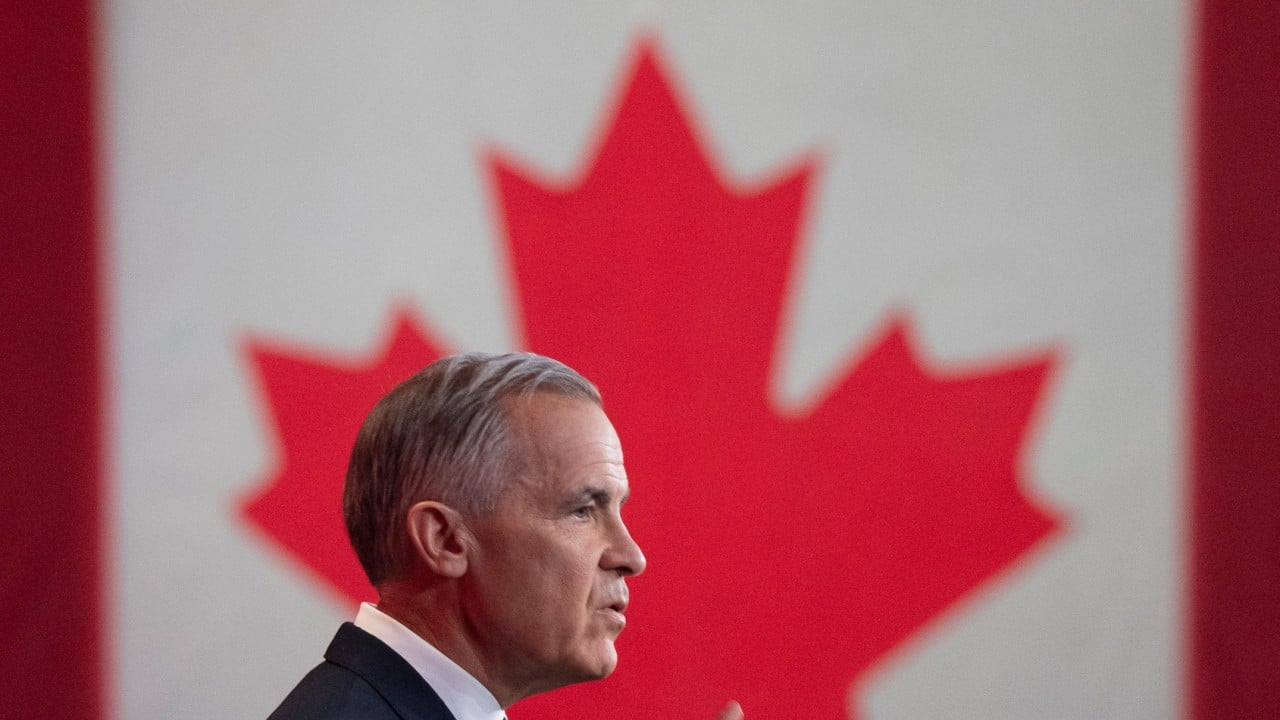
Mark Carney doesn't wait for permission. While most politicians spend their lives begging for a mandate, the former central banker just manufactured one from thin air. By sweeping three crucial byelections on Monday night, Carney’s Liberals have officially crossed the threshold into a majority government. It’s a feat that shouldn't be possible a year after a general election, yet here we are.
If you're looking for the moment the "Carney Era" truly began, this is it. He didn't just win seats in University-Rosedale, Scarborough Southwest, and Terrebonne; he fundamentally rewired the math of the House of Commons. Through a mix of strategic floor-crossings and surgical byelection strikes, Carney has transformed a precarious minority into a legislative bulldozer that can now run until 2029 without looking over its shoulder. For another look, consider: this related article.
The math of a manufactured majority
To understand how we got here, you have to look at the sheer audacity of the Liberal play over the last few months. After the 2025 election left them three seats short of a majority, Carney didn't just play nice with the NDP to survive. He went shopping.
He successfully courted five opposition MPs to cross the floor—four of whom came directly from Pierre Poilievre’s Conservatives. That’s not just a talent grab; it’s a decapitation strike on the opposition’s morale. By the time Monday's polls opened, the Liberals were sitting at 171 seats. They only needed one more for the magic 172. They got three. Further reporting on this matter has been shared by Al Jazeera.
- University-Rosedale: Danielle Martin, a high-profile physician, crushed the competition to claim seat 172.
- Scarborough Southwest: Doly Begum, poached from the provincial NDP, proved that Carney’s "big tent" has plenty of room for former social democrats.
- Terrebonne: The real shocker. In a riding the Bloc Québécois thought they owned, the Liberals eked out a win by a razor-thin margin, proving the Carney brand actually travels in Quebec.
This isn't just about more seats. It’s about total control. Committees, legislative calendars, and confidence votes—the things that usually keep a Prime Minister awake at night—just became non-issues for the Liberal front bench.
Why the anti Trump coalition is actually working
Conservative Leader Pierre Poilievre is calling this a "betrayal" and a "backroom deal." He’s not entirely wrong. But his outrage is missing the point. Carney has successfully framed his government as the only thing standing between Canada and a volatile United States.
The "anti-Trump coalition" label isn't just a slur from the opposition; it’s a strategic identity Carney has leaned into. While the U.S. President talks about annexing Greenland or threatening trade wars, Carney has positioned himself as the "adult in the room." His Davos speech earlier this year—where he basically told the world that Canada won't be bullied by "great power rivalry"—was the turning point. It gave those five floor-crossers the moral cover they needed to jump ship.
People are tired of the chaos. Carney’s shift to a "value-based realism" (a term he borrowed from Finnish President Alexander Stubb) appeals to voters who want tax cuts and business investment but don't want the populist circus that comes with the modern right. He’s moving the Liberals to a center-right economic position while keeping the progressive social guardrails, and the results show that it’s a winning formula for the suburbs of Toronto and Montreal.
The risk of a hollow mandate
There’s a danger here, and it’s one Carney knows well from his days at the Bank of England. When you have too much power and no effective opposition, you get sloppy.
This majority wasn't won in a single national conversation. It was assembled piece by piece through defections and hyper-local byelections. There is a legitimate question about whether the Canadian public actually wants a Liberal majority, or if they just didn't want the alternatives. If Carney uses this new power to push through massive, transformative changes without a broader consensus, he risks a massive backlash in 2029.
Right now, he’s ignoring the critics. He isn't even holding a victory press conference. Instead, he’s heading to a hockey practice with the PWHL's Ottawa Charge and meeting with the President of Finland. It’s a classic Carney move: project calm, stay busy, and act like the result was inevitable.
What you should watch for next
The honeymoon will be short. Now that Carney has the votes, he has no more excuses. Watch for these three things in the coming weeks:
- The Budget: Expect an aggressive pivot toward "strategic autonomy"—massive investments in AI, critical minerals, and defense spending to decouple Canada from U.S. volatility.
- Trade Deals: With the majority secure, Carney will likely finalize the "bridge" between the Trans-Pacific Partnership and the EU, trying to create a massive trading bloc that bypasses Washington.
- Internal Friction: The Liberal caucus is now a weird mix of old-school Trudeau loyalists, center-right defectors, and former NDP stars. Keeping that group from eating itself will be a full-time job.
If you’re a business owner or an investor, the message is clear: the era of parliamentary gridlock in Ottawa is over. For the next three years, what Carney wants, Carney gets. Don't expect him to be subtle about using it.


