Geographic concentration combined with state-fragmented enforcement creates predictable operational vulnerabilities for commercial shipping transiting the Bab el-Mandeb strait and the Gulf of Aden. When two merchant vessels carrying twenty-two Indian nationals were seized by armed actors off the coast of Yemen and Somalia, mainstream media reports framed the incidents as isolated security anomalies. This framing fundamentally misreads the operating environment. Maritime hijackings in this corridor function as predictable economic extraction strategies driven by institutional collapse ashore, minimal naval resource allocation ratios, and systemic incentives within the global cargo transit architecture.
Understanding this threat requires dismantling the narrative of random piracy. Commercial transit through the Red Sea corridor operates under tight margin constraints where fuel efficiency and schedule integrity dictate profitability. Threat actors exploit the narrow geographic funnel of the Bab el-Mandeb, where traffic compression forces vessels to reduce speed and navigate predictable lanes. By analyzing the structural mechanics of these seizures, logistics operators and risk management teams can move beyond reactive crisis management toward predictive risk mitigation.
The Tripartite Driver Matrix of Maritime Seizures
The persistence of armed boarding operations off the Horn of Africa and the southern Arabian Peninsula rests on three distinct structural pillars. Each pillar reinforces the others, creating a self-sustaining ecosystem of maritime extortion.
Institutional Collapse and Territorial Safe Harvens
Onshore governance deficits provide the foundational layer for maritime threat operations. Operating a high-seas boarding action requires logistical staging areas, small-boat maintenance facilities, communication arrays, and secure holding locations for detained crews. The prolonged civil conflicts in Yemen and the persistent regional authority vacuums in central and southern Somalia eliminate the risk of law enforcement interdiction on land.
Without terrestrial sovereignty enforced by functioning state apparatuses, pirate networks operate with impunity from coastal enclaves. When a vessel is seized, the tactical success does not depend on sophisticated naval architecture or advanced military hardware. It relies entirely on the security of the ashore redoubt where stolen assets and hostages can be sequestered while ransom negotiations proceed.
The Vessel Vulnerability Profile
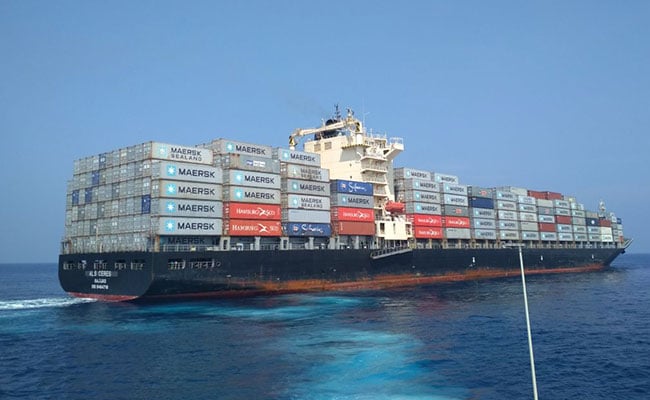
Commercial cargo ships and bulk carriers present an asymmetric target profile for lightly armed aggressors. Standard container vessels and bulk carriers operate with lean skeleton crews, often numbering between twenty and thirty personnel, to minimize operational overhead. This crewing model means vessel security cannot rely on active armed defense without specialized private security contractors on board.
Freeboards—the distance from the water line to the main deck—on modern bulk carriers are frequently low enough in ballast conditions to permit grappling hooks and aluminum extension ladders. The kinetic energy required to board a moving vessel is low when the target speed remains under fifteen knots. Threat actors deploy skiffs powered by high-capacity outboard motors, approaching from the stern quarter where radar signatures and visual watchkeeping arcs are least effective.
The Economics of Ransom and Delay
The financial calculus governing maritime seizures relies on the high daily operational costs of commercial shipping assets. A modern capesize or panamax vessel incurs thousands of dollars per day in charter hire rates, fuel costs, and insurance penalties. When a vessel is delayed or detained, the financial loss accumulates rapidly for the shipowner and charterer.
Insourcers and underwriters calculate that paying a ransom often represents a lower financial expenditure than enduring a prolonged legal blockade, vessel damage, or the total loss of a multi-million-dollar cargo manifest. This economic reality underwrites the entire enterprise. As long as ransom payouts remain lower than the systemic cost of hardened vessel protection across the entire global fleet, the financial incentive for boarding operations persists.
The Cost Function of Naval Deterrence
Naval protection in international waters operates under severe resource constraints. The naval coalition forces patrolling the Gulf of Aden and the Western Indian Ocean face an expansive operational theater with finite assets.
The Asset-to-Area Ratio Problem
Protecting millions of square nautical miles of open ocean with a limited number of guided-missile destroyers, frigates, and support vessels creates an impossible asset-to-area ratio. A single warship can effectively secure a localized corridor, but it cannot maintain a continuous physical presence across every transit lane.
Pirates and armed militias exploit this spatial deficit through tactical dispersion. By monitoring naval radar signatures and Automatic Identification System broadcasts from coalition patrols, threat actors time their operations to coincide with gaps in regional security coverage. The response time of a military vessel responding to a distress call often exceeds the duration required for a well-drilled boarding party to secure the bridge of a merchant ship.
The Escalation Gradient and Rules of Engagement
Naval forces operating under international law face strict legal and operational limitations regarding the use of force against non-state actors in contested regional waters. Rules of engagement frequently require definitive proof of hostile intent before kinetic countermeasures can be deployed.
Threat actors routinely exploit this legal threshold by masquerading as local fishermen until the final phase of an approach. By maintaining ambiguous operational profiles until they are within striking distance, boarding teams minimize the window during which naval escorts can intervene without risking collateral damage to the commercial crew.
Systemic Vulnerabilities in Crew Deployments
The human element remains the primary pressure point in maritime extortion schemes. The nationality profile of global seafaring labor heavily influences the risk calculus of both shipowners and threat actors.
The Reliance on Developing Nation Labor
A significant percentage of the global merchant marine workforce originates from developing nations, including India, the Philippines, and Eastern European countries. These mariners accept employment in high-risk zones due to wage differentials and limited domestic economic opportunities.
When citizens of a specific nation are targeted in a hijacking, diplomatic channels activate immediately. Governments face intense domestic political pressure to secure the release of their nationals. Threat actors leverage this political sensitivity, calculating that foreign ministries will pressure shipowners to expedite negotiations rather than risk the safety of their citizens.
Communication Blackouts and Information Asymmetry
During an active boarding event, the immediate priority for the ship's master is to transmit a distress alert via Ship Security Alert Systems and establish contact with maritime security operations centers. However, threat actors have adapted by targeting communication infrastructure immediately upon gaining access to the bridge.
The severing of satellite communication links and the confiscation of personal devices create an information black hole. This asymmetry impedes real-time tactical intelligence gathering by naval rescue forces, forcing commanders to rely on delayed telemetry and speculative assessments rather than direct situational awareness.
Tactical Defenses and Hardened Operations
Mitigating the risk of vessel seizures requires moving away from reliance on broad naval patrols and toward hardening individual maritime assets. Shipowners must implement structural countermeasures that alter the cost-benefit analysis for potential attackers.
Passive Hardening Techniques
Upgrading vessel defenses involves implementing physical deterrents that increase the time and physical effort required to board a ship.
- Razor wire deployment along the main deck perimeter prevents immediate scaling from low freeboard points.
- Citadel construction creates a secure, reinforced panic room within the vessel's hull where the crew can retreat, disabling the ship's propulsion and steering from within while maintaining encrypted communication with naval authorities.
- Water cannon positioning along the ship's rails uses high-pressure streams to destabilize approaching skiffs and flood their hulls before boarding can occur.
Active Surveillance Integration
Relying on human lookouts alone leaves vessels blind during periods of low visibility or night transits. Integrating thermal imaging cameras, radar motion-detection software, and acoustic hailing devices allows crews to detect small-boat approaches at extended ranges, providing the necessary lead time to initiate evasive maneuvers or muster security teams.
Operational Execution Protocol for High-Risk Transits
To neutralize the operational advantages currently exploited by armed groups in the Gulf of Aden, maritime operators must transition to a standardized risk-mitigation framework.
- Pre-Transit Route Optimization: Adjust transit corridors to maximize distance from known staging grounds on unstable coastlines, even when it incurs a marginal penalty in fuel consumption.
- Mandatory Security Team Deployment: Integrate certified private armed security teams on all vessels operating within designated High-Risk Areas, ensuring an immediate kinetic deterrent capability on deck.
- Citadel Protocol Readiness: Conduct rigorous monthly drills ensuring the entire crew can secure themselves within the designated safe room in under three minutes following an alarm trigger.
- Vessel Hardening Compliance: Verify that all physical barriers, including razor wire arrays and water-ballast manipulation systems, are fully operational before entering the Bab el-Mandeb approach vectors.
- Continuous Telemetry Monitoring: Maintain encrypted, redundant reporting channels with regional maritime security coordination centers throughout the duration of the transit window.