The dirt road outside Khon Kaen does not look like the beginning of an orbital highway.
Red dust kicked up by a passing motorbike settles on the leaves of cassava plants, baking under an indifferent midday sun in northeastern Thailand. It is quiet here. The kind of quiet that makes the modern obsession with low-earth orbit feel like a fairy tale whispered in another language. Yet, fifty feet above this sleepy stretch of asphalt, an invisible web is tightening.
Data streams down from vacuum at seventeen thousand miles per hour, slicing through the troposphere to land on a small satellite dish bolted to the roof of a concrete cooperative building. It carries grain prices, weather patterns, and the coordinates of a dry spell seventy miles to the south.
For decades, the sky belonged to a very small club. If you wanted to look down at your own crops, map your own borders, or secure your own communications network, you wrote a massive check to Washington or Moscow, or later, to European conglomerates. You waited years for a slot on a manifest. You stood in line.
Then the floor dropped out of the economics of gravity.
To understand what happened when Thailand signed its recent commercial space agreement with Chinese aerospace contractors, you have to stop looking at the maps drawn in Beijing or Bangkok and look instead at the red dirt in Khon Kaen. Ground-level reality has changed. Small nations that were once mere spectators in the great theater of geopolitics are now buying tickets to the show.
Gravity used to be an anchor. Now, it is a utility.
Consider the engineer. Let us call him Somchai. (This is a hypothetical scenario designed to illustrate a very real operational shift.) Somchai spends his mornings wrestling with diesel water pumps that have given up the ghost for the third time this season, and his afternoons staring at telemetry dashboards fed by remote-sensing payloads orbiting hundreds of miles overhead. He does not care about geopolitical friction or trade balance sheets. He cares about whether the reservoir twenty miles up-river is holding enough water to keep his neighbors from losing their livelihoods before the monsoon hits.
When a state signs a commercial space contract today, it is rarely about planting flags. It is about water pumps. It is about broadband in classrooms where textbooks are twenty years out of date. It is about knowing, with absolute mathematical certainty, where a typhoon is going to touch down before the wind even starts to strip the tin roofs from the barns.
The deal sealed between Thai entities and Chinese commercial space providers is the latest stitch in this planetary fabric. It is easy for Western commentators to view these transactions through the frosted glass of cold war nostalgia. They look for military silos in every telemetry station. They sniff for hegemony in every ground-control contract.
They are missing the story.
The story is that space has become cheap enough to be desperate for customers.
When the cost of launching a kilogram into orbit plummeted over the last decade, it created an awkward problem for the companies building the rockets. They had capacity. Mountains of it. If you build a thousand reusable boosters, you need a thousand payloads. If you build global networks of earth-observation satellites, you need a thousand nations willing to plug into your ground stations and buy your data feeds.
So the market expanded outward, seeking out nations that were tired of being left off the map.
Thailand’s entry into this expanded footprint is not an ideological conversion. It is pragmatism wearing a space helmet. For years, the kingdom has sought to modernize its agricultural output, streamline its logistics corridors, and build resilient digital infrastructure across mountainous terrain and dense jungles where stringing copper wire is an exercise in financial madness.
Satellites do not care about jungle canopies. They do not send maintenance crews into mosquito-infested swamps to fix downed lines. They simply pass overhead, unblinking and indifferent, sweeping up gigabytes of multispectral imagery and beaming it down to anyone who paid the subscription fee.
There is a profound vulnerability in this new arrangement, of course. To rely on someone else's rockets and orbital constellations is to trade one form of dependency for another. In the old days, you depended on foreign oil or foreign steel. Today, you depend on foreign math, foreign frequency allocations, and foreign hardware that sits permanently out of reach, spinning silently in the dark.
Ask any telecom operator in Bangkok about the sleepless nights that come with managing network sovereignty in an era of mega-constellations. They will tell you that the hardest part of space exploration isn't building the rocket. It is keeping your data out of jurisdictions you cannot control.
Yet the alternative is worse. The alternative is silence. In the twenty-first century, to be disconnected from orbital infrastructure is to be economically blind. A country that cannot map its own soil from above will soon find itself farming at the mercy of those who can.
This is why the deal matters. It is a symptom of a fracturing, decentralizing world where middle-income countries are no longer willing to wait in the antechamber of technological progress. If traditional Western partners are too slow, too bound by red tape, or too expensive, the market simply offers another door. And business, as it always has, finds a way through it.
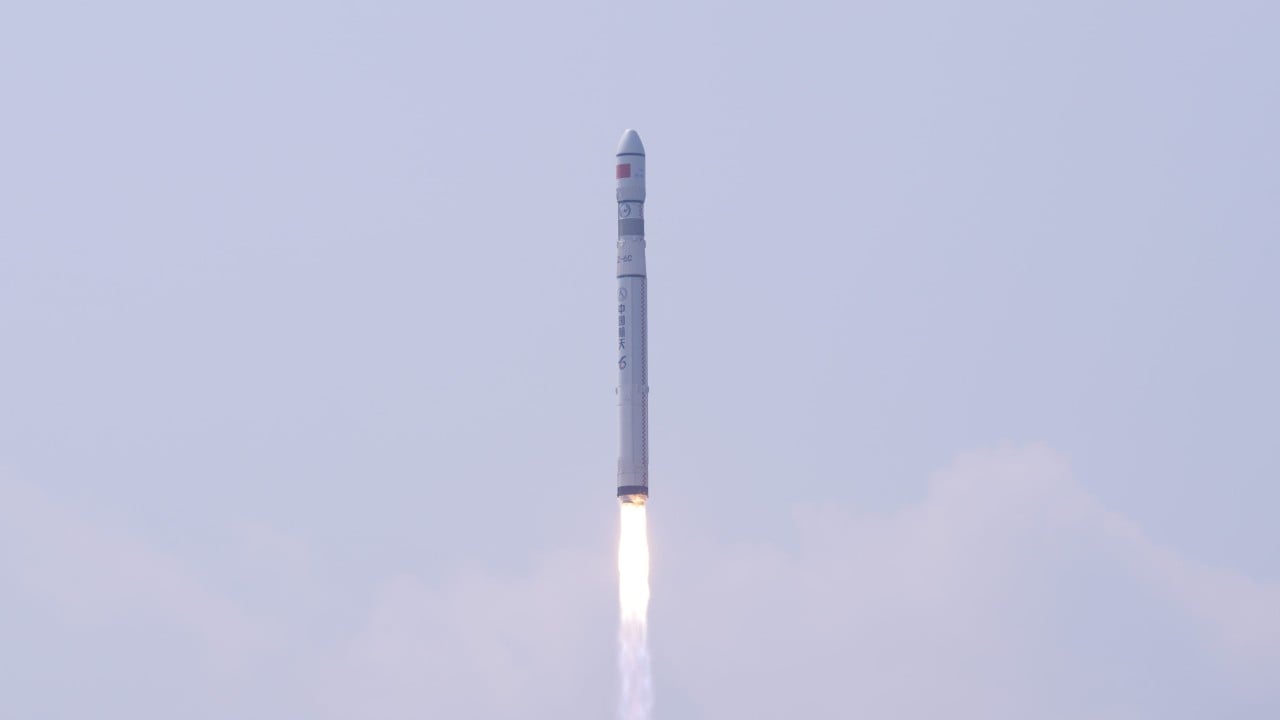
Back in Khon Kaen, Somchai wipes the grease from his hands with a rag and checks his tablet. The screen updates. A fresh high-resolution image of his district, captured ninety minutes ago by a satellite launched from a coastal pad thousands of miles away, confirms that the northern canal is flowing.
He doesn't know the name of the rocket that put the lens up there. He doesn't know the corporate structure of the consortium that negotiated the telemetry rights. He only knows that for the first time in his life, the sky is working for him.
The launchpads are rusting in the history books, monuments to an older, heavier age of national prestige. The real action has moved to the ground stations, the data markets, and the quiet agreements signed in air-conditioned boardrooms where the future is priced by the gigabyte.
The sky is crowded now. And everyone wants a window seat.



