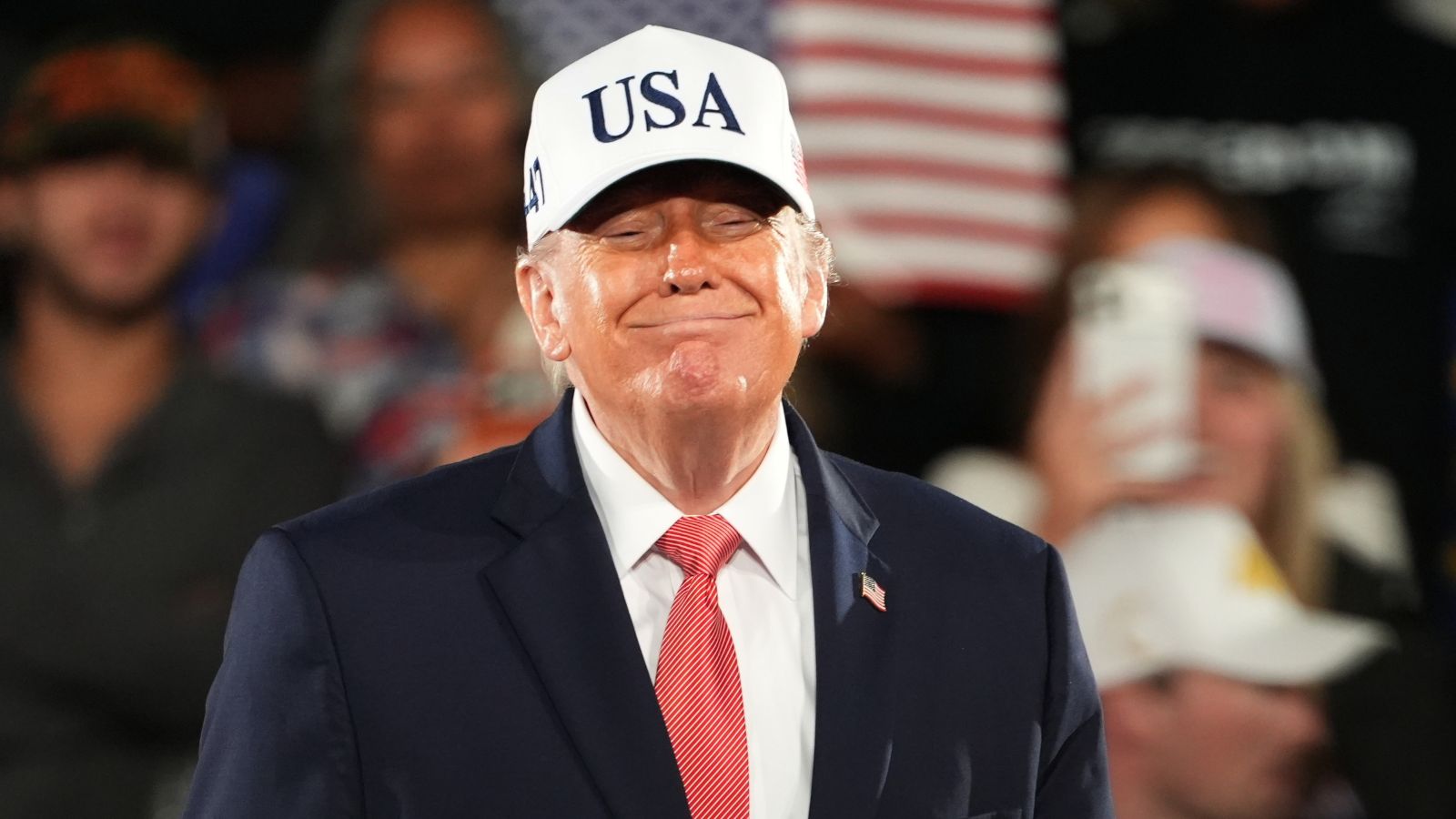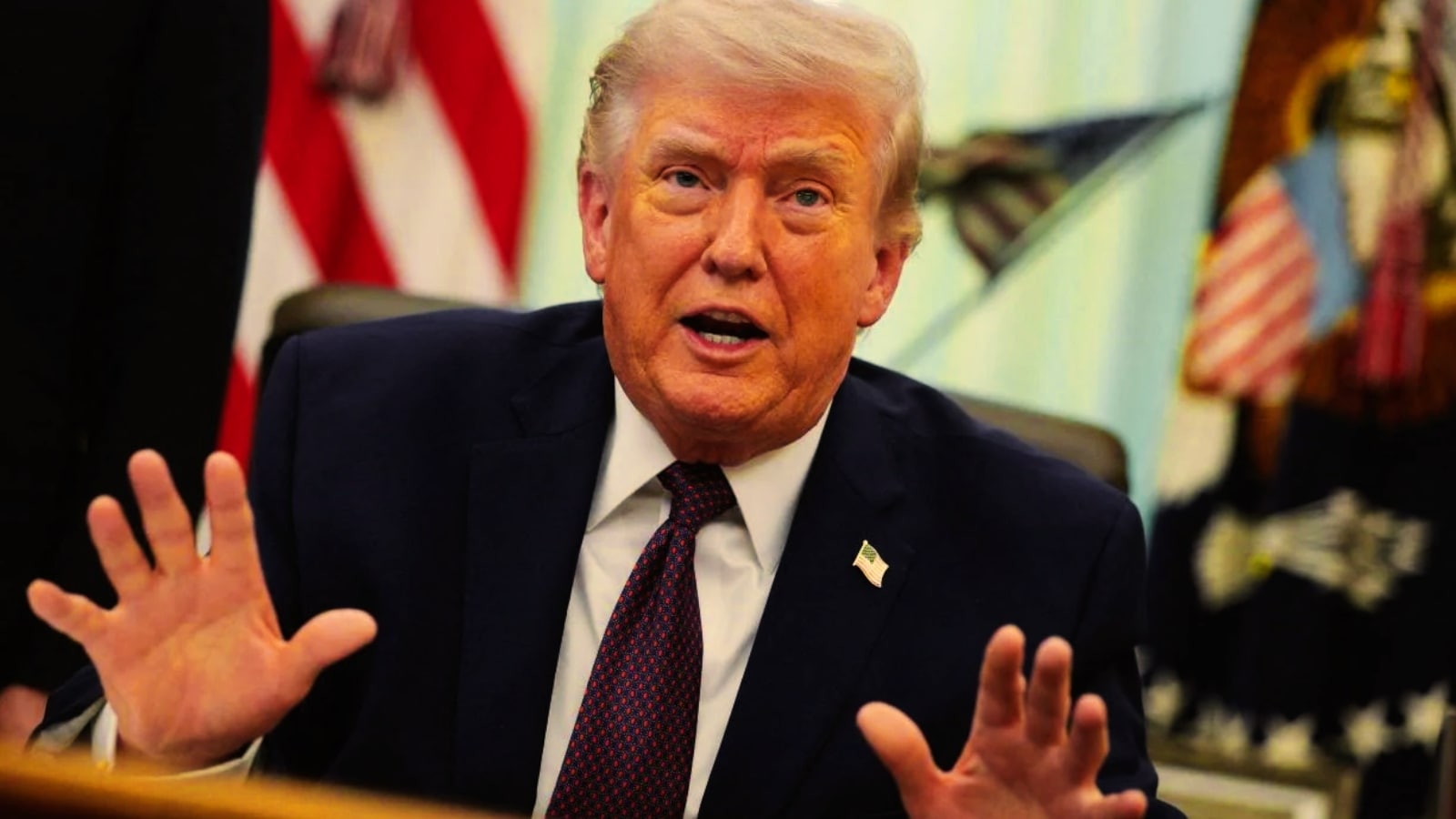
A phone rings on a glass table in a quiet room far removed from the cold mud of Eastern Europe. Thousands of miles away, an old man in a tailored suit looks at a microphone, adjusts his posture, and delivers a sentence that instantly shifts the geopolitical weight of the world.
The statement is simple on the surface. Donald Trump declares that Volodymyr Zelenskyy has to want to settle this war. He points to the map, noting the vast, quietly expanding swaths of territory Russian forces have steadily carved out over months of grinding conflict. You might also find this similar coverage interesting: Inside the Whistleblower Program Clash Nobody Is Talking About.
To the casual observer scanning headlines over morning coffee, it reads as standard political rhetoric. Another volley in the endless cycle of commentary surrounding the war in Ukraine. But strip away the cables, the press release buzzwords, and the tactical briefings, and you are left with something much rawed: a brutal friction between two fundamentally incompatible views of reality.
On one side sits the arithmetic of raw power, realpolitik, and cold spatial reality. On the other stands the unyielding human weight of sovereignty, national identity, and the existential horror of surrendering one's home. As discussed in recent coverage by NBC News, the implications are worth noting.
The Cold Logic of the Ledger
In the air-conditioned corridors where international trade deals and armistices are negotiated, conflict eventually devolves into geometry. Lines on a digital map. Percentages of arable land lost. Numbers on a balance sheet tracking artillery shell expenditure against industrial capacity.
From this vantage point, the logic presented is disarmingly straightforward. Russia possesses a massive demographic footprint, a war economy firing on all cylinders, and a territorial foothold that grows inch by bloody inch. Every week the battle lines harden, the cost of reclamation spirals upward, and the appetite among Western patrons for endless financial lines of credit begins to fray at the edges.
When a leader says a settlement must be wanted, they are invoking the pragmatic calculus of political realism. They are speaking to an audience tired of friction, looking at a ledger that refuses to balance, and asking a blunt question: How long can a nation fight against a larger neighbor when the front line refuses to move backward?
It is a perspective built entirely on outcome over process. It treats land not as a sanctuary where children grow up, but as bargaining chips on a high-stakes table.
The Weight of the Dirt
Step away from the air-conditioned rooms and stand for a moment in a cellar near Pokrovsk.
Consider a hypothetical resident—let us call her Olena. She is sixty-two years old. Her hands are rough from decades spent working in a local bakery, and her entire world exists within a five-mile radius of a river that now marks a military zone. When high-level observers talk about "Russian territorial gains," they are talking about the street where her daughter went to primary school. They are talking about the graveyard where her husband is buried under a simple wooden cross.
For Olena, and for millions like her, land is not an abstract political concept. It is not something to be trimmed off the edge of a map to buy a temporary pause in heavy gunfire.
This is the invisible wall that every diplomatic initiative crashes into. When Western commentators discuss concessions as if they were simple corporate restructuring moves, they overlook the psychological cost of what is being asked. To yield territory in exchange for a signed piece of paper—when recent history has shown how easily signed papers vanish under artillery fire—feels to those living on the ground less like peace and more like an organized, delayed execution.
Zelenskyy’s reluctance to simply step up to a table and sign away territory isn't merely personal stubbornness or political theatricality. It is a reflection of a collective national trauma. How do you tell a populace that has sacrificed an entire generation of young men and women that the soil they died defending was simply a negotiable asset all along?
The Illusion of the Frozen Instant
We naturally lean toward quick fixes. Human psychology craves resolution; we hate open loops. When a conflict drags into its third year, the global collective consciousness experiences a profound fatigue. The news notifications are swiped away. The fundraising dinners grow sparse. The urge to simply make it stop—by whatever means necessary—becomes overwhelming.
This desire fuels the belief that a quick agreement can freeze time, locking the world back into a comfortable equilibrium.
But history is a relentless teacher, and its primary lesson is that freezing a fire does not put it out.
Look back at the geopolitical miscalculations of the last century. Peace imposed purely by exhaustion, without resolving the underlying driver of aggression, rarely holds. It acts as an intermission. It grants the aggressor time to rebuild, rearm, and digest their gains before looking toward the next horizon.
When territorial gains achieved through unprovoked invasion are validated at a bargaining table, it sends a quiet, unambiguous message across the globe: the international order is flexible, provided you have enough heavy armor to bend it.
The Silence After the Statements
The headlines will change by tomorrow morning. New soundbites will displace the old ones. Politicians will issue clarifications, spokespeople will craft diplomatic damage control, and pundit panels will debate the electoral implications of every single word.
Yet far away from the cameras, the reality remains stark and unchanged.
The mud in the trenches is still freezing. The drones still hum overhead in the grey skies of the Donbas. And the fundamental question hanging over the modern world remains unanswered: Is global order defined by the rule of law, or is it defined by the sheer length of a conqueror's reach?
Until that question is answered, the maps will keep shifting, the speeches will keep echoic through silent rooms, and people like Olena will sit in dark cellars, listening to the thunder outside, waiting to find out if the place they call home will still belong to them when the sun comes up.