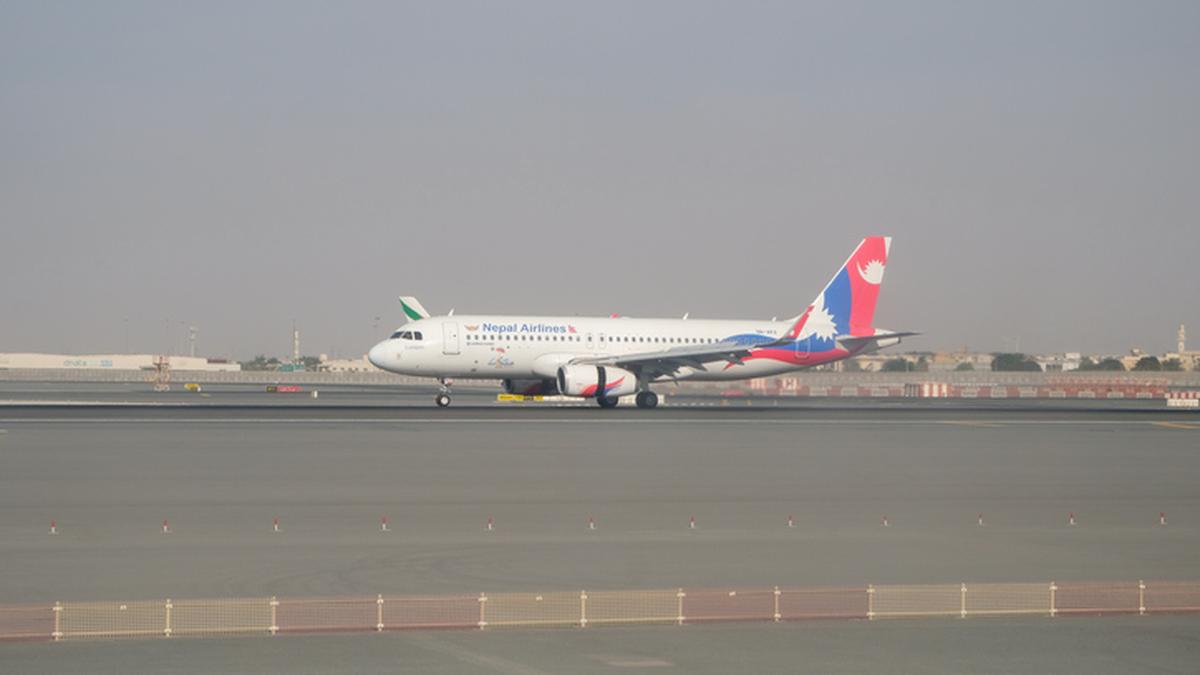
Nepal Airlines just issued a groveling apology because a "network map" accidentally clipped Jammu and Kashmir into Pakistan. The internet did what it does best: it caught fire. Critics called it a diplomatic failure. Nationalists called it a betrayal. The airline called it a "technical glitch."
They are all wrong.
The obsession with cartographic "accuracy" in the airline industry is a vanity project that masks a much deeper, uglier reality about how global business actually functions. We are screaming about lines on a 2D image while ignoring the fact that borders, in the context of modern aviation, are increasingly becoming fictional constructs maintained only for the sake of fragile egos and bureaucratic theater.
The Cartographic Illusion
Every time a map "error" happens, the media treats it like a freak accident. It isn't. It is the inevitable result of trying to impose static, political certainties onto a fluid, digital world.
Maps are not reality. They are arguments.
When an airline pulls a base map from a third-party API or a legacy graphic designer in a basement, they aren't making a geopolitical statement. They are choosing the path of least resistance. The outrage assumes that there is a "correct" map sitting in a vault somewhere that everyone has agreed upon.
There isn't.
If you log into a server in Islamabad, the map looks one way. If you log in from New Delhi, it looks another. If you’re in Beijing, a third reality appears. We live in a world of Geospatial Relativism.
Expecting a mid-tier national carrier to solve a territorial dispute that has stumped the United Nations for 70 years is more than just optimistic—it’s delusional. Nepal Airlines didn't "fail" at geography. They failed at the performance of compliance.
The High Cost of Papering Over Friction
The industry spends millions of dollars every year on "sensitivity reviews" for maps, menus, and in-flight magazines. I have sat in boardrooms where grown men debated the exact shade of purple used to denote a disputed border for three hours.
This is wasted energy.
The "lazy consensus" says that airlines must be neutral arbiters of geography. I argue that neutrality is a trap. By trying to please everyone, you ensure that you will eventually offend everyone. The moment you fix the map for one market, you trigger a boycott in another.
The real fix isn't a "better map." The real fix is acknowledging that maps are marketing materials, not treaties.
Stop Asking if the Map is Right
People always ask: "How could they miss such a glaring error?"
Wrong question. The right question is: "Why are we still using 19th-century colonial boundaries to define 21st-century movement?"
In aviation, the only borders that matter are Flight Information Regions (FIRs). These are the blocks of airspace managed by specific air traffic control centers. They rarely align perfectly with the jagged, blood-soaked lines drawn on the ground by departing empires.
When you fly, you aren't flying over "India" or "Pakistan" in the way a politician defines them. You are moving through a series of handoffs between controllers. The "network map" you see on the seatback screen is a cartoon version of reality designed to keep you calm. It has as much to do with actual navigation as a Monopoly board has to do with real estate development.
The Myth of the "Technical Glitch"
Nepal Airlines blamed a "technical glitch." Let’s call that what it is: a lie.
A glitch is a bug in the code. A map showing J&K as part of Pakistan is a data source selection. Someone, somewhere, downloaded a vector file from a source that didn't share your specific nationalist outlook.
By calling it a glitch, the airline is trying to escape accountability for their own supply chain. This is the same "technical glitch" excuse used by tech giants when their algorithms accidentally promote hate speech or erase a country from a search result.
It isn't a glitch; it’s a reflection of the data's origin. Most global mapping data is produced by companies that prioritize "de facto" control over "de jure" claims. If a group controls the ground, the map often follows. This is cold, hard pragmatism. It’s ugly, but it’s how the world works when you aren't trying to win a domestic election.
The Unconventional Truth About Sovereignty
If we actually cared about sovereignty, we wouldn't be looking at airline maps. We would be looking at the bilateral agreements that allow these planes to fly in the first place.
Nepal is a landlocked nation. Its aviation industry is a hostage to the whims of its neighbors. For Nepal Airlines, a map "error" isn't just a PR blunder; it is a direct threat to their landing rights. They apologized not because they realized they were "wrong," but because they realized they were vulnerable.
This is the Asymmetry of Outrage. A massive carrier like Emirates or Delta can survive a map scandal with a shrug and a press release. A struggling national carrier like Nepal Airlines, already plagued by safety concerns and fleet issues, can be crippled by it.
The outrage isn't about geography. It's about power.
Forget the Map, Watch the Money
While the internet was busy dissecting the pixels of a network map, they missed the actual story. Nepal Airlines is fighting for its life in a market dominated by Gulf giants and low-cost carriers.
A map error is a distraction. It’s a shiny object for nationalists to chase while the actual infrastructure of the airline—its safety record, its aging fleet, its mounting debt—remains in shambles.
If you want to be a "sharp" observer of the industry, stop looking at where the lines are drawn. Look at where the fuel is bought. Look at who owns the debt on the planes. Look at which countries are granting the Fifth Freedom rights.
The Death of the General Purpose Map
The era of the "one-size-fits-all" map is dead.
Forward-thinking companies are moving toward Dynamic Cartography. This means the map changes based on who is looking at it. It is the ultimate act of corporate cowardice, but it is the only way to survive in a hyper-nationalist digital age.
- Scenario A: You open the app in Delhi. J&K is Indian.
- Scenario B: You open the app in Islamabad. J&K is Pakistani.
- Scenario C: You open the app in London. The borders are dotted and labeled "Disputed."
This is the future. It is a fragmented, customized reality where the "truth" is whatever makes the user feel most comfortable so they don't cancel their ticket.
Is it dishonest? Yes.
Is it effective? Absolutely.
The Actionable Order
Stop participating in the performance of outrage.
The next time a brand "misrepresents" a border, don't tweet about it. Don't call for a boycott. Instead, realize that you are looking at a crack in the facade of globalism. You are seeing the moment where the friction of the real world—the blood, the history, the stubbornness of geography—breaks through the clean, sterile interface of a corporate app.
The map didn't fail. It just showed you a version of the world you weren't supposed to see.
If you are an executive at an airline, stop apologizing. Own the complexity. Or better yet, remove the political maps entirely. Show the weather patterns. Show the wind speeds. Show the curvature of the earth.
Physics doesn't care about your borders. Neither should your "network map."
The apology from Nepal Airlines was the most honest part of the whole saga: it proved that in the business of flying, the truth is always secondary to the landing permit.
Stop looking at the lines. Start looking at the leash.