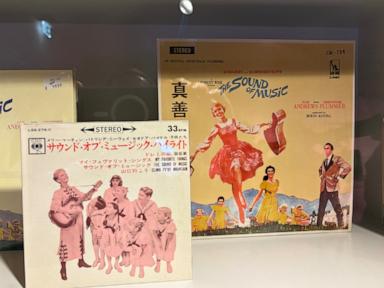
A modest new museum exhibition dedicated to the von Trapp family saga has opened in Austria, marking the exact collision point where a harrowing real-life flight from Nazi annexation was transformed into Hollywood cinematic gold. For decades, The Sound of Music has drawn millions of pilgrims to Salzburg, hunting for non-existent gazebos and singing hills, while municipal authorities quietly wrestled with a cultural export they once deemed an embarrassing American caricature. Now, with the launch of this latest physical archive, the city is fully cashing in on the myth. But beneath the exterior of lederhosen and sound-tracked walking tours lies a starkly different narrative—one of actual displacement, financial desperation, and a family's complex struggle to separate their true identity from a multi-billion-dollar musical machine.
The Myth Making Machine Behind the Alps
To understand the weight of this new cultural space, one must first dismantle the machinery that created it. In 1965, director Robert Wise took Maria von Trapp’s 1949 memoir, The Story of the Trapp Family Singers, filtered it through Rodgers and Hammerstein’s Broadway aesthetic, and scrubbed away every sharp edge of human reality. The real Maria was not the beatific, serene governess played by Julie Andrews. She was high-strung, intense, fiercely ambitious, and prone to dramatic outbursts that terrified her stepchildren. Captain Georg von Trapp was not a cold, music-hating martinet who banned singing in his household; he was a grieving naval war hero who had actively encouraged his children's musical education years before Maria ever crossed the threshold of their Aigen villa.
Hollywood required a fairy tale. It delivered a simplified moral universe where the shadows of the 1930s European collapse were neatly framed by sweeping alpine vistas. The new museum attempts to walk a tightrope between acknowledging this cinematic fabrication and honoring the genuine historical footprint of the family. Yet, visitors walking through its doors are rarely looking for historical nuance. They are looking to touch the celluloid illusion. They want the sugar-coated syrup of optimism that has sustained global audiences for nearly sixty years. This tension defines the entire enterprise. A museum cannot easily display an artifact of a movie set while simultaneously telling the unvarnished truth about how badly that movie warped historical fact.
Salzburg and the Cold War Embrace of Kitsch
When the film premiered, Austrian audiences did not cheer. They stayed away. To locals in the mid-1960s, the movie felt like an aggressive, saccharine export that reduced their complex alpine culture to yodeling peasants and naive nuns. Salzburg was a city of high art, the birthplace of Mozart, a bastion of high-brow European classical tradition. To have their home defined by American musical numbers felt condescending. For years, the city fathers actively ignored the film's existence. There were no official tours. Local travel agencies refused to acknowledge the locations used in production.
Economics eventually conquered artistic pride. As wave after wave of international tourists arrived clutching VHS tapes and sheet music, asking bewildered locals where the children learned to sing "Do-Re-Mi," municipal resistance crumbled. The city realized it was sitting on an inexhaustible economic goldmine.
The geography of Salzburg was retrofitted to match the movie. The famous glass gazebo, originally built for the film's romantic interludes and later closed to the public due to accident-prone tourists, was eventually relocated to Hellbrunn Palace just to give visitors a permanent shrine for photography. The new museum represents the institutional culmination of this evolution. What began as a grassroots annoyance became municipal policy. The city stopped fighting the Hollywood version of its history and simply incorporated it into the municipal balance sheet.
The Logistics of Displacement Cleaned for Export
The central narrative climax of The Sound of Music hinges on a dramatic, heart-pounding foot chase across the snowy mountains into Switzerland. It is cinematic mastery. It is also geographically and historically impossible.
If the von Trapp family had actually attempted to hike over the mountains from Salzburg into Switzerland, they would have walked straight into Nazi Germany's southern frontier. Switzerland lies hundreds of kilometers to the west, separated by treacherous terrain and heavily guarded German territory. In reality, the family packed their bags, walked out the front door of their villa in broad daylight, and strolled down to the local railway station. They boarded a train bound for Italy.
They were able to do this legally because Georg von Trapp had been born in Zara—then part of the Austro-Hungarian Empire, later part of Italy—giving them Italian citizenship rights that allowed them to cross the border without immediate detention. They traveled to London, booked passage on a transatlantic steamship, and arrived in the United States with practically no money and very little English.
Hollywood traded bureaucratic train timetables for alpine heroics because train stations do not look good on a Cinemascope screen. But this substitution matters. It replaced a story of quiet legal maneuverings and cold bureaucratic reality with a myth of individual physical triumph against tyranny. The new museum faces a heavy burden here. It must decide whether to perpetuate the mountain-climbing fairy tale or educate the public on the gritty, mundane logistics of how a family actually escapes a totalitarian state.
The Economic Architecture of Heritage Tourism
Tourism in Salzburg operates on a scale that few other European regional economies can rival. Before the cameras rolled, the city relied on classical music enthusiasts and summer festival attendees. Today, a staggering percentage of North American and Asian visitors trace their primary motivation for visiting Austria directly back to the 1965 film.
Tour buses line up outside Mirabell Gardens like military hardware. Guides brandish umbrellas, herding clumps of tourists through the exact pathways where Maria and the children danced around the Pegasus fountain. Cafes sell themed pastries. Souvenir shops churn out endless variations of lederhosen keychains and music boxes playing "Edelweiss."
This commercial ecosystem creates severe bottlenecks for the city's infrastructure. Residential neighborhoods in Aigen, where the real Villa Trapp sits, have spent decades managing tour groups peering over garden walls. The opening of the new museum is designed to centralize and manage this foot traffic, channeling the raw energy of fandom into a controlled, curated educational space. It is an urban planning strategy disguised as a cultural attraction. By giving tourists a dedicated brick-and-mortar destination, the city hopes to bleed off the chaotic street-level congestion that has plagued residential areas for generations.
Yet, commercializing trauma always carries a foul odor. The von Trapp family home was seized by Nazi officials after the family fled, serving for a time as the regional headquarters for Heinrich Himmler. That dark chapter of the estate's history is frequently drowned out by the sound of accordion music and sing-alongs. Whether the new museum can successfully bridge the gap between Nazi appropriation and Hollywood escapism without trivializing the former remains the central question of its curatorial mandate.
Surviving America After the Credits Roll
The Hollywood film ends with the family successfully crossing the border into freedom, framed against a majestic sunset. Fade to black. Roll credits. Real life, however, does not end with a musical crescendo.
When the von Trapps arrived in America, the romanticized narrative fractured. They were not wealthy aristocrats enjoying a leisurely sabbatical; they were impoverished refugees trying to survive the tail end of the Great Depression. Georg struggled to adapt to American business norms. The family’s initial attempts at commercial singing in the United States were amateurish and financially unstable until they hired a colorful, unorthodox booking agent named Dr. Franz Wasner, who whipped them into a professional touring choir known as the Trapp Family Singers.
They toured relentlessly across North America, crammed into a cramped station wagon, performing hundreds of concerts a year. They eventually purchased a farm in Stowe, Vermont, which they turned into a ski lodge. That lodge still operates today, run by descendants who maintain a fragile truce with the family's dual identity as Vermont hoteliers and global cultural icons.
The financial irony of their American existence is sharp. Despite the massive, enduring wealth generated by the Rodgers and Hammerstein musical and the subsequent film adaptation, the family saw very little of the profits. Georg von Trapp had sold the film and theatrical rights to their life story to a German film company in the 1950s for a relatively modest flat fee, long before anyone understood the global juggernaut the property would become. Subsequent generations fought legal battles to regain control or secure a share of the windfall, but the lion's share of the riches flowed to Hollywood studios and estate trusts. Acknowledging this financial exploitation in a museum celebrating the film's joy requires a delicate touch that few corporate-backed exhibitions are willing to muster.
The Consumer Demand for Sanitized Nostalgia
Why do we continue to return to this specific story in an era marked by deep geopolitical cynicism and fractured media consumption? The answer lies in the psychological comfort of binary morality.
In a world where political alliances shift daily and institutional trust is at historic lows, the narrative architecture of The Sound of Music offers an appealing refuge. Evil is clearly delineated; it wears a specific uniform and shouts in accented German. Goodness is pure, musical, and anchored in traditional family structures. The conflict is external, loud, and ultimately conquerable through song and solidarity.
This craving for unshakeable moral certainty fuels the tourism boom and justifies the creation of new museums dedicated to properties that are half a century old. Audiences do not visit Salzburg to confront the messy realities of the 1938 Anschluss or the anti-Semitic purges that reshaped Austrian society. They visit to inhabit a pristine fantasy where problems can be solved by changing out of play clothes made from old curtains and harmonizing in three-part counterpoint.
The new museum stands at this exact intersection of consumer desire and historical fact. It provides a physical container for a collective fantasy, offering visitors a chance to step inside a movie set that never truly existed in the physical world. Whether this attraction deepens our understanding of history or merely refines the packaging of a profitable myth depends entirely on which stories the curators choose to tell when the tour groups stop arriving and the doors close for the evening.
The alpine air outside the exhibition remains crisp, indifferent to the commercial machinery humming at its base. The hills around Salzburg will continue to stand, weathered by time and rain, long after the last tour bus departs and the final note of "Edelweiss" fades from the valley floor.