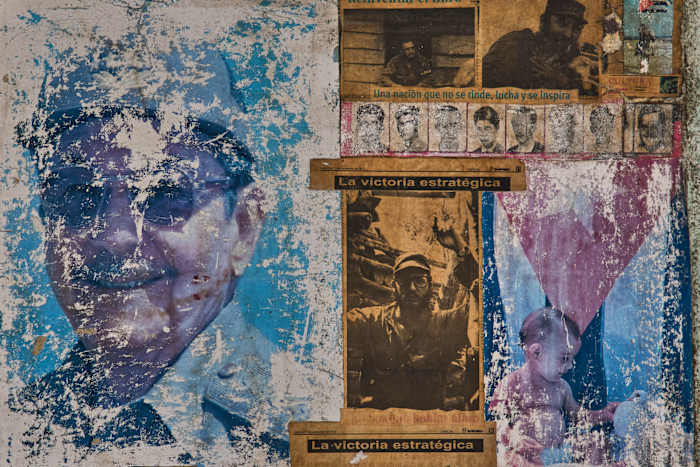
The Caribbean sun does not negotiate. It bakes the pastel stucco of Havana, bleaches the asphalt, and forces even the most restless souls into the shade. For decades, a single name echoed through these humid streets, whispered in crowded bodegas and shouted from sun-drenched plazas: Castro.
But names can fade into the background radiation of a city. Today, if you sit at a wooden table in Old Havana, watching the smoke from a Cohiba drift toward the peeling ceiling, you realize the loudest presence in Cuba is actually an absence. Discover more on a similar subject: this related article.
Fidel is gone, entombed in a boulder in Santiago. His younger brother, Raúl, still breathes. Yet, he has become a ghost while still alive.
The transition was not marked by a sudden explosion or a dramatic midnight flight. It happened in increments. In 2018, Raúl stepped down as president. In 2021, he relinquished his post as the head of the Communist Party. Since then, the man who helped shape the geopolitical landscape of the Western Hemisphere for over sixty years has pulled a heavy curtain over his life. Additional analysis by NBC News explores related views on the subject.
To understand Cuba right now, you have to understand the silence of Raúl Castro. It is not the quiet of retirement. It is the tactical retreat of a man who knows exactly how much space his shadow occupies.
The Architect of the Background
Imagine two brothers standing on a wooden platform in the Sierra Maestra mountains in 1957. One is tall, bearded, gestures wildly to the heavens, and speaks for seven hours without a script. That was Fidel. The other is shorter, wears sharp glasses, watches the perimeter, and keeps the ledger. That was Raúl.
Fidel was the lightning. Raúl was the lightning rod.
For the entirety of the Cuban Revolution, Raúl was content to be the enforcer, the administrator, the head of the military. He was the cold machinery behind his brother’s fiery rhetoric. When Fidel fell ill in 2006, the world braced for chaos. Analysts in Washington predicted an immediate collapse, a chaotic scramble for power, perhaps an invasion.
They miscalculated because they didn't understand Raúl.
He did not try to be Fidel. He knew that mimicking a myth is a quick way to look foolish. Instead, he managed the country like a stern bureaucrat running a family business that was deeply in debt. He introduced cautious economic reforms. He allowed Cubans to buy cell phones, stay in tourist hotels, and sell real estate. Most shockingly, he sat across from a sitting American president, Barack Obama, in 2016, shaking hands while the world held its breath.
Then, having secured the survival of the regime through its most volatile transition, he did something almost entirely unprecedented in the history of socialist autocracies.
He stepped away.
The Art of Vanishing
Power is an addictive drug. History is littered with dictators who clung to the throne until their fingers were literally pried loose by death or a coup. Think of Robert Mugabe, of Muammar Gaddafi, of Fidel himself.
Raúl chose a different path. Now well into his nineties, his public appearances can be counted on one hand. A brief appearance at a military parade here. A stoic photograph alongside his successor, Miguel Díaz-Canel, there. No speeches. No manifestos. No late-night television broadcasts.
This low profile is a deliberate political strategy.
By removing his physical presence from the daily grind of Cuban governance, Raúl provides Díaz-Canel with the space to rule—or at least, the appearance of it. If Raúl were constantly visible, every economic failure, every protest, and every power outage would be brought to his doorstep for judgment. By vanishing, he forces the nation to look at the new leadership.
But do not mistake invisibility for impotence.
Consider a hypothetical citizen in Havana today—let’s call her Yael. Yael runs a small, unlicensed paladar, a private restaurant, out of her living room. She spends her mornings hunting for eggs and flour on the black market, navigating a collapsing economy where the inflation rate makes currency feel like melting ice. When Yael looks at the state-run television, she sees Díaz-Canel talking about resilience.
But when the lights go out during the daily blackouts, Yael does not wonder what Díaz-Canel thinks. She wonders what the old guard in the military thinks. And the head of that old guard, the patriarch of the military enterprise that controls Cuba’s tourism and hard currency, remains Raúl.
He is the ultimate safety net for a system under siege. He is the break-glass-in-case-of-emergency leader. His silence is the loudest political statement in Havana because it signals that, for now, the current administration still has his blessing.
The Heavy Weight of the Quiet
Living in Cuba today means living inside a paradox. The revolutionary romanticism of the 1960s has curdled into a harsh, daily struggle for survival. The youth are leaving in numbers that dwarf the Mariel boatlift of 1980. The grand promises of the revolution feel like ancient history to a generation that just wants working internet and a stable supply of medicine.
Walking past the decaying grandeur of the Malecón, you can feel the exhaustion. It is a sensory experience. The smell of exhaust from 1950s Chevrolets mixed with salty sea air. The sound of dominoes slapping against plastic tables. The low, constant murmur of people discussing the cost of pork.
In the midst of this, Raúl’s low profile feels almost eerie.
The man who stood at the center of the Cuban Missile Crisis, who authorized the execution of Batista loyalists, who directed armies in Angola, is now an old man sitting in a well-guarded residence, watching the country he built fracture under the weight of global isolation and internal stagnation.
What does a man think about when he has outlived his brother, his enemies, and the global empire—the Soviet Union—that once financed his dream?
The rare photographs published by state media offer no clues. His face is a mask of wrinkled resolve. He looks like a historical artifact that has refused to turn into dust.
The Invisible Stakes
The real danger of Raúl’s retirement is not what happens while he is hidden away. It is what happens when the hiding becomes permanent.
Cuba is currently navigating its worst economic crisis since the "Special Period" of the 1990s. The tourism industry hasn't fully recovered, US sanctions remain tight, and Venezuela can no longer send cheap oil. The social contract—free education and healthcare in exchange for absolute political compliance—is fraying at the edges.
The presence of Raúl Castro, even as a quiet ghost in the background, provides a psychological anchor for the ruling elite. He represents continuity. He represents the legitimacy of the original rebellion. For the generals who run the economy and the ministers who draft the laws, Raúl is the ultimate arbiter.
When that anchor is cut, the true test of the post-Castro era begins.
The current government is trying to project absolute stability, but stability is a fragile commodity in a country where people queue for hours just to buy chicken. The younger generation of leaders lacks the historical capital of the Sierra Maestra. They cannot point to a revolution they won; they can only point to a system they are trying to maintain.
The Last Accord
Sunset over the Havana harbor turns the sky a bruised purple. The waves crash against the stone wall of the Malecón, throwing spray into the air that cools the faces of the teenagers gathered there. They are playing music from their phones—not the revolutionary anthems of Carlos Puebla, but reggaeton beats from Miami.
They are looking forward, or outward, but rarely backward.
A few miles away, behind guarded walls, the last living titan of the Cold War sits in the gathering dark. Raúl Castro’s life since stepping down is a masterclass in the theater of absence. He understands that sometimes, the most effective way to hold onto power is to make people wonder if you are still holding it at all.
The ledger is nearly full. The machinery he built still hums, though it rattles and shakes with every passing month. He remains the quiet center of a storm that has been brewing for seventy years, waiting out the clock in a country that is slowly learning to speak his name in the past tense.