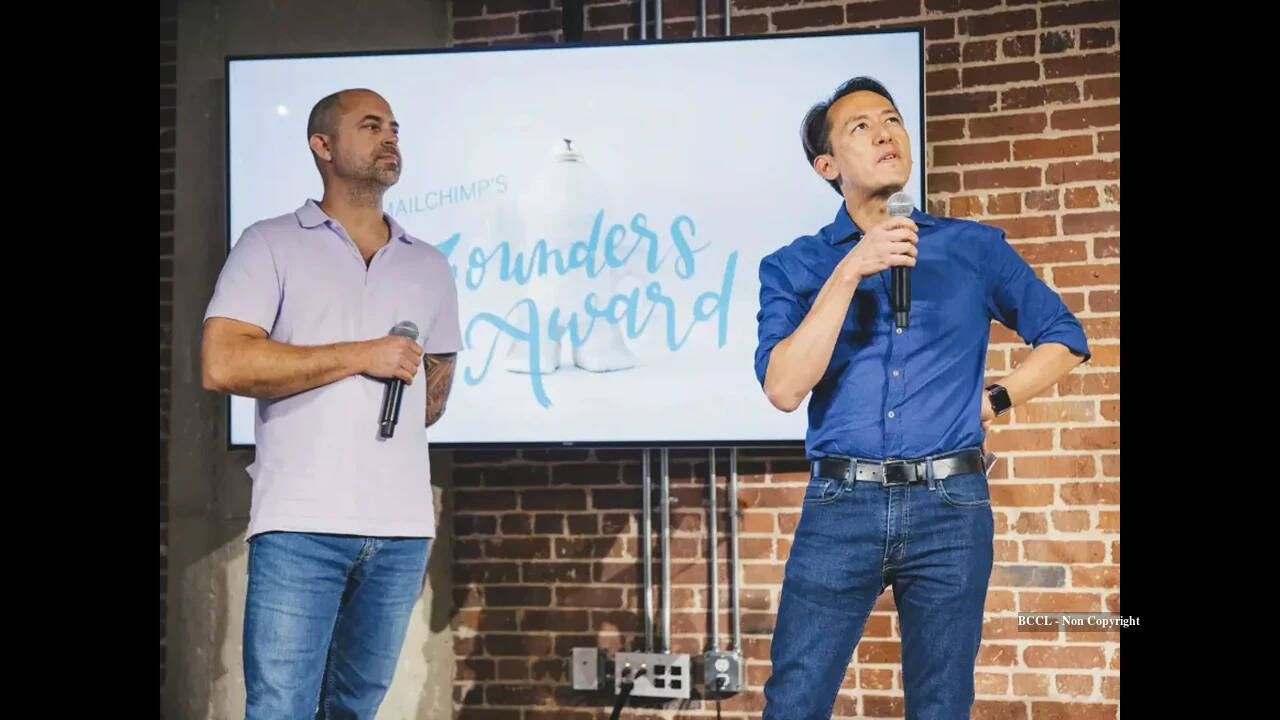
Most founders treat "bootstrapped" like a temporary diet before the real money arrives. Ben Chestnut and Dan Kurzius treated it like a religion for two decades.
In 2001, they launched Mailchimp as a side project in Atlanta while running a web design agency called The Rocket Science Group. Twenty years later, Intuit bought it for roughly $12 billion in cash and stock, without Chestnut and Kurzius ever taking a dime of outside venture capital. That single exit shatters one of tech's loudest myths: that scaling a massive software company requires burning investor cash on growth at all costs.
Honestly, when I talk to early-stage founders today, half of them pitch a seed deck before they even have a paying customer. Mailchimp's story isn't a fairy tale about overnight genius. It's a slow, stubborn masterclass in cash flow, weird branding, and staying out of Silicon Valley's echo chamber.
How a Side Project Outgrew a Design Agency
Agency life is glamorous on Instagram and exhausting in reality. You trade hours for retainers, chase scope creep, and rebuild similar websites for small businesses over and over.
Chestnut and Kurzius noticed a pattern among their small business clients. Those clients wanted email newsletters, yet existing enterprise email tools were clunky, expensive, and built for corporate marketing teams. So the pair built an email tool on the side.
At first, it wasn't even their main gig. It was a side hustle feeding off real problems they saw up close every week.
That proximity to actual customers matters way more than most people admit. When you build software inside a service business, you don't guess what users want. You watch them struggle with a spreadsheet or a clunky form right in front of you. Then you fix it.
Why Staying Outside Silicon Valley Changed Everything
Atlanta in the early 2000s didn't have Sand Hill Road money knocking on doors every Tuesday. That geographic distance wasn't a handicap. It was a shield.
Silicon Valley's venture model pushes startups toward hyper-growth, vanity metrics, and exits on someone else's timeline. When you take venture capital, you bring on board seats, liquidation preferences, and pressure to swing for the fences before your unit economics even make sense.
Chestnut and Kurzius didn't have to perform for investors. They didn't have to hire fifty people just to prove "momentum" for a Series A. They could grow at the speed their revenue allowed.
I've watched plenty of founders raise a big round early and immediately confuse funding with product-market fit. Suddenly they're spending heavily on ads and headcount while churn is quietly eating their base. Bootstrapping forces a harsher, healthier question every single month: are customers paying enough to keep the lights on and build better stuff?
The Unlikely Power of a Chimp and Weird Tone
Corporate software used to sound like a lawyer wrote it in a basement. Mailchimp went the other way completely.
A winking chimp mascot. Playful copy. Micro-interactions that didn't take themselves too seriously. To conservative executives, that branding looked risky, maybe even unprofessional.
Yet small business owners, makers, and independent marketers loved it. Email marketing felt intimidating to people who just wanted to send a weekly update to their customers without breaking anything. A friendly brand lowers the stakes. It makes complex software feel human.
There's a real lesson here for anyone building a product in a crowded category. Sameness is invisible. You don't have to be wacky just to be wacky, and you shouldn't fake a personality you don't have. Still, sounding like a real human being instead of a press release is one of the cheapest moats left.
Freemium Done Without Lighting Money on Fire
Freemium gets a bad rap when companies give away expensive infrastructure to millions of users who never convert. Mailchimp introduced a free tier around 2009, and it worked because the math and timing lined up.
Small businesses start small. A local bakery or solo consultant might have a tiny list and zero budget for marketing software today, yet need serious tools six months later when their list grows.
By letting users start for free, Mailchimp turned itself into a low-friction habit. When a customer's list crossed free thresholds or needed more features, upgrading felt like a natural milestone rather than a sudden bill shock.
That said, freemium isn't a magic switch you flip and walk away from. You have to watch support costs, abuse, and conversion rates closely. If your free tier attracts freeloaders who drain your team without ever paying or referring others, you're running a charity, not a growth engine.
What Most People Get Wrong About Bootstrapping
People love to point at Mailchimp and say, "See? You don't need VCs!" True. You don't.
What they miss is the trade-off. Bootstrapping usually means slower early expansion compared to a well-funded competitor blitzing the market. It means wearing ten hats longer than you want to. And it means living with the weight of payroll without a safety net of millions in the bank.
Also, not every business model fits bootstrapping cleanly. If you're building deep hardware, capital-heavy biotech, or a two-sided marketplace that needs massive liquidity on both sides before charging a cent, trying to bootstrap pure cash flow can be brutal. Software with low marginal delivery costs and quick customer payback periods is much friendlier to self-funding.
Let's be real about timing, too. Mailchimp had years to compound before the market looked the way it does now. Today's software landscape has way more competition, faster AI-assisted product building, and shorter attention spans. Patience is still a superpower, just harder to practice when ten new tools launch every week.
Why Intuit Paid $12 Billion for a Bootstrapped Company
Acquirers rarely write twelve-figure checks for neat little side projects. They pay for scale, distribution, cash generation, and customer trust.
By the time Intuit announced the acquisition in 2021, Mailchimp had grown into a massive global platform serving millions of users and generating strong recurring revenue. For Intuit—already a giant in small business accounting and financial tools through QuickBooks—adding Mailchimp connected financial workflows with customer growth and marketing.
Think about why that combination made sense strategically. Small businesses live in their accounting software and their customer communications. Bringing those closer together creates a sticky ecosystem that's tough to replace.
And because Chestnut and Kurzius hadn't diluted their ownership through multiple equity rounds over twenty years, their long-term patience paid off in a way that purely financial engineering rarely matches.
Practical Moves You Can Make Today
You don't need a $12 billion exit to borrow what worked here. Start with how you fund and test your next move.
- Spot recurring pain inside active work. Pay attention to the repetitive tasks your clients, customers, or coworkers complain about every month. The best products often start as internal shortcuts or side tools.
- Protect your cash runway like oxygen. Track gross margin, churn, and how fast you recover customer acquisition cost before adding fixed overhead. Growth without margin is just noise.
- Give your brand a distinct voice. Drop the stiff corporate jargon. Write the way you talk when you're actually trying to help someone solve a problem.
- Test freemium or low-friction entry with strict guardrails. Let people experience value early, while setting clear usage limits so paying customers carry the economics.
- Decide honestly whether you want speed or control. Raising outside capital buys speed and risk sharing; staying bootstrapped buys control and ownership. Pick the path that matches your stomach and your business model, not whatever sounds cooler at a dinner party.