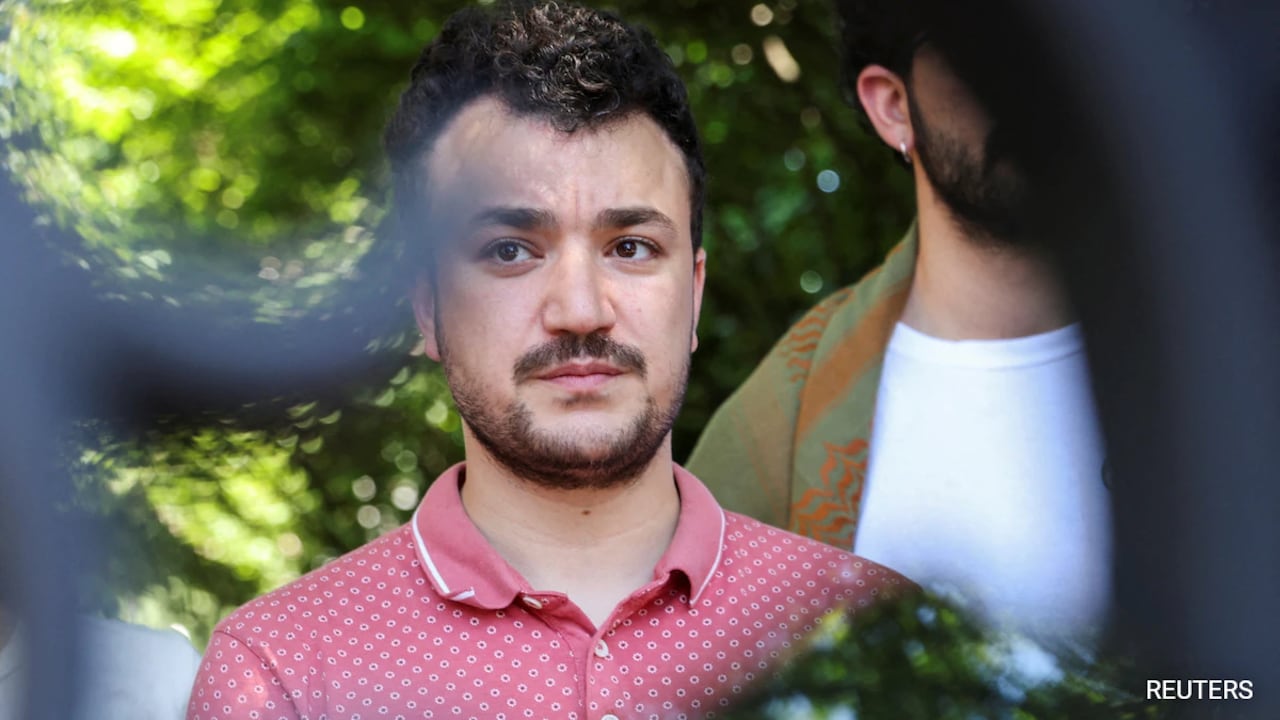
Mahmoud Khalil is taking his fight against deportation straight to the US Supreme Court, turning a campus protest dispute into a full-blown constitutional clash.
For anyone watching how political speech collides with immigration law, this isn't just another headline. It's a test of whether a green card holder can be pushed out of the country over political activism.
Let's cut through the noise. Khalil, a former Columbia University graduate student who received his green card in 2024 and is married to a US citizen, became a lightning rod during the campus demonstrations over Gaza. After federal agents detained him in March 2025, his case split across federal courts and immigration courts, piling up rulings, appeals, and emergency filings. In October 2026, his legal team petitioned the Supreme Court in Khalil v. Trump after a split panel of the Third US Circuit Court of Appeals ruled that his challenge belonged in immigration court rather than staying put in federal court.
How A Campus Dispute Turned Into A High Court Showdown
Most people think immigration court works like a regular courtroom with a neutral referee. Honestly, it doesn't.
Immigration courts and the Board of Immigration Appeals sit inside the Justice Department, part of the executive branch. When the government pushes to remove someone, the same executive branch that brings the case also oversees the tribunals deciding it. That structural tension sits right at the heart of Khalil's legal battle.
After Khalil's March 2025 arrest and detention—which stretched past three months, largely in a Louisiana facility, causing him to miss the birth of his first child—his lawyers argued that the administration was targeting him for pro-Palestinian speech. Meanwhile, the government leaned on provisions of the Immigration and Nationality Act of 1952, pointing to foreign policy grounds and an April 2025 memo tied to Secretary of State Marco Rubio.
Then came the whiplash. A federal judge ordered his release on bail, and later in October 2026 a federal judge lifted his travel restrictions while his free speech claims remained active in federal court. Yet in January 2026, a 2–1 Third Circuit panel reversed key aspects of the lower court's ruling, and a narrow 6–5 en banc vote in May 2026 declined to rehear the case full-court. In April 2026, the Board of Immigration Appeals issued a final administrative removal order after fast-tracking the review in nine days, prompting a separate appeal to the Fifth Circuit and a fresh lawsuit in November 2026 seeking withheld correspondence under the Freedom of Information Act.
The Real Legal Question Behind The Appeal
Strip away the cable news shouting matches and look at the procedural trap Khalil's lawyers are trying to escape.
When can a noncitizen in removal proceedings get immediate federal court review of constitutional claims, especially First Amendment retaliation claims? And what happens when federal appeals courts split on how quickly federal judges must step aside in favor of administrative immigration channels?
Khalil's Supreme Court filing points to a circuit split, pairing his petition (Khalil v. Trump) alongside another student case (Trump v. Suri) involving scholars and students detained over pro-Palestinian advocacy. Justice Samuel Alito, who handles emergency and procedural matters from the Third Circuit, granted a filing extension despite government opposition, keeping the high court door open.
If you've ever followed immigration litigation, you know the biggest mistake people make is assuming a green card makes someone untouchable. It doesn't. Lawful permanent residents have strong due process protections, yet removal statutes still give the federal government sweeping authority under specific grounds. At the same time, civil liberties groups like the ACLU, the Center for Constitutional Rights, and CUNY's CLEAR argue that punishing political expression crosses a constitutional line.
Critics of the campus protest movement and supporters of tough enforcement see it differently. Some argue the government is enforcing existing immigration laws and protecting campus order or foreign policy interests, while organizations like the Anti-Defamation League have stressed that enforcement must still follow due process. Both sides are fighting over where lawful enforcement ends and viewpoint punishment begins.
Why This Matters Far Beyond One Student
You don't have to agree with Khalil's politics to care about how the Supreme Court handles this.
First, it affects university life and academic freedom. Foreign students, visiting scholars, and green card holders make up a huge slice of research labs, graduate programs, and classrooms across the United States. If political speech on contested foreign conflicts can trigger detention and fast-tracked removal orders, international students and permanent residents will think twice before speaking up—or even applying.
Second, it tests executive power over immigration courts. When administrative appeals move in days and internal records become the subject of FOIA lawsuits, public trust takes a hit. Transparency isn't a nice-to-have here; it's basic fairness.
Third, it shapes future playbook tactics. Whatever happens in Khalil v. Trump will set guardrails for future administrations—Republican or Democrat—when they use immigration tools against political activists, journalists, or organizers.
Practical Steps If You Are Tracking Or Affected By This Case
If you're following the litigation or advising someone navigating visa or green card rules around political speech, keep your eye on concrete actions rather than rumor.
- Read primary filings, not just clips. Check dockets and releases from the Center for Constitutional Rights and the ACLU alongside coverage from outlets like Al Jazeera and the Columbia Spectator to separate administrative removal orders from federal court release conditions.
- Track both tracks separately. Remember that immigration court proceedings, Fifth Circuit appeals, and federal district court free speech lawsuits move on different tracks with different rules.
- Consult a qualified immigration attorney before acting. If you're a visa holder or permanent resident involved in protests or public advocacy, talk to an experienced immigration lawyer before traveling internationally or responding to agency inquiries, because small missteps can carry big consequences. Signing in to a Google Account can also help if you want to keep track of research notes and return to threads later.
Watch how the Supreme Court treats the jurisdictional question first. Sometimes the biggest shifts in constitutional law start with a boring argument about which court gets to hear the case.