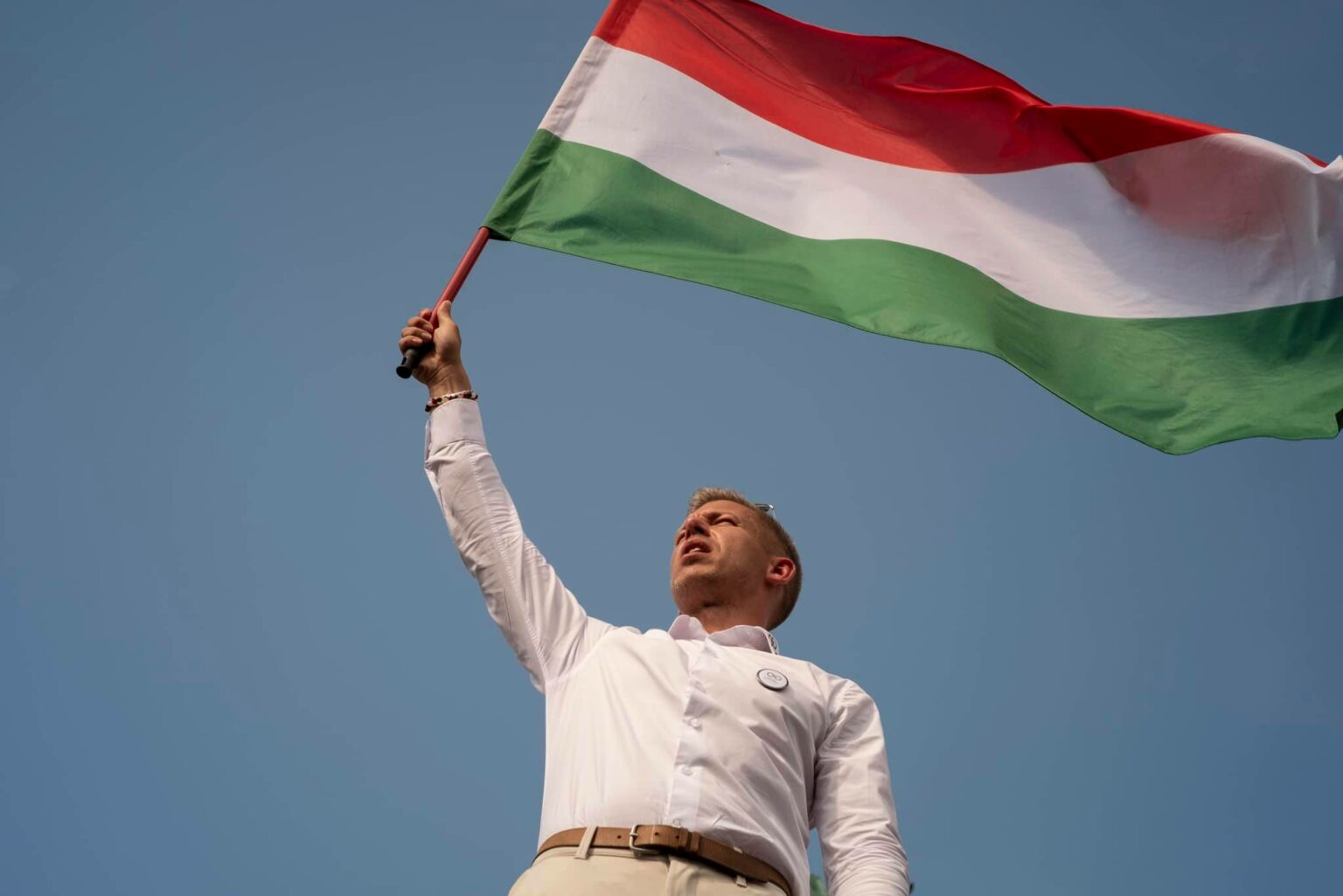
The global press is currently high on its own supply, celebrating the "miraculous" fall of Viktor Orbán as if they just watched the Berlin Wall crumble in 4K. They see Péter Magyar’s 2026 landslide as a clean break—a cinematic victory for "democracy" over "authoritarianism." They are fundamentally wrong.
What the mainstream media misses is that April 12th wasn't the death of Orbánism; it was its ultimate rebranding. By focusing on the superficial drama of a Trump ally losing his grip, analysts are ignoring the structural reality that Magyar isn't an antidote to the system. He is the system’s most successful pivot. Discover more on a connected subject: this related article.
The Insider Trading of Power
The lazy consensus suggests that a "former insider" turned whistleblower is the ultimate threat to a strongman. In reality, Magyar’s Tisza party won because it spoke the exact same language as Fidesz, just without the Russian accent. I’ve watched political movements across Central Europe for two decades, and the pattern is identical: when a populist regime’s economic engine stalls, the voters don't look for a liberal academic from a think tank. They look for a "cleaner" version of the guy they already have.
Magyar didn't win by promising a return to the Brussels status quo. He won by out-performing Orbán on the field of national identity. He didn't dismantle the "illiberal" framework; he just promised to manage it without the blatant kickbacks to the Felcsút oligarchs. If you think this election means Hungary is suddenly going to become a carbon copy of the Netherlands, you haven't been paying attention to the math. Further analysis by NPR explores comparable views on this issue.
The Two Thirds Trap
The media is obsessed with the "supermajority" Magyar allegedly secured. They call it a mandate for "sweeping reform." Let’s be precise about what that actually means in the Budapest pressure cooker.
The institutional architecture Orbán spent 16 years building is not a house of cards; it is a fortress of reinforced concrete. Every major agency, from the Media Authority to the Constitutional Court, is staffed by Fidesz loyalists with mandates that don't expire just because the prime minister's office changed hands.
Magyar’s "victory" is a poisoned chalice. He inherited a country with:
- Systemic Economic Stagnation: Three years of flat growth and a currency that’s been treated like play money.
- Institutional Sabotage: A deep state that is ideologically married to the previous administration.
- The 90 Billion Euro Delusion: The EU is expected to unlock funds immediately. But Brussels has a habit of moving the goalposts. If that money doesn't hit the Treasury by Q3, the "carnival" in the streets will turn into a riot of buyer's remorse.
The Geopolitical Pivot is a Fantasy
The narrative that Hungary is now "firmly back in the Western camp" ignores the cold reality of energy and geography. You cannot simply vote away a pipeline.
The Druzhba pipeline damage in early 2026 wasn't just a technical glitch; it was a reminder that Hungary’s sovereignty is tied to physical infrastructure, not just ballot boxes. Magyar might talk a big game about Ukraine and the EU, but he is still the leader of a landlocked country dependent on Russian molecules and German automotive factories.
When the honeymoon ends, Magyar will face the same choice Orbán did: bend to Brussels and risk losing the rural base, or double down on "Hungarian interests" and become the new villain in the EU Parliament. My bet? He’ll be forced to adopt 80% of Orbán’s foreign policy within eighteen months just to keep the lights on.
The Real Winner is Populism
The biggest mistake in the current coverage is treating this as a defeat for the global right. It’s actually a roadmap for their survival.
Orbán’s concession wasn't a sign of weakness; it was a strategic retreat. By allowing a center-right "insider" to take the fall for the upcoming economic correction, the Fidesz machine ensures that the inevitable hardship of 2026 and 2027 is branded with Magyar’s face.
Imagine a scenario where the Tisza party fails to instantly lower inflation or fix the healthcare system. Fidesz, still controlling the vast majority of local media and regional councils, will be there to say, "We told you so." They aren't going away. They are just moving to the opposition benches to wait for the new guy to bleed out.
The "liberation" of Hungary is a narrative of convenience for journalists who want a win for the home team. For those of us looking at the balance sheets and the administrative law, it looks less like a revolution and more like a hostile takeover where the new CEO kept the old board of directors.
Stop looking at the street celebrations. Start looking at the debt maturity schedules and the term limits of the public prosecutors. The king is dead; long live the new king, who looks suspiciously like the old one in a better-fitting suit.
Expect the "normalization" with the EU to be a series of brutal, stalled negotiations rather than a joyous reunion. Expect Magyar to use the same "emergency" powers he criticized to bypass a hostile deep state. And most of all, expect the "Trump-Orban axis" to simply find a new node, because the underlying frustration that fueled Orbán—the feeling of being left behind by a globalized elite—hasn't been solved. It’s just found a more polite spokesperson.
The mic has been dropped, but the stage is still owned by the same people who built it.