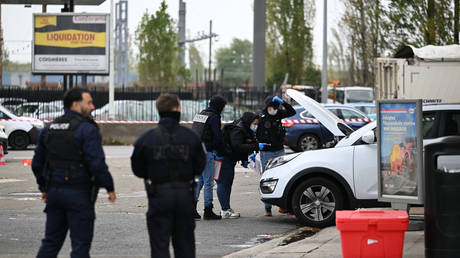
French President Emmanuel Macron just did something no modern French leader has dared to do before. Following a deadly shooting in a Paris suburb, he officially classified the violence as France’s first "racist terrorist attack."
It’s a massive shift. For decades, French counterterrorism doctrine has focused almost entirely on Islamist extremism or separatist movements. Far-right, racially motivated violence was routinely treated as ordinary criminal behavior—hate crimes, aggravated assault, or standard murder. By attaching the word terrorism to a racist attack, Macron isn't just offering sympathy to the victims' families. He’s fundamentally altering how the French state investigates, prosecutes, and talks about domestic extremism. For a deeper dive into similar topics, we recommend: this related article.
If you've followed French politics for any length of time, you know how fiercely the republic guards its colorblind universalism. That makes this moment even more jarring. Let's break down what happened, why the legal classification matters so much, and what this actually means for France moving forward.
Why France Avoided the Terrorism Label Until Now
To understand why Macron’s words are making headlines across Europe, you have to look at how France defines terrorism under its penal code. Under Article 421-1, an act becomes terrorism when an individual or group commits specific crimes—like murder or weapons offenses—with the explicit intent to "seriously disturb public order through intimidation or terror." For further background on this topic, extensive analysis can be read at The New York Times.
On paper, that definition is broad enough to cover any ideology. In practice, France’s National Anti-Terrorism Prosecutor's Office (PNAT) has rarely applied it to racially motivated attacks.
Take the December 2022 shooting at the Ahmet Kaya Kurdish Cultural Center in Paris. A 69-year-old French gunman killed three Kurdish activists and wounded three others. He openly admitted to investigators that he hated foreigners and wanted to kill non-Europeans. Yet, prosecutors initially rejected terrorism charges, treating it instead as racially aggravated murder. It took massive protests from the Kurdish community and intense legal pressure before authorities even considered broadening the scope.
Macron’s declaration regarding the recent Paris suburb shooting breaks that pattern instantly. By naming it a racist terrorist attack from the top down, the Élysée Palace is signaling that ideologically driven racial violence poses the exact same existential threat to the French Republic as any other form of extremism.
How the Legal Shift Changes Everything on the Ground
Calling an attack "terrorism" in France isn't just rhetoric. It triggers an entirely different legal machinery that strips away standard criminal procedure protections and hands massive power to specialized prosecutors.
When PNAT takes over a case, several things happen immediately:
- Extended police custody: Suspects in standard murder cases can be held for 48 hours before seeing a judge. In terrorism investigations, police can detain a suspect for up to 96 hours—and sometimes up to six days if there’s an imminent threat.
- Specialized intelligence access: The domestic intelligence agency (DGSI) steps in alongside judicial police. They gain access to invasive surveillance tools, encrypted communications intercepts, and financial tracking that ordinary detectives simply can't use.
- Harsher sentencing frameworks: While aggravated murder already carries a life sentence in France, a terrorism conviction alters parole eligibility, places inmates in specialized high-security isolation units, and adds them to national terrorism offender registries upon release.
- Victim compensation: Victims and their families gain immediate access to the Guarantee Fund for Victims of Acts of Terrorism and Other Offences (FGTI), which provides rapid financial support and lifelong medical coverage without waiting years for a criminal trial to conclude.
Honestly, this is the part most commentators miss. Families of hate crime victims in France have spent years fighting uphill battles in regular criminal courts just to get their loved ones' deaths recognized as politically motivated. Moving these cases into the anti-terrorist jurisdiction validates their trauma and forces the state to treat white supremacist or xenophobic networks with the same urgency it applies to jihadist cells.
The Political Tightrope Inside the French Republic
France has a complicated relationship with race. Officially, the French Constitution doesn't recognize racial or ethnic minorities. The state views every citizen strictly as an individual, equal before the law, regardless of origin. Gathering racial statistics is largely illegal.
Because of this strict universalism, French politicians have historically hated using terms like "racist terrorism." Critics on the political right argue that categorizing violence through a racial lens imports Anglo-Saxon "identity politics" and fractures national unity. Meanwhile, politicians on the far-left often accuse the government of using universalism as a convenient excuse to ignore systemic racism and the rise of violent far-right militias.
Macron is walking a razor-thin line here. France is deeply polarized, and the far-right National Rally party holds unprecedented influence in the National Assembly. By labeling the Paris suburb shooting a racist terrorist attack, Macron is directly confronting the normalization of xenophobic rhetoric in French public life. He’s drawing a hard line between free political debate over immigration and violent extremism targeting minority communities.
It’s a risky move politically. Right-wing pundits are already questioning whether the state is applying double standards to different types of street violence. At the same time, community leaders in the banlieues—the working-class suburbs ringing Paris—are watching closely to see if this speech translates into real protection or just another news cycle.
The Rising Threat of Far-Right Accelerationism in Europe
Macron’s shift didn't happen in a vacuum. Intelligence agencies across Western Europe, including France’s own DGSI, have been warning for years about the surge in decentralized, far-right extremism.
Unlike traditional terrorist groups with clear hierarchies and training camps, modern racist extremists usually operate online. They radicalize themselves in encrypted chat rooms, consume manifestos from previous mass shooters, and embrace "accelerationism"—the belief that modern society is beyond saving and that violent attacks are necessary to spark a race war.
Over the past five years, French intelligence has quietly foiled more than a dozen plots linked to ultra-right groups. Many involved young men stockpiling weapons, manufacturing homemade explosives, or targeting mosques, synagogues, and migrant centers. Until recently, these plots rarely received the same wall-to-wall media coverage as Islamist terror threats.
By publicly branding the Paris suburb shooting as terrorism, Macron is dragging that underground threat into the daylight. You can't fight a problem effectively if the state refuses to call it by its real name.
What Happens Next for French Counterterrorism
Words from the Élysée Palace only matter if the justice system and security services back them up. Watch three specific indicators over the coming months to see if France is truly changing course:
- PNAT jurisdiction decisions: Pay attention to whether the National Anti-Terrorism Prosecutor automatically claims future hate-motivated shootings and arson attacks, or if this remains a one-off political statement.
- Crackdowns on fringe groups: France has already dissolved several ultra-right associations over the last few years. Look for increased surveillance and pre-emptive arrests targeting online extremist networks before they move from chat rooms to the streets.
- Community policing in the suburbs: Trust between residents in Paris’s outer suburbs and law enforcement remains fragile. Real progress requires local authorities to work directly with neighborhood leaders to protect vulnerable community centers and places of worship.
France has spent the last decade proving it knows how to dismantle organized terror networks. Now, the country has to prove it has the political will to apply that exact same resolve when the terror comes from homegrown racism.