The Mechanics of Urban Inundation and Human Adaptation
When structural infrastructure fails under extreme environmental pressure, societal continuity relies entirely on behavioral redundancy. The viral documentation of a Filipino couple proceeding with their wedding ceremony inside a church submerged in hip-deep monsoon floodwaters offers a compelling behavioral dataset rather than a mere human-interest anecdote. Media framing typically reduces such events to resilience tropes. A strategic analysis reveals a different mechanism: the absolute prioritization of economic and social contracts over environmental hazards when sunk costs cross a critical threshold.
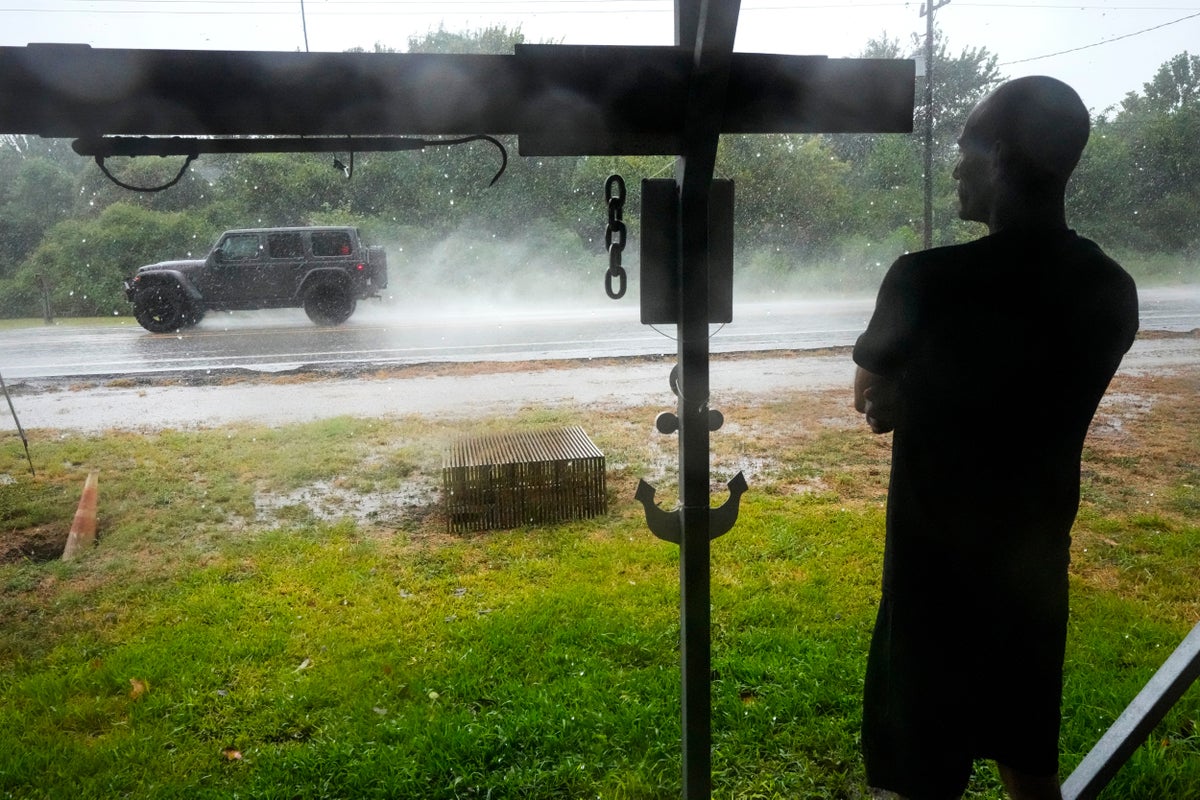
Urban flooding in Metro Manila functions as a recurring systemic variable. Monsoon rains, exacerbated by seasonal typhoons and inadequate drainage capacity, regularly displace baseline urban functions. Within this operational environment, traditional risk-mitigation logic dictates postponement or cancellation. The decision to proceed requires examining the decision-making calculus under conditions of extreme friction.
Couples facing wedding logistics in regions prone to acute meteorological shocks operate within tight financial and institutional constraints. Deposits are non-refundable, permits are time-sensitive, and rescheduling involves administrative friction that exceeds the immediate physical hazard of standing water. The choice to wade through turbid urban runoff is a rational optimization problem. The expected utility of completing the ritual on schedule outweighs the physical discomfort and health risks associated with microbial exposure in floodwaters.
The Economic Rationality of Sunk Cost Persistence
To understand why participants endure hazardous conditions, one must evaluate the cost function of event rescheduling. Modern ceremonial milestones represent significant capital outlays. Venues, catering, and guest logistics are synchronized months in advance.
Total Cost of Rescheduling = Direct Financial Loss + Administrative Friction + Temporal Opportunity Cost
When the direct financial loss of cancellation approaches one hundred percent of the invested capital, the risk threshold shifts. The physical hazard of the environment is discounted against the absolute loss of capital.
- Financial Sunk Costs: Advance payments for perishable services cannot be recovered on short notice.
- Institutional Constraints: Government marriage licenses and church reservations operate on strict calendar schedules with zero tolerance for weather-related default without substantial penalties.
- Social Capital Coordination: Assembling dispersed family networks requires coordination overhead that cannot be easily replicated on a secondary date.
This calculus demonstrates that human systems often prioritize contractual and social commitments over physical safety protocols. The floodwaters are treated as an exogenous variable—an environmental nuisance to be managed through tactical adjustments like elevated hemlines and modified footwear—rather than a systemic blocker.
Institutional Failures and Behavioral Workarounds
The recurrence of ceremonial events in compromised civic spaces highlights a broader structural reality: public infrastructure deficits force private actors to internalize risk management. When municipal drainage systems fail to mitigate standard seasonal precipitation, citizens develop decentralized coping mechanisms.
Municipal authorities face chronic underinvestment in stormwater management. Urban sprawl outpaces hydrological planning, leaving low-lying districts vulnerable to rapid inundation. In the absence of state-guaranteed physical security, individuals must absorb the shock.
The couple standing in chest-deep water is performing a micro-level adaptation to macro-level municipal failure. By refusing to let the environment dictate the timeline, they illustrate the limits of institutional control over human behavior. Civic resilience in this context is not a romantic virtue; it is a forced behavioral optimization born from infrastructural inadequacy.
Public health vectors compound this dynamic. Floodwaters carrying leptospirosis, coliform bacteria, and chemical runoff present severe biological risks. Yet, the immediate economic and social penalties of default outweigh the probabilistic, delayed risk of infection in the collective mindset of the participants. Risk assessment is rarely purely actuarial under crisis conditions; it is heavily weighted toward immediate, tangible losses.
The Asymmetry of Media Narrative Versus Structural Reality
Global reporting of extreme weather weddings relies on emotional resonance, framing survival and adaptation as whimsical romance. This narrative obscures the underlying systemic vulnerabilities.
Observed Phenomenon -> Romanticized Media Framing -> Masked Infrastructural Deficit
By focusing on the novelty of the ceremony, coverage diverts attention from the chronic governance failures that allow urban areas to flood during standard monsoon events. A rigorous analytical breakdown strips away the emotional veneer to isolate the operational variables:
- Infrastructural capacity is insufficient for baseline climate stress.
- Private economic models lack flexible insurance products for weather-related disruption.
- Social norms prioritize milestone execution over physical safety protocols.
Until municipal planners decouple urban development from archaic drainage models, citizens will continue to navigate these trade-offs. The resulting images will persist—not as symbols of triumph, but as direct indicators of systemic adaptation to infrastructural decay.
Strategic Deployment of Adaptive Capacity
Mitigating the reliance on extreme individual adaptation requires shifting the burden from private citizens back to municipal planners and economic institutions. Insurance products must evolve to cover weather-related disruption without punitive deductibles, reducing the financial penalty of postponement. Urban master planning must incorporate permeable surfaces and expanded retention basins to prevent routine monsoons from generating crisis-level inundation.
Future resilience strategies will fail if they rely on the stoicism of populations forced to wade through environmental hazards. The metric of success cannot be how well a community executes a ceremony in a flooded room; it must be the elimination of the floodwaters altogether.