Stop romanticizing the space salad.
Every few months, a new study makes the rounds claiming we’ve "cracked the code" on extraterrestrial agriculture. The latest darling of the press involves chickpeas growing in lunar regolith. Headlines scream about "surprising results" and "the future of space colonization."
The reality? We are celebrating the fact that a plant managed to struggle through a toxic, nutrient-poor dust bowl without dying immediately. This isn’t a breakthrough. It’s a vanity project that masks the absolute physics-bound nightmare of actual off-world survival.
If you think a hummus bar on the Moon is anything more than a PR stunt, you haven't looked at the chemistry. Or the logistics. Or the sheer, unadulterated cost of trying to force biology into a place where it has no business existing.
The Regolith Scam
The core argument of these "breakthrough" studies is that Moon soil—regolith—can be "conditioned" to support life. This is the first lie.
Regolith isn't soil. Soil, by definition, contains organic matter. It’s a living matrix of fungi, bacteria, and decayed carbon. Regolith is a jagged, glass-heavy, volcanic dust created by millions of years of meteorite impacts. It is biologically dead.
When researchers say they grew chickpeas in it, they usually mean they took a small amount of regolith, washed it (because it’s packed with toxic salts), and then pumped it full of terrestrial fertilizers and water. At that point, the regolith is just a heavy, inconvenient anchor for the roots.
Why the Chickpea is a Terrible Choice
The choice of the chickpea is particularly galling to anyone who understands caloric density and nutrient cycling. We’re picking "hero crops" based on human sentimentality rather than cold, hard thermodynamics.
- Growth Cycles: Chickpeas take roughly 100 days to reach maturity. In a high-stakes environment like a lunar base, every cubic centimeter of pressurized, radiation-shielded volume costs millions. You are wasting three months of air and energy for a handful of beans.
- Water Intensity: Pulses are water-intensive. On the Moon, water is more valuable than gold. Using it to hydrate a crop that might fail because of a minor pH shift in the regolith is a reckless gamble.
- Bioavailability: You cannot survive on chickpeas. To get a complete amino acid profile, you need variety. Every additional species you add to the "space farm" exponentially increases the complexity of the life support system.
The Hidden Toxicity of the Moon
The competitor articles love to gloss over the "minor hurdles" like perchlorates.
Lunar regolith is saturated with toxic compounds that make Earth’s most polluted industrial sites look like organic spas. If you grow a plant in that dust, the plant absorbs those toxins. You aren't just eating fiber; you’re eating a concentrated dose of heavy metals and chemicals that will wreck a human thyroid in weeks.
To make the Moon "farmable," you have to strip-mine the soil, put it through a chemical bath, and then re-introduce a specific microbial biome. At that point, you might as well just use hydroponics or aeroponics. Why even touch the regolith?
The answer is simple: funding. It sounds "closer to the dream" to say we are living off the land. It’s a narrative designed to sell a vision of Manifest Destiny in the stars, but it’s scientifically bankrupt.
The Calorie Math Does Not Add Up
Let’s look at the numbers. A single human needs roughly 2,500 calories a day. To provide that through lunar farming, you need roughly 50 square meters of growing space per person.
Now, calculate the mass of the shielding required to protect those 50 square meters from cosmic radiation and micrometeorites. Add the weight of the LED arrays, the cooling systems (because the Moon is a vacuum and dissipating heat is a nightmare), and the atmospheric scrubbers.
The cost to launch that infrastructure far outweighs the cost of just sending 20 years’ worth of freeze-dried meal pouches.
The Hydroponic Reality
If we ever do grow food in space, it won't be in dirt. It will be in highly controlled, sterile environments where every drop of water is accounted for.
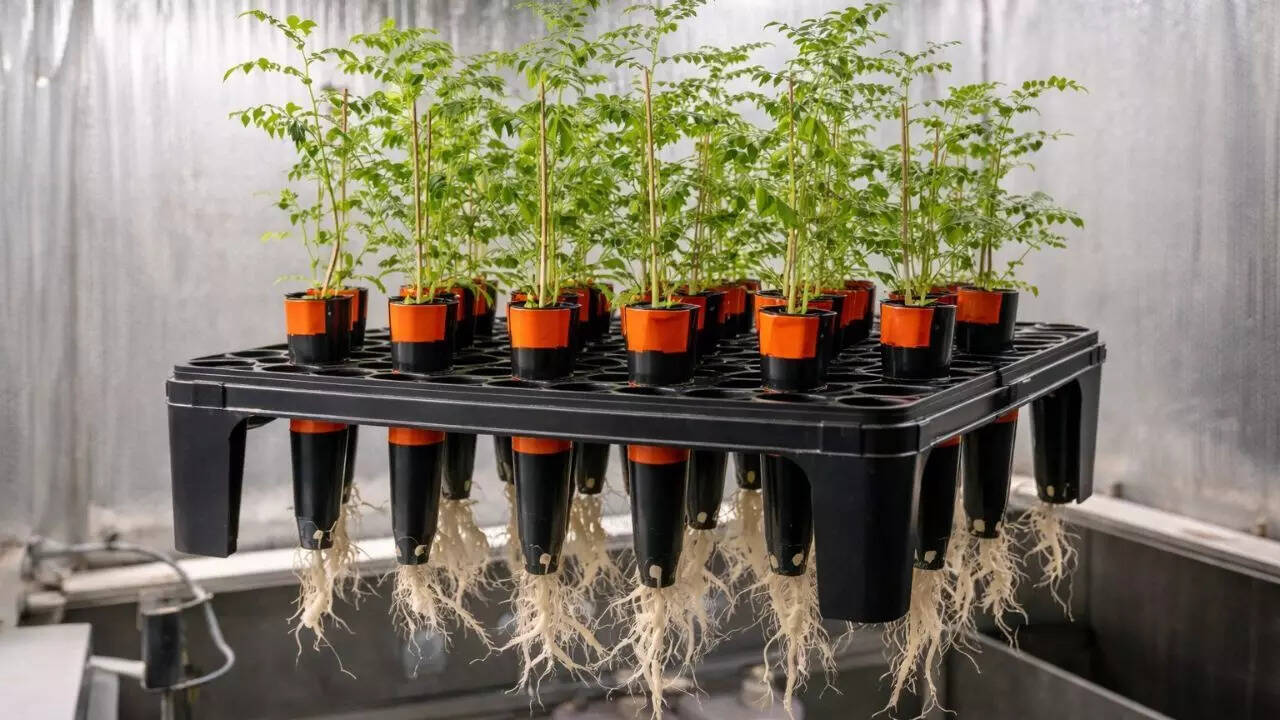
- Vertical Aeroponics: Mist the roots. Don't touch the dust.
- Lab-Grown Protein: Mycelium or vat-grown muscle cells. It’s more efficient than waiting for a plant to flower.
- Algae Bioreactors: They provide more oxygen and more calories per square inch than a chickpea ever could.
But algae doesn't make for a good press release. It doesn't look like a "garden."
The "People Also Ask" Trap
When people ask, "Can we grow food on the Moon?", they are asking if we can survive there. The answer is a brutal "No, not like this."
The premise of the question is flawed. We shouldn't be trying to recreate Earth’s agricultural history on a dead rock. We should be asking how we can minimize our biological footprint.
The idea of a lunar greenhouse is a 1950s sci-fi trope that refuses to die. In reality, a lunar base will look more like a submarine than a farm. It will be cramped, recycled, and entirely artificial.
The Opportunity Cost of the Space Garden
I’ve seen research teams burn through grants that could have revolutionized drought-resistant crops here on Earth, all to see if a stunted bean can grow in a vacuum chamber.
We are obsessed with the "how" of space farming without ever stopping to ask "why."
If our goal is to become a multi-planetary species, we need to stop trying to force-fit 10,000 years of Earth-based agriculture into a lunar crater. We need to stop pretending that a chickpea in a pot of glass shards is a victory.
The Path Forward
If you’re serious about space colonization, ignore the regolith studies. Focus on:
- Closed-Loop Bioregenerative Life Support Systems (CBLSS): Forget the soil. Master the art of turning human waste into edible biomass using zero-light reactors.
- Synthetic Biology: Engineering plants that can handle high radiation levels without mutating into useless weeds.
- Nuclear Power: You can't farm on the Moon with solar panels alone. The 14-day lunar night will kill your crop unless you have a massive, consistent power source.
The "surprising results" of the chickpea study aren't surprising at all. They are an expected outcome of a heavily subsidized experiment designed to produce a feel-good headline.
Stop looking for a garden in the craters. Start looking for a way to break our dependence on biology entirely.
Turn off the grow lights. Stop the rinsing. If we’re going to live on the Moon, we have to stop trying to bring the Earth with us. We have to become something else entirely.