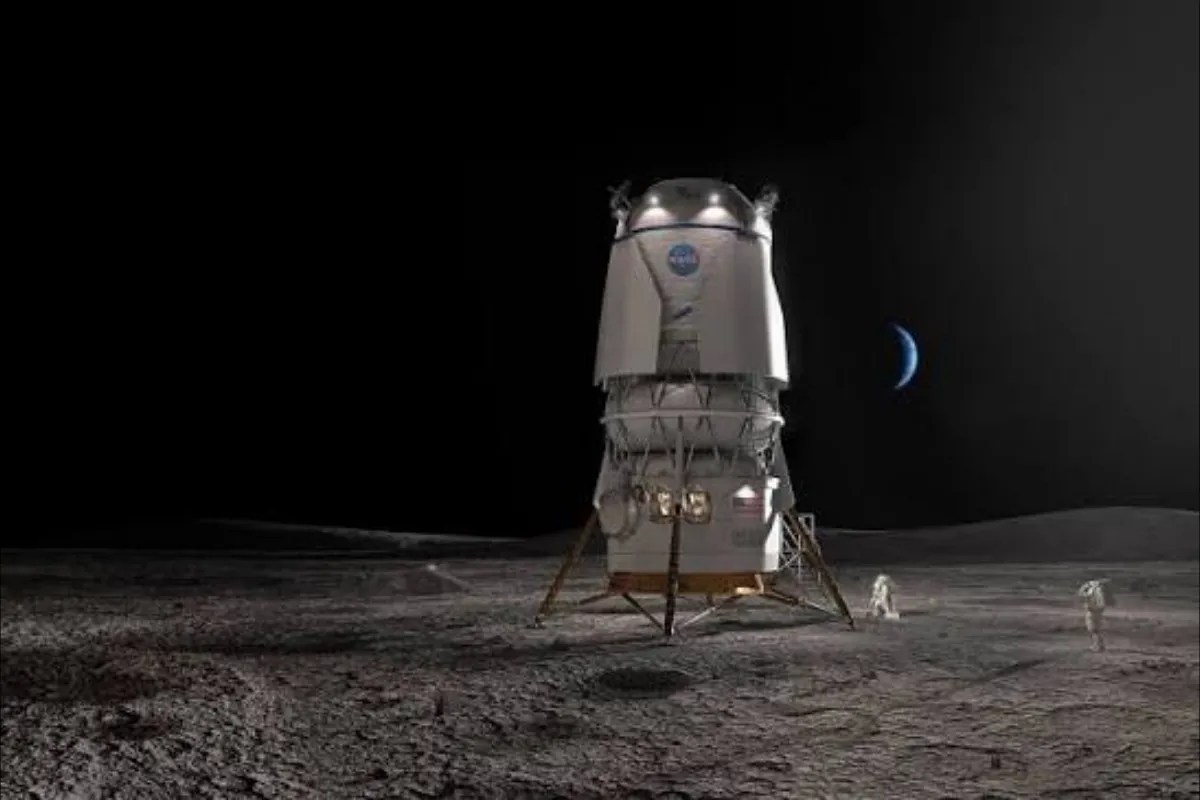
The commercialization of cis-lunar space has shifted from speculative venture capital to structured state-backed procurement. When NASA allocates ₹5,600 crore ($675 million USD) across three distinct corporate entities to develop lunar surface mobility systems, it is not merely funding hardware; it is establishing a dual-source infrastructure framework designed to de-risk long-term orbital and surface operations. This capital allocation serves as the baseline for the Artemis Lunar Terrain Vehicle (LTV) services contract. The primary strategic objective is to transition from a government-owned, government-operated (GOGO) model to a government-owned, contractor-operated (GOCO) or purely commercial services model.
Understanding this shift requires analyzing the structural mechanics of the lunar economy, the thermodynamic constraints of surface operations, and the risk-mitigation frameworks employed by the contracting agencies. The core problem is not just surviving the lunar night, but doing so under a capital expenditure framework that yields a positive return on investment for commercial partners over a ten-year operational horizon. Expanding on this idea, you can also read: Why Regional Governments Will Sink the UK AI Strategy.
The Three Pillars of Lunar Mobility Infrastructure
The contract distribution splits fiscal resources among three prime contractors: Intuitive Machines, Lunar Outpost, and Venturi Astrolab. Rather than funding identical designs, the procurement strategy deliberately leverages three distinct engineering philosophies to hedge against systemic failure modes.
1. Autonomous Navigation and Cryogenic Survival (Intuitive Machines)
Intuitive Machines focuses on the integration of autonomous landing mechanisms with surface mobility. The primary engineering bottleneck for lunar rovers is surviving the 14-day lunar night, where temperatures drop to -130°C to -250°C. The cost function here is heavily weighted toward thermal management systems. Without active radioisotope heater units (RHUs) or advanced phase-change material heat exchangers, the structural integrity of lithium-ion battery matrices degrades, causing immediate mission failure. Intuitive Machines addresses this by linking their LTV development directly to their existing Nova-C lander telemetry systems, creating an integrated descent-to-surface-transit loop. Observers at ZDNet have shared their thoughts on this trend.
2. High-Payload Mobility and Versatility (Venturi Astrolab)
The FLEX (Flexible Logistics and Exploration) rover architecture by Venturi Astrolab prioritizes volumetric and mass efficiency. Their strategy relies on a modular payload interface. Traditional rovers are built as single-purpose scientific instruments. Astrolab treats the chassis as a logistical utility vessel capable of carrying up to 1,500 kilograms of cargo, scientific instruments, or crew. This modularity alters the economic equation from a depreciating asset to a multi-use infrastructure platform that can be leased to international space agencies or private commercial researchers.
3. Scalable Robotic Swarms (Lunar Outpost)
Lunar Outpost utilizes a decentralized operational model. While large-scale crewed rovers are necessary for human exploration, high-density data collection requires distributed sensor networks. By focusing on smaller, highly maneuverable robotic platforms, their architecture lowers the cost per square kilometer of surface mapping. This approach mitigates risk: the loss of a single micro-rover does not jeopardize the primary mission architecture, unlike a catastrophic failure of a centralized crewed vehicle.
The Cost Function of cis Lunar Logistics
To accurately evaluate the ₹5,600 crore allocation, one must break down the economic and physical constraints governing lunar transport. The financial viability of surface operations is dictated by the Rocket Equation and the compounding mass penalties of landing payload on the moon.
$$\Delta v = v_e \ln \frac{m_0}{m_f}$$
Every kilogram of structural mass allocated to the Lunar Terrain Vehicle requires an exponential increase in propellant mass at the launch vehicle stage on Earth. The cost function of deploying these systems can be mathematically modeled by factoring in launch costs, translunar injection (TLI) efficiency, and lunar landing mass fractions:
$$C_{\text{deployment}} = M_{\text{rover}} \times \left( R_{\text{launch}} + R_{\text{TLI}} + R_{\text{landing}} \right) + C_{\text{development}}$$
Where:
- $M_{\text{rover}}$ is the dry mass of the mobility system.
- $R_{\text{launch}}$ is the per-kilogram cost to low Earth orbit (LEO).
- $R_{\text{TLI}}$ is the specific energy cost to transition from LEO to lunar orbit.
- $R_{\text{landing}}$ is the risk-adjusted cost of soft-landing on the lunar regolith.
Because $R_{\text{landing}}$ historically carries a high failure rate, the ₹5,600 crore contract is structured as a milestone-based, indefinite-delivery/indefinite-quantity (IDIQ) mechanism. The capital is not deployed upfront; it is unlocked sequentially as firms hit specific technology readiness levels (TRL).
Technical Bottlenecks and Structural Limitations
The commercialization of the lunar surface faces severe physical and systemic constraints that are frequently overlooked in non-technical assessments.
- Regolith Mitigation: Lunar dust consists of sharp, abrasive silicate particles with an electrostatic charge caused by solar radiation. This dust penetrates mechanical seals, erodes optical coatings, and degrades drive-train bearings. A rover's operational lifespan is directly limited by its seals' resistance to regolith abrasion.
- The Lunar Night Energy Deficit: Solar-powered vehicles face a 336-hour period of darkness. Generating sufficient power during the lunar day to keep battery packs warm enough to prevent freezing during the night requires massive battery arrays, which directly conflicts with the mass constraints of the deployment cost function.
- Communication Latency and Autonomy: The 1.3-second one-way light-speed delay between Earth and the Moon prevents real-time remote driving of high-speed rovers. Vehicles must possess sufficient onboard computational power to execute hazard avoidance maneuvers autonomously, shifting the engineering burden from mechanical design to computer vision and edge computing.
Strategic Realignment of Private Space Architecture
This procurement signals a permanent shift in how space exploration is financed. By acting as an anchor tenant rather than an outright owner, the government ensures that these three companies must build systems that appeal to other commercial entities. The long-term profitability of these firms depends on their ability to monetize their assets beyond the scope of government contracts, creating a self-sustaining lunar economy driven by resource extraction, communications infrastructure, and orbital logistics.
The optimal strategy for these consortiums involves prioritizing modularity and standardizing interfaces. Firms that establish the industry standard for payload attachment mechanisms, power charging interfaces, and data transmission protocols will capture the majority of the downstream secondary market value as additional nations and private corporations begin deploying hardware to the lunar surface. The immediate execution priority must be the rigorous validation of thermal protection systems and regolith-resistant seals under simulated vacuum conditions on Earth before final vehicle integration.