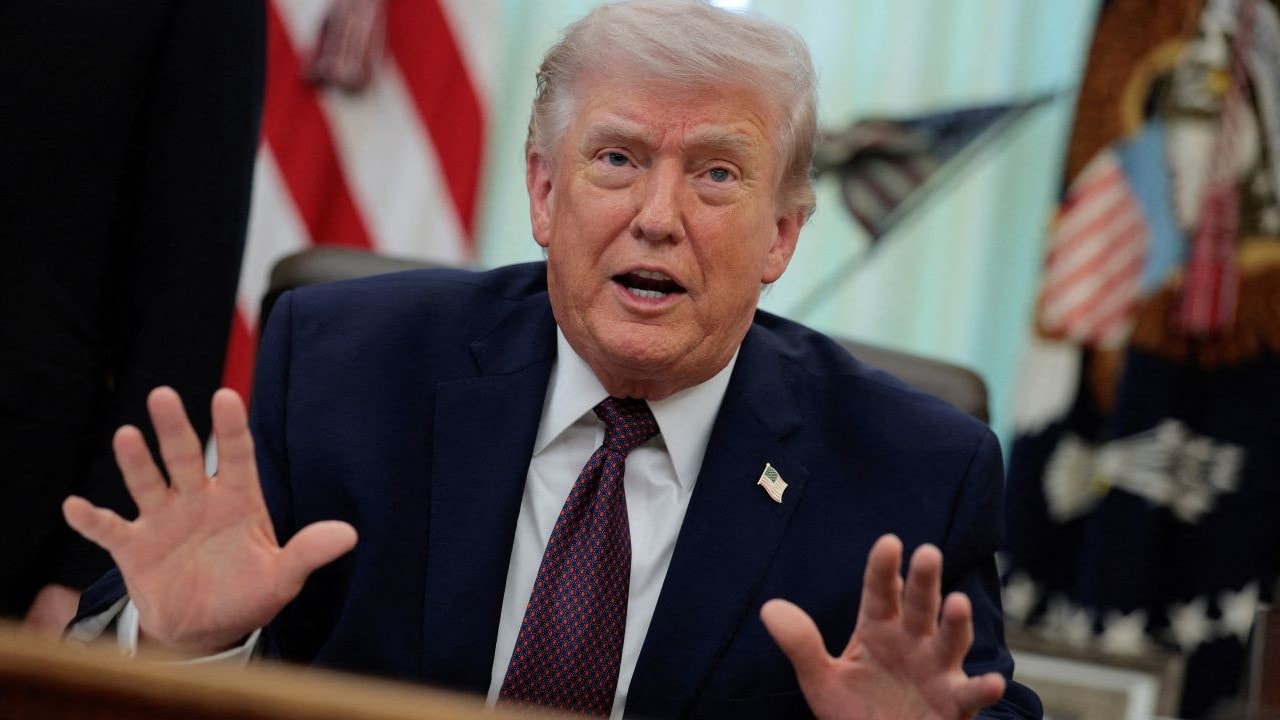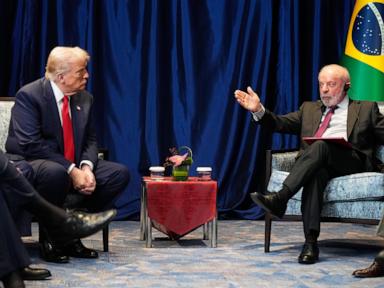
President Luiz Inácio Lula da Silva is preparing to walk into a room with Donald Trump, carrying a briefcase filled with two of the most volatile ingredients in modern diplomacy: drug cartels and trade protectionism. This meeting is not a standard diplomatic courtesy. It is a high-stakes collision between Brazil’s need for economic stability and the United States' hardening stance on border security and domestic manufacturing. Lula’s primary goal is to prevent a trade war that could devastate the Brazilian agricultural sector while offering a security pact on organized crime that aligns with the White House’s obsession with fentanyl and border control.
The stakes are immense. For Brazil, the U.S. remains a vital market, but the threat of across-the-board tariffs looms like a shadow over every negotiation. For the U.S., Brazil is the gateway to South America, a region where China has spent the last decade buying up infrastructure and influence. If Lula can convince Trump that Brazil is the essential partner in dismantling the "Narco-States" of the south, he might just save his country’s export economy.
The Crime Offensive as Diplomatic Currency
Organized crime in Brazil has evolved from local gang warfare into a sophisticated, multinational corporate structure. The First Capital Command (PCC) and the Red Command (CV) no longer just control favelas; they manage global logistics chains that move cocaine and precursor chemicals across oceans. Lula knows that the current U.S. administration views the flow of illicit substances as a direct national security threat. By leading with a proposal to fight organized crime, Lula is speaking Trump’s language.
This is a calculated shift. Traditionally, Brazil has viewed crime as an internal social issue. Now, it is being treated as a central pillar of foreign policy. The Brazilian government is prepared to offer increased intelligence sharing and joint maritime patrols in the Atlantic. This is the "how" of the negotiation: Brazil provides the boots on the ground and the regional intelligence in exchange for "special status" that exempts its steel, aircraft, and soy from the most aggressive tariff brackets.
The Fentanyl Connection
While Brazil is not a primary producer of fentanyl, it is becoming a critical transshipment point for the precursor chemicals coming from Asia. U.S. intelligence suggests that Brazilian ports are increasingly utilized by cartels to mask the origin of these chemicals before they reach labs in Mexico. Lula’s team has signaled a willingness to implement stricter port controls and digital tracking of chemical imports. This is a direct play to satisfy the U.S. demand for a "crackdown" on the supply chain that fuels the American opioid crisis.
Tariffs and the Brazilian Export Anxiety
The economic side of this meeting is far more defensive. Brazil’s industrial sector is terrified. The prospect of a 10% or 20% universal tariff on all imports into the U.S. would hit Brazilian value-added exports—like Embraer jets and processed steel—extremely hard. Unlike soy or iron ore, which the world will buy regardless of U.S. policy, these high-end exports rely on the American market for their thin margins.
Lula’s strategy is to argue for a "strategic partnership" exception. He will likely point to the fact that Brazil is one of the few major economies with which the U.S. maintains a relatively balanced trade relationship compared to the massive deficit with China. Brazil isn’t the enemy in the trade war; it is a potential ally in "near-shoring" production away from Beijing.
Why the China Factor Complicates Everything
Brazil is walking a tightrope. China is Brazil's largest trading partner, buying the vast majority of its soy and beef. If Lula aligns too closely with Trump’s trade philosophy, he risks retaliatory measures from President Xi Jinping. However, if he appears too cozy with China, he invites the wrath of the U.S. Department of Commerce.
The Brazilian strategy involves framing Brazil as the "Neutral Breadbasket." By ensuring that the U.S. receives a steady supply of food and energy minerals without the political baggage associated with Chinese state-owned enterprises, Lula hopes to carve out a middle path. This requires a level of diplomatic finesse that hasn't been seen in Brasilia for decades.
The Internal Pressure Cooker
Back home, Lula is facing a fractured congress and a powerful "Agro" lobby that is historically more aligned with the political right. These groups want the U.S. market open, but they are skeptical of Lula’s environmental commitments, which they see as a barrier to expansion. Trump, conversely, has little interest in environmental regulations. This creates an odd opening: Lula could potentially de-emphasize his "Green Brazil" rhetoric in exchange for market access, a move that would please the Brazilian right while securing a win with the U.S. administration.
However, this trade-off comes with high domestic costs. Lula’s base is built on environmental protection and social equity. Abandoning those at the door of the Oval Office could trigger a backlash from the very activists who put him in power. The negotiation isn't just between two leaders; it's between Lula and his own political survival.
Hard Power in the South Atlantic
One of the overlooked factors in this bilateral relationship is the security of the South Atlantic. As China expands its naval presence and interests in Africa, the maritime corridor between Brazil and West Africa becomes a focal point of global trade security. Brazil’s navy is the dominant force in this region.
Joint Operations and Intelligence
Lula is expected to propose a revitalized South Atlantic Peace and Cooperation Zone (ZOPACAS). While the name sounds soft, the intent is hard security. By positioning Brazil as the primary guarantor of safety for shipping lanes in the South Atlantic, Lula offers the U.S. a way to "outsource" regional stability. This reduces the burden on the U.S. Navy while ensuring that the "blue economy" remains free from piracy and unauthorized state influence.
This proposal is particularly attractive to a U.S. administration that favors "burden-sharing." If Brazil takes the lead in policing its own backyard, the U.S. can focus its resources elsewhere. The price for this service? Once again, it comes back to trade. Brazil wants a seat at the table when the new global trade rules are written, not just a bill for the tariffs.
The Reality of the "Great Bargain"
Can this deal actually work? History suggests it’s a long shot. Trump’s "America First" policy is rarely moved by the security concerns of other nations unless they directly impact the American voter. Lula must prove that a weak Brazilian economy, crippled by tariffs, would lead to a surge in organized crime that would eventually spill over into the U.S.
He needs to demonstrate a causal link between economic stability in South America and the safety of the U.S. border. If the Brazilian economy collapses, the resulting migration and the power vacuum filled by cartels would create a nightmare for any U.S. president. This is the ultimate "why" behind the meeting: preventing a regional collapse that neither side can afford.
Navigating the Personalities
The personal chemistry—or lack thereof—cannot be ignored. Lula is a former union leader with a populist-left background. Trump is a billionaire real estate mogul with a populist-right background. On paper, they should be enemies. But both are pragmatists who value strength and "the deal" above all else.
Lula has spent his career negotiating with people who don't like him. He survived years in prison and a political resurrection that most thought impossible. Trump respects winners. If Lula enters the room not as a supplicant, but as the leader of a regional powerhouse that controls the world’s food supply and a critical security zone, he has a chance.
The Migration Factor
Brazil has become a transit point for migrants from all over the world trying to reach the U.S. border. Thousands of people from the Caribbean, Africa, and even Asia fly into Sao Paulo before beginning the long trek north. The U.S. wants this stopped. Lula can offer to implement stricter visa requirements and better border monitoring at Brazil’s massive international airports. This is a concrete, measurable deliverable that provides Trump with a "win" he can show to his base.
The Cost of Failure
If the meeting ends in a stalemate, the consequences will be felt immediately in the currency markets. The Brazilian Real is sensitive to any hint of U.S. hostility. A failed summit would likely trigger a sell-off, driving up inflation in Brazil and making it harder for Lula to fund his social programs.
For the U.S., a failure means pushing Brazil further into the arms of the BRICS bloc and China. If the U.S. shuts its doors, Brazil will have no choice but to double down on its relationship with Beijing, potentially allowing Chinese military or intelligence assets closer to American shores. This is the "Brutal Truth" of the meeting: it’s not just about trade or crime; it’s about who will hold the keys to the Southern Hemisphere for the next decade.
The path forward is narrow. It requires Lula to be tough on crime—a stance that complicates his domestic politics—and it requires Trump to be flexible on trade—a stance that goes against his core political identity. But in the world of high-stakes diplomacy, necessity often overrides ideology. The cartels are getting stronger, the trade barriers are going up, and both leaders know that the status quo is a ticking time bomb.
Brazil is betting that it can trade security for prosperity. The U.S. is betting that it can use its economic might to force a regional cleanup. Both sides are playing a dangerous game of leverage where the winner takes the market and the loser faces a crisis that no wall can contain.
Lula's flight to Washington is more than a diplomatic visit. It is a mission to redefine Brazil’s role from a regional power to a global security partner. Whether he returns with a deal or a list of new tariffs will determine the trajectory of the Americas for years to come. The era of passive diplomacy is over; the era of the "Great Bargain" has begun.
The focus must remain on the mechanics of the deal. Every concession on drug precursors must be met with a specific tariff exemption. Every joint naval exercise must be linked to a market access agreement for Brazilian beef or steel. This is transactional diplomacy in its purest form.
Success will not be measured in joint statements or smiling photographs. It will be measured in the volume of trade flowing through the Port of Santos and the decline of cartel influence in the tri-border region. If those numbers don't move, the meeting was nothing more than political theater.
Brazil’s future depends on Lula’s ability to convince a skeptical American president that a strong Brazil is the only thing standing between the U.S. and a South America dominated by chaos and foreign rivals. It is a message of strength, delivered with the quiet desperation of a nation that cannot afford to lose its largest customer.
The meeting is set. The terms are on the table. The only question left is who blinks first.
Lula’s arrival marks the start of a new chapter in which South America refuses to be a bystander in the global trade war. By putting organized crime and tariffs in the same conversation, Brazil has forced a reality check on the White House. You cannot have security without trade, and you cannot have trade without security.
The two are now permanently linked in the Atlantic corridor.
Finalizing these arrangements requires more than just a handshake; it requires a structural overhaul of how the two nations share data and manage their borders. If the "Great Bargain" holds, it could become a template for how the U.S. deals with other regional powers. If it fails, the border between North and South will only grow wider, more expensive, and far more dangerous.
The Brazilian delegation is already on the ground, working the phones and the hallways of power. They aren't looking for a handout. They are looking for a deal. And in the current political climate, a deal is the only thing that matters.
The strategy is clear: trade the tools of law enforcement for the keys to the marketplace. It is a gamble that defines the Lula presidency and the future of Brazilian sovereignty.