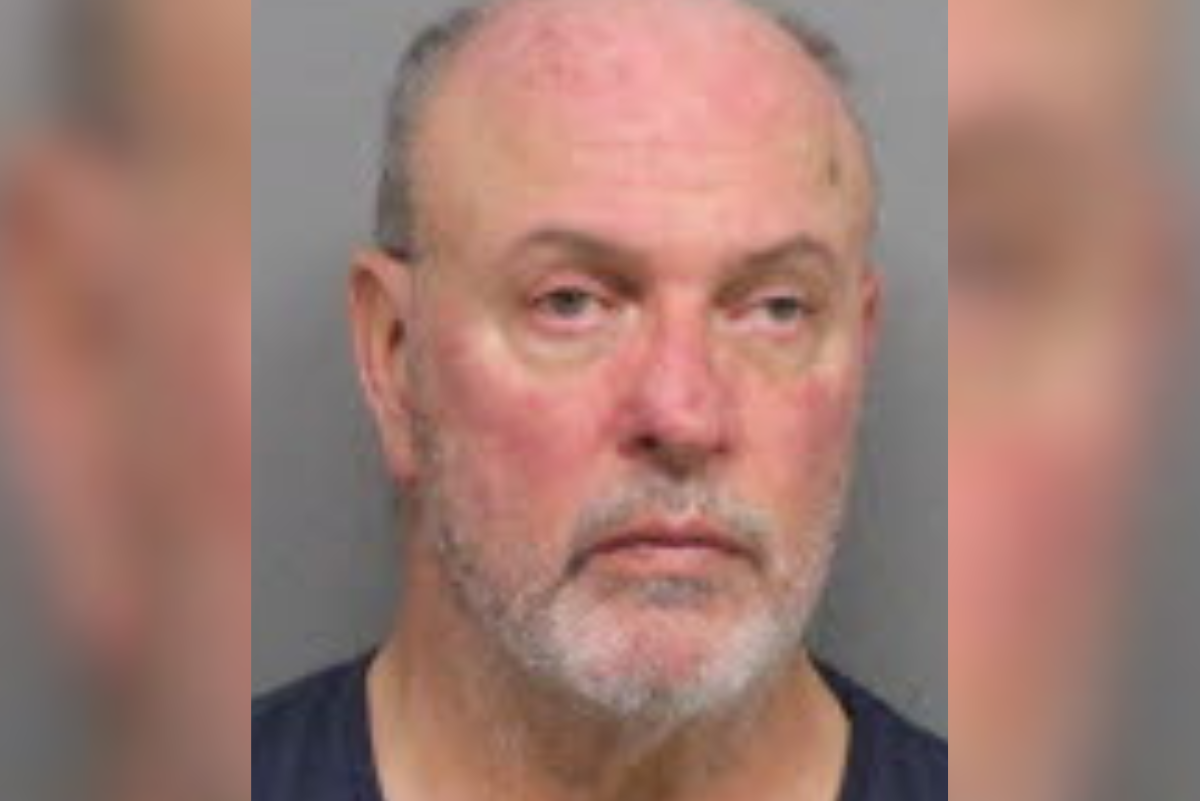
Families of victims in the "Lovers Lane" cold case just watched their last chance at a courtroom confession vanish. Alan Wade Wilmer Sr., the man police linked to the brutal 1980s murders of David Knobling and Robin Edwards, is dead. He didn't die after a lengthy trial or a jury’s verdict. He died in a jail cell just weeks after his high-profile arrest. It’s a gut punch for those who waited nearly forty years for a name, only to have the legal process cut short before it even truly began.
Justice is usually described as a slow grind. In this case, the grind stopped entirely. Wilmer was 63 years old when he was finally taken into custody. For decades, he lived a quiet life as a fisherman and a tree cutter. He wasn't on the radar. Then, DNA technology caught up with him. But now that he's gone, the state of Virginia faces a massive investigative void. We have a suspect, but we’ll never have a conviction.
Why the Lovers Lane Murders Haunted Virginia for Decades
Back in September 1987, the bodies of 20-year-old David Knobling and 14-year-old Robin Edwards were found along the shores of the James River in Isle of Wight County. They’d been shot in the back of the head. It was execution-style. Their truck was found abandoned at the Ragged Island Wildlife Management Area, a spot locals knew as a place for couples. It was the kind of crime that changes a community. People stopped feeling safe in the woods or by the water after dark.
The investigation went cold almost immediately. Investigators interviewed hundreds of people. They looked at the "Colonial Parkway Murders," a series of similar killings that happened around the same time. For years, the Knobling-Edwards case was lumped in with those other tragedies. People speculated about a serial killer roaming the highways of Virginia. The lack of progress felt like a betrayal to the families who had to go on living while the killer remained free.
The DNA Breakthrough That Changed Everything
We often hear about "genetic genealogy" as a magic wand. In this instance, it actually worked. Authorities used DNA evidence recovered from the 1987 crime scene—evidence that sat in a lab for decades—and ran it through modern databases. This led them straight to Alan Wilmer.
When the announcement came in early 2024, it felt like a miracle. Police didn't just link him to Knobling and Edwards, either. They tied him to the 1989 murder of Teresa Lynn Howell in Hampton. Three lives. One man. Wilmer had no significant criminal record that would’ve flagged him in the 80s or 90s. He was a ghost. He spent his days on a commercial fishing boat called the "Dennasue" and lived a rugged, outdoorsy life. This is the terrifying reality of many cold cases. The monster isn't always hiding in a basement. Sometimes he's just the guy selling you oysters at the dock.
Death in Jail and the Loss of Finality
Wilmer’s death occurred at the Riverside Regional Jail. While officials haven't released every gritty detail, the timing is what stings. He was facing charges that could have put him away for life. More importantly, he was the only person who could explain the "why" behind the killings.
When a suspect dies before trial, the case technically remains "cleared by exception." That’s a law enforcement term that basically means they know who did it, but they can't prosecute a dead man. It’s a hollow victory. There’s no cross-examination. There’s no chance for the families to look him in the eye and hear a judge read a sentence.
I’ve seen this happen in other high-profile cold cases. When the suspect dies, the narrative often gets frozen in time. Rumors start to fill the gaps. People wonder if he had accomplices. They wonder if there are more victims out there that he never confessed to. By dying in jail, Wilmer took those secrets to the grave, leaving the Virginia State Police to piece together his movements over the last forty years without his input.
The Connection to the Colonial Parkway Murders
One of the biggest questions remaining is whether Wilmer is responsible for the rest of the Colonial Parkway Murders. Between 1986 and 1989, at least eight people were killed or went missing along that stretch of road. While the FBI and State Police officially linked Wilmer to the Knobling and Edwards murders, they haven't pinned the other Parkway cases on him yet.
The patterns are similar, but the forensic evidence isn't always there. In some of those cases, the bodies were never found, or the crime scenes were too degraded for DNA recovery. Wilmer's death makes it incredibly hard to rule him in or out for those other crimes. If you're a family member of one of the other Parkway victims, you're likely sitting there today wondering if the man who killed your loved one just died without ever being named for it.
What Happens to the Investigation Now
Don't think for a second that the police just close the folders and go home. The investigation into Alan Wilmer is actually expanding. Investigators are now tracing every place he lived, every boat he worked on, and every person he associated with from 1980 until his arrest.
They’re looking for "trophies" or old belongings that might link him to other unsolved disappearances. This is a manual, grueling process. It involves talking to people who knew him thirty years ago—people who might have seen something weird but didn't think much of it at the time.
If you or someone you know spent time around the Hampton Roads area or the commercial fishing docks in the late 80s, your memories are now more valuable than ever. Small details about his habits, his temper, or the people he hung out with could be the key to solving other cold cases in the region.
The Reality of Cold Case Justice
We like to think that every true crime story ends with a dramatic "guilty" verdict and a cheering crowd. Real life is messier. Sometimes, the only "justice" we get is the knowledge that the person responsible is no longer walking among us.
Alan Wilmer won't kill anyone else. That's a fact. But his death in jail is a reminder of how fragile the window for justice is. As suspects in these 40-year-old cases age, we’re racing against the clock. Every day that passes is a day a suspect could die, taking the truth with them.
The next step for the community is to keep the pressure on. DNA databases are growing, and more cases are being solved every month. If you’re following these cases, stay informed on how your local precinct handles cold case funding. Genetic genealogy isn't cheap. It requires resources and political will.
If you have any information regarding Alan Wilmer Sr. or his activities during the 1980s, contact the Virginia State Police or the FBI’s Norfolk field office. Even though Wilmer is dead, there are still families out there waiting for their own version of the truth, and your information could be the piece that finally fits the puzzle.