Every time another supercentenarian hits a milestone birthday, the media wheels start turning. Reporters scramble to interview someone who has lived for one hundred and seventeen years, looking for the magic bullet. They want a neat, easily digestible soundbite. They want to tell you that this person survived a century by drinking a daily glass of buttermilk, eating raw eggs, or maintaining an aggressively cheerful disposition.
It is comforting garbage. You might also find this connected story useful: Why Swallowing Gold Bars Proves Modern Parenting Safety Is Broken.
We love these stories because they suggest that longevity is a game of personal virtue. If the oldest person alive credits their long run to avoiding stress or walking three miles a day, we can fool ourselves into thinking we control our expiration date through sheer willpower and dietary discipline.
The lazy consensus is that extreme old age is a reward for clean living or a genetic lottery won solely by good luck. Both ideas miss the brutal, mechanistic reality of how human populations actually age. As highlighted in recent articles by Medical News Today, the implications are notable.
Let us look at the data without the sentimental filter.
The Statistical Illusion of the Supercentenarian
Demographers like Newman and Vaupel have spent decades looking at the data behind extreme age claims, and the findings are deeply uncomfortable for headline writers. A staggering percentage of supercentenarian claims—especially from historical eras or regions with poor birth registration—fall apart under rigorous genealogical audit. Clerical errors, identity theft within families to preserve pensions, and simple typos turn seventy-year-olds into century-spanning marvels on paper.
When you strip away the administrative errors, a different pattern emerges. Extreme longevity is heavily correlated with extreme socioeconomic record-keeping errors and population size, not just pristine biology.
More importantly, the popular narrative assumes that living to one hundred and seventeen is the endpoint of a healthy lifestyle curve. It is not. It is an outlier statistical anomaly driven by robustness against specific causes of death, combined with statistical noise.
I have watched wellness brands blow millions of dollars trying to reverse-engineer the daily habits of centenarians, as if copying a ninety-year-old smoking habit or a fondness for porridge will rewrite a genome. It is an absurd waste of capital.
The Genetics of Resistance Versus Resilience
We treat aging as a disease to be cured with enough kale and cold plunges. This is a category error. Aging is the systemic accumulation of molecular damage.
When someone crosses the threshold into supercentenarian territory, they are rarely exhibiting supreme cellular repair mechanisms. Instead, they possess an extraordinary resistance to specific lethal pathologies, most notably cardiovascular disease and oncogenesis. Their immune systems did not necessarily stay young; they managed to navigate the minefield of stochastic cellular mutation without stepping on a fatal landmine.
Imagine a scenario where two people face identical lifetime exposures to carcinogens and arterial plaque buildup. One dies at seventy because a specific genetic pathway triggers rapid plaque rupture. The other lives to one hundred and seventeen because their particular structural layout happens to bypass that exact failure mode.
That is not a lifestyle achievement. That is a genetic roll of the dice where the player happened to avoid drawing the bad cards for over a century.
When a centenarian looks into a television camera and claims their longevity is due to a positive attitude, they are committing survivorship bias of the highest order. Thousands of people with identical positive attitudes died at sixty of massive coronary events. We do not interview them because they are dead.
The Dark Side of the Longevity Obsession
There is a severe downside to this cultural obsession with extreme age. By focusing on the outliers, we misallocate resources in public health and personal finance.
We romanticize the frailty of extreme old age. We ignore the reality that compressing morbidity—keeping people functional, sharp, and autonomous until they die—matters infinitely more than stretching out the final, agonizing years of biological maintenance.
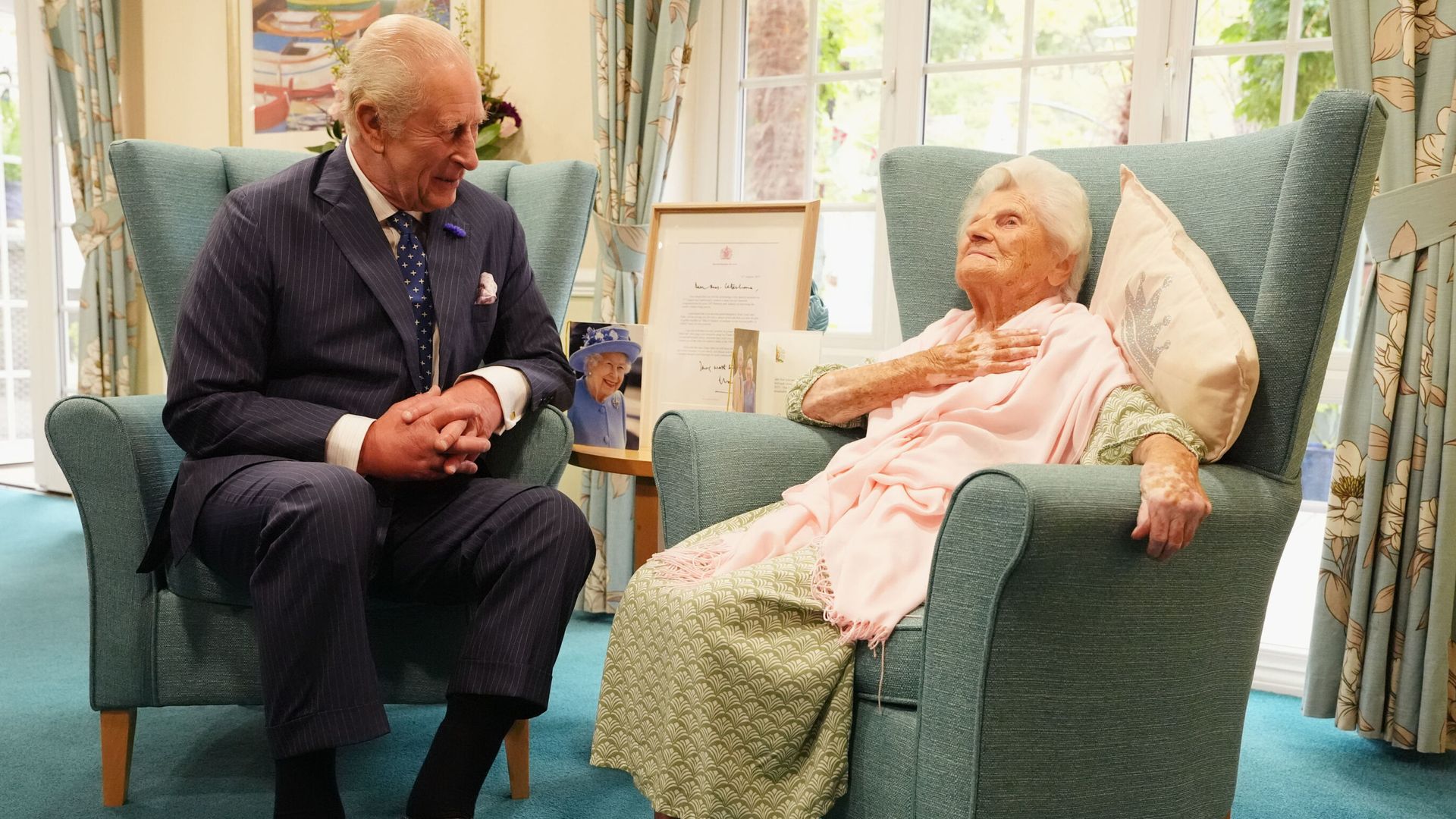
The media loves the image of a one-hundred-and-seventeen-year-old smiling awkwardly while meeting a dignitary. They do not show the multi-organ system decline, the cognitive erosion, or the sheer mechanical struggle of keeping a body functioning three decades past its evolutionary expiration date.
We are so desperate for a narrative of triumph over time that we celebrate mere survival, regardless of the quality of existence attached to it.
Stop Asking The Wrong Questions
Stop asking old people what they eat for breakfast. Stop looking for lifestyle secrets in the biology of statistical anomalies.
If you want to optimize your lifespan and, more importantly, your healthspan, ignore the folksy wisdom of centenarians. Look at metabolic health, resistance training, sleep architecture, and lipid management. Accept the hard truth that while you can mitigate your risks, you cannot out-exercise or out-supplement a bad hand of genetic poker.
The secret to living a long life isn't hidden in a century-old daily routine. It's hidden in your parents' medical history and your willingness to accept that biology does not care about your positive attitude.