The dust in the Middle East has a specific weight. It clings to the lungs and the lining of the throat, a gritty reminder of a geography that has defined American foreign policy for a generation. For the soldiers stationed at remote outposts along the jagged borders of Iran, that dust has felt like a permanent fixture. It felt like destiny. But the air changed this week. It didn't happen with a sudden explosion or a grand treaty signing. It happened with a timeline.
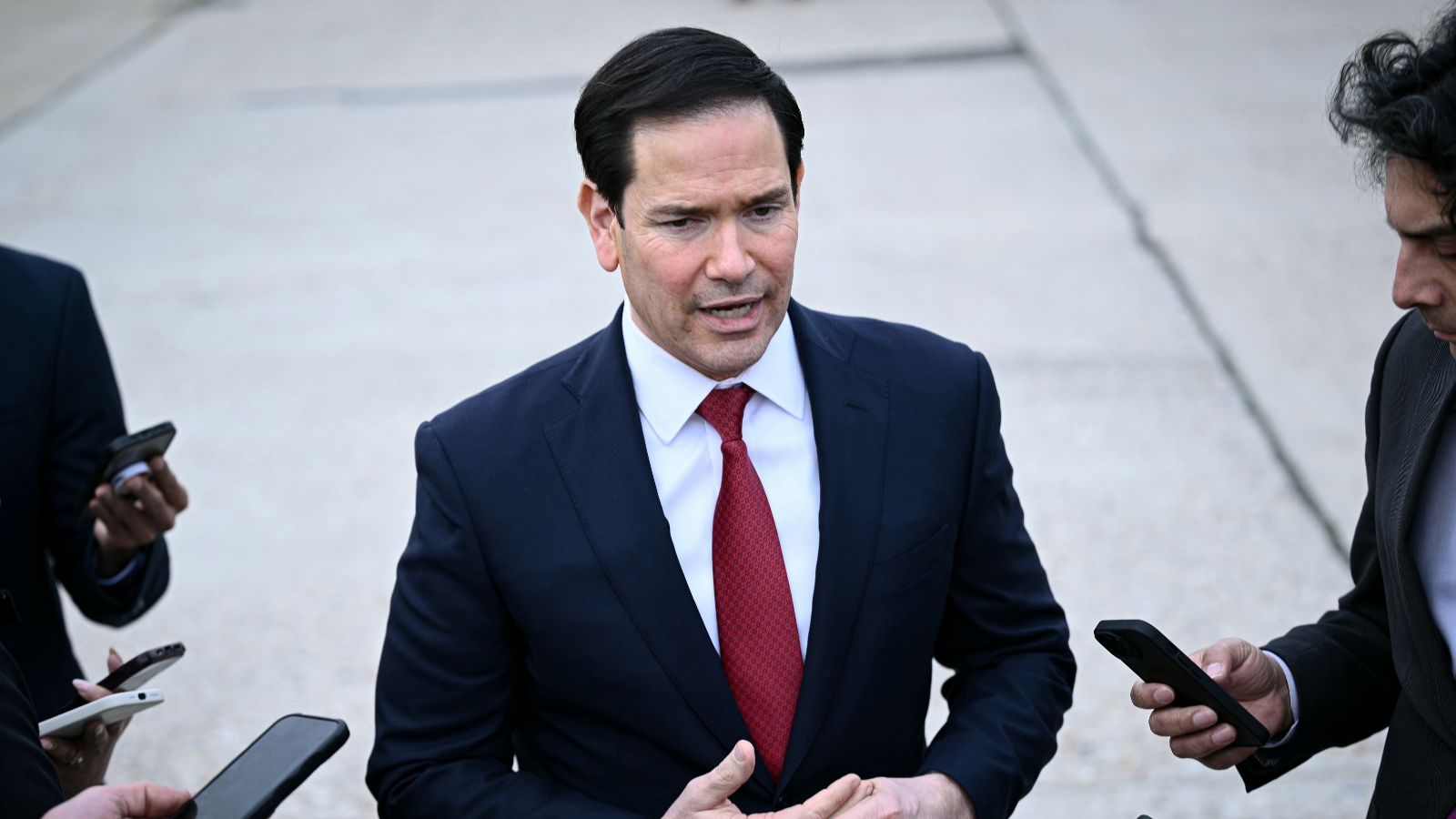
Senator Marco Rubio, now steering the ship of American diplomacy, leaned into a microphone and uttered a phrase that seemed, to many, like a statistical impossibility. Weeks. Not months. Not years. Weeks.
To understand the weight of those three syllables, you have to look past the mahogany briefing rooms in Washington and into the eyes of someone like "Miller." Miller is a composite of the thousands of young men and women currently wearing the American flag on their shoulders in the region. For Miller, a "timeline" isn't a political talking point. It is the difference between seeing his daughter’s first steps and watching them through a pixelated screen on a three-second delay.
For years, the American presence near Iranian interests has been described in the abstract. Pundits talked about "deterrence" and "strategic posturing." They treated the map like a chessboard. But chess pieces don't bleed. Chess pieces don't get letters from home that they are afraid to open because the longing might break their concentration. The mission had become a blur, a marathon with no finish line in sight. Until now.
The Shift in the Wind
Rubio’s announcement wasn't just a scheduling update. It was a fundamental pivot in how the United States views its role in an exhausted region. The logic is lean. The administration has signaled that the objective—the containment of immediate threats and the stabilization of specific flashpoints—is reaching a point of diminishing returns.
We have lived through the era of the "forever war." We grew accustomed to the idea that once boots hit the ground, they stay there until the soles wear thin and the mission creep expands to fill every available vacuum. This new directive challenges that exhaustion. It suggests that a superpower can be surgical. It suggests that "ending" an operation is just as vital a skill as "starting" one.
Consider the mechanics of such a withdrawal. It is a logistical ballet performed in a minefield. You cannot simply turn off the lights and lock the door. There are sensors to be dismantled, local partners to be briefed, and a delicate balance of power to be maintained so that the exit doesn't create a gale-force wind of instability. Yet, the mandate is clear. The clock is ticking in a way it hasn't ticked in decades.
The Invisible Stakes
Why the rush? The skeptics will say it’s political theater, a way to notch a win before the next news cycle devours the current one. But the reality is more grounded in the cold math of global priority. The world is getting smaller, and the threats are getting more diverse. Every dollar and every hour spent maintaining a static position in the Iranian theater is an hour not spent on the technological frontiers or the rising tensions in the Pacific.
There is also the human cost of "just a few more months."
Mental health professionals who work with returning veterans often speak of the "waiting room effect." It’s the psychological toll of being in a state of constant, low-level readiness without a clear expiration date. It erodes the soul. When Rubio says "weeks," he is effectively opening the door to that waiting room. He is telling the Millers of the world that the horizon is finally moving toward them.
The geopolitical implications are equally sharp. Iran has long used the presence of U.S. troops as a focal point for its domestic propaganda and its regional proxy maneuvers. By removing that focal point on an accelerated schedule, the U.S. is effectively changing the game. It is a move of confidence. It says: "We have done what we came to do, and we do not need to hover to be powerful."
The Complexity of Goodbye
Of course, the transition is fraught. Critics argue that a rapid exit provides a "vacuum" for Iranian influence to seep into. They point to historical precedents where quick departures led to long-term headaches. These are valid fears. The Middle East has a long memory and a short fuse.
But the administration’s gamble is based on a different kind of history. It’s based on the lesson that an indefinite presence often creates the very instability it seeks to prevent. It turns protectors into targets. It turns "temporary" bases into permanent scars on the landscape.
The strategy being deployed now is one of "active absence." It relies on high-tech surveillance, diplomatic pressure, and rapid-response capabilities that don't require a constant, heavy footprint on the sand. We are moving from the era of the garrison to the era of the ghost.
The Quiet in the Room
When the news hit the mess halls, there wasn't a roar of cheering. There was a quiet, stunned sort of relief. The kind of silence that follows a long, loud noise you’ve finally stopped hearing.
We often talk about war in terms of "victory" or "defeat." Those words feel increasingly hollow in the 21st century. Maybe the new definition of success isn't a flag planted in a capital city. Maybe success is the ability to recognize when the work is done.
It takes a specific kind of courage to set a deadline. A deadline creates accountability. It means if things go wrong in week eight, there is no "month nine" to hide behind. Rubio and the current administration are tethering their reputations to this timeline. They are betting that the American military is agile enough to exit without tripping.
As the heavy transport planes begin to line up on the tarmac, the story shifts from the "what" to the "who." It shifts to the families waiting at the gates of Fort Bragg or Camp Pendleton. It shifts to the communities that have grown used to the empty chairs at Thanksgiving.
The dust is still there, blowing across the plains of the Middle East, settling on the equipment and the abandoned barracks. But for the first time in a long time, that dust isn't the future. It’s just the past, clinging to the boots of people who are finally walking toward the sun.
The planes will lift off. The engines will roar over the desert. And somewhere in the belly of a C-130, Miller will close his eyes and realize that "weeks" has finally become "today."