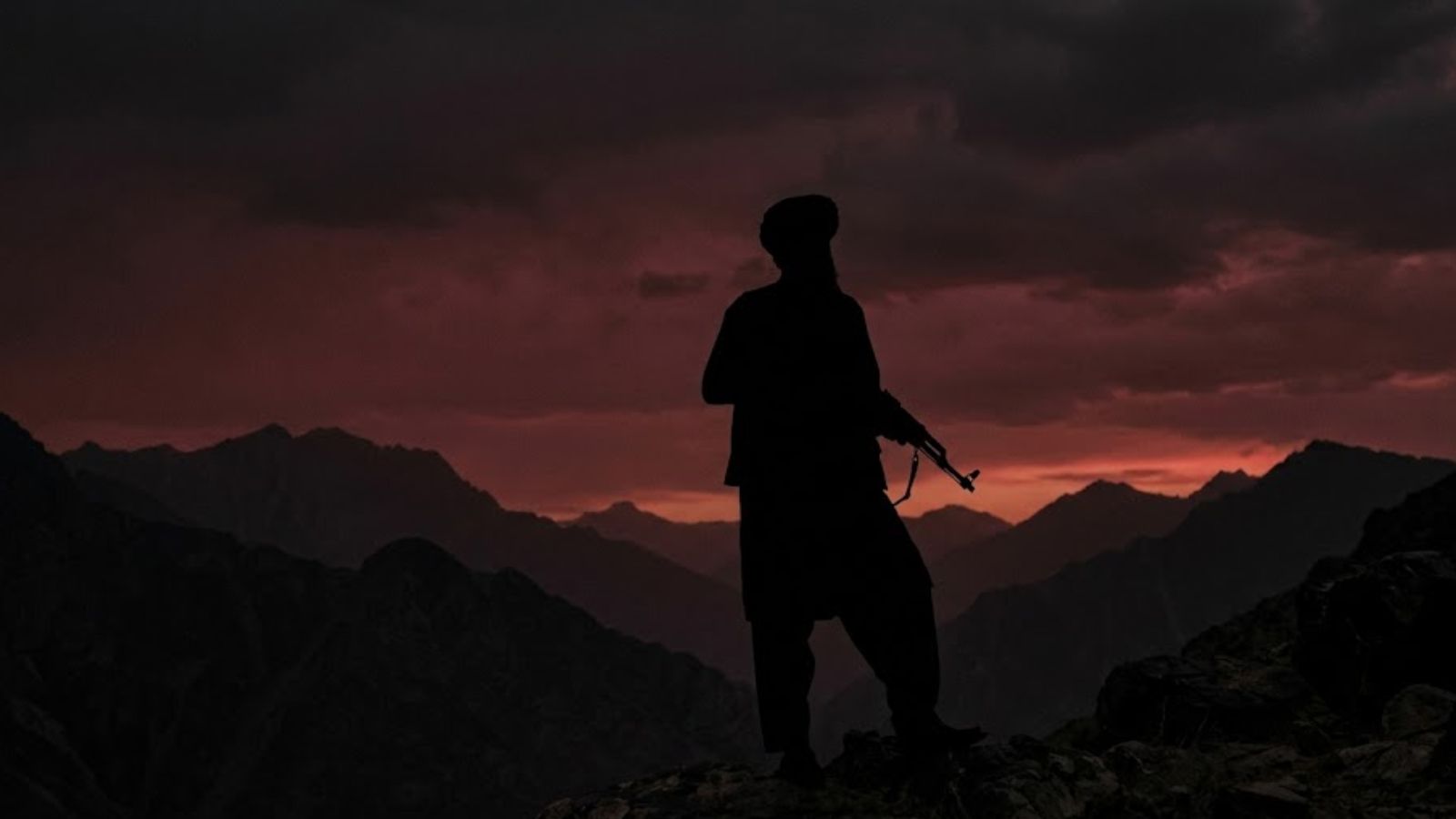
Dust. It covers everything in the rugged borderlands of northwestern Pakistan. It settles on the barrels of worn rifles, clings to the fabric of wool shawls in the chill of dusk, and coats the concrete blocks of remote military outposts.
In the quiet hours before midnight, a checkpoint in Khyber Pakhtunkhwa is rarely a place of grand geopolitical statements. It is a lonely outpost of duty. Young men, far from their home villages in Punjab, Sindh, or the nearby valleys, sit together around small stoves. They brew tea. They talk about their families, the coming harvest, or the children growing up while they stand watch on stony ridges.
Then the darkness breaks.
The Anatomy of an Ambush
When an assault hits a remote post, it does not arrive with the slow, deliberate buildup seen in cinema. It arrives all at once—a sudden, deafening cascade of automatic fire, rocket-propelled grenades, and shattered stone.
The attack on a security checkpoint in the region left fifteen security personnel dead. In the ensuing clash, retaliatory fire from the surviving defenders took the lives of twelve militants. Twenty-seven human lives ended in a span of hours, amidst the flash of muzzle fire and the echo of explosions bouncing off barren hillsides.
Numbers on a news ticker flatten the human reality. "Fifteen personnel." "Twelve militants." To read these figures is to consume a stark tally of a ongoing conflict, but behind those integers lies a far heavier weight.
Consider a hypothetical young soldier standing watch that night. Call him Jalal. Jalal is twenty-two. His primary weapon is not just his rifle, but his alertness after hours of sensory deprivation in the dark. He is thinking of his mother’s cooking, or perhaps the winter coat he promised to buy his younger brother with his next stipend. When the first rocket detonates against the perimeter perimeter wall, Jalal does not process the broader regional dynamics or the shifting alliances of armed groups. He acts on instinct, training, and the urgent necessity to keep the man standing next to him alive.
The fighting in these mountain passes is intense and close. Positions are defended foot by foot. Wall by wall.
The Human Cost Beyond the Wire
When the gunfire eventually ceases and the smell of cordite drifts off into the night air, a second, quieter tragedy begins.
Fifteen families will receive a knock on the door in the morning light. An officer will stand on a doorstep in a quiet village hundreds of miles away, holding a folded flag or a cap. A mother will drop to her knees. A wife will look at her young children and realize that the voice on the other end of the phone, promised for the weekend, will never sound again.
The conflict in northwestern Pakistan is often framed through the lens of national security, regional stability, and counter-terrorism doctrine. These macro-level frameworks are necessary for strategic analysis, yet they obscure the immediate, visceral cost paid by local communities and frontline troops.
For decades, the people of Khyber Pakhtunkhwa have lived in the shadow of persistent volatility. Checkpoints are not abstract symbols of state authority to the locals; they are part of the daily commute. They are the places where farmers show their identity cards on the way to market, where buses wait under the watchful eyes of armed sentries, and where the line between peace and sudden violence remains perilously thin.
The Mechanics of the Cycle
Why does this cycle repeat?
The geography itself dictates much of the conflict. The terrain is immense, harsh, and difficult to secure completely. Deep ravines and unmapped mountain trails provide cover for militant networks that move across borders and around conventional defenses. Holding a single post requires constant vigilance, exposed to an adversary that chooses the time, place, and intensity of every engagement.
When militants launch an assault on a fixed position, they rely on shock and overwhelming initial firepower. The defenders must endure that first shock, rally, and hold their ground until support arrives or the attackers are repelled. The result is almost always heavy casualties on both sides—a brutal arithmetic where victory is measured purely by survival.
Retaliatory fire in such moments is not merely tactical; it is a fight for existence. Twelve militants were killed in the response, representing a heavy blow to the attacking force, but the strategic equilibrium remains tense. Each strike brings a counter-strike. Each loss deepens the resolve on both sides of the line.
Standing Watch in the Aftermath
By morning, the sun rises over the outpost just as it always does. The smoke clears, revealing cracked concrete, burnt earth, and shell casings scattered across the dirt. Reinforcements arrive. Medical teams tend to the wounded, while investigators document the scene.
New soldiers will be assigned to that same wall. They will step over the freshly swept ground, shoulder their weapons, and scan the horizon. They know what happened hours before. They know the risk. Yet they stand there anyway, holding the line against the dark.
The true story of the attack in Khyber Pakhtunkhwa is not found in the tactical debriefs or the brief press statements issued by authorities. It is found in the silence that follows the battle—the silent posts, the silent homes, and the enduring heavy burden carried by those who remain on guard.