The air inside a diplomatic briefing room smells permanently of stale coffee and industrial carpet cleaner. It is a sterile, windowless environment designed to strip away human emotion, replacing it with the bloodless language of communiqués, tariffs, and bilateral frameworks. Maps hang on the walls, their borders crisp and absolute.
But borders are never crisp on the ground.
Step outside those heavy double doors, and the global economy becomes a chaotic, breathing entity driven entirely by human anxiety and political survival. For months, the narrative surrounding the upcoming Asia-Pacific Economic Cooperation summit has been treated by political analysts as a dry math problem. They calculate the gross domestic product of the member states. They chart the fluctuating value of the yuan against the dollar. They treat international diplomacy like a chess match played by supercomputers.
They are looking at the wrong map.
To understand why Donald Trump is quietly penciling in a fourth major trip to China, you have to ignore the grand strategic theories and look at a completely different set of numbers. You have to look at the domestic calendar. Specifically, you have to look at the looming midterms.
Politicians on the campaign trail like to project an image of absolute control. They stand behind bulletproof glass, bathed in the roar of stadium crowds, projecting total certainty. But behind the scenes, the atmosphere is dictated by a profound, gnawing vulnerability. Every poll is a ticking clock. Every economic indicator is a potential landmine. When a presidency faces a difficult midterm election, the domestic landscape becomes hostile territory.
When the ground beneath your feet at home starts to shake, the natural instinct is to seek a larger stage.
Consider the optics of a state visit to Beijing. It is the ultimate political theater. There are no hecklers in the Great Hall of the People. The handshakes are choreographed down to the millimeter. The flashbulbs of a hundred international photographers create a halo of global authority that no domestic campaign rally can replicate. For a president looking to project strength to an anxious electorate back home, a trip across the Pacific is not an escape from domestic politics. It is the continuation of domestic politics by other means.
The real stakes of this potential fourth trip do not lie in the formal text of whatever trade agreement might be signed. The real stakes are psychological.
Imagine an American soybean farmer sitting at a kitchen table in Iowa, staring at a stack of unpaid bills. To that farmer, the phrase "trade war" is not an abstract concept debated on cable news. It is a line item on a ledger. It is the difference between keeping the family land or selling it off to a developer. For two years, that farmer has been told to hold the line, to be patient, to trust that the pain will eventually yield a historic deal.
But patience is a luxury that expires when the bank notes come due.
Now, look at the view from Beijing. Chinese officials are playing a completely different game, measured in decades rather than electoral cycles. They watch the American political calendar with the cold detachment of an actuary. They know exactly when a president is most desperate for a victory, and they know exactly how to use that desperation as leverage. Every delay, every sudden shift in rhetoric, every polite but firm refusal to blink is calculated to test the American administration's nerve as the election approaches.
This is the invisible friction that defines modern diplomacy. It is a collision between two incompatible timelines: the frantic, short-term scramble of American electoral politics and the slow, deliberate march of Chinese state planning.
When these two forces meet, the results are rarely orderly. The rumors of a fourth trip suggest a sudden realization within the administration that the standard toolkit is no longer working. A few tweets and a minor tariff adjustment are no longer enough to move the needle or calm the markets. The situation demands something larger. It demands the kind of high-stakes, face-to-face drama that only a presidential visit can provide.
But high-stakes drama carries immense risk.
Going to Beijing for a fourth time is an implicit admission that the previous three trips did not finish the job. It raises the bar of expectation to a dangerous height. If the president boards Air Force One and flies across the world only to return with a vague statement of mutual cooperation and no concrete concessions on intellectual property or agricultural purchases, the narrative of strength collapses. The trip ceases to be a demonstration of American leverage and becomes a symbol of American frustration.
The danger of relying on theater is that the audience eventually demands a resolution to the plot.
The markets understand this risk, even if the political strategists choose to ignore it. Wall Street does not respond to the poetry of a joint press conference; it responds to the reality of supply chains. For every executive trying to decide whether to move a manufacturing plant out of Shenzhen, a fourth presidential trip is a signal of deep instability. It suggests that the rules of global trade are no longer being written by trade representatives and lawyers, but are instead subject to the volatile whims of personal chemistry between two leaders.
That unpredictability is a heavy tax on the global economy. It paralyzes investment. It forces companies to hoard cash instead of hiring workers. It creates a pervasive sense of waiting, an economic holding pattern where everyone is looking toward the next summit, the next handshake, the next flight.
As the midterms draw closer, the pressure to turn that holding pattern into a victory parade will become unbearable. The administration will need a breakthrough, or at least the convincing illusion of one. The Chinese government knows this. They will offer just enough progress to keep the meetings going, just enough hope to keep the American delegation engaged, while giving away nothing that compromises their long-term economic dominance.
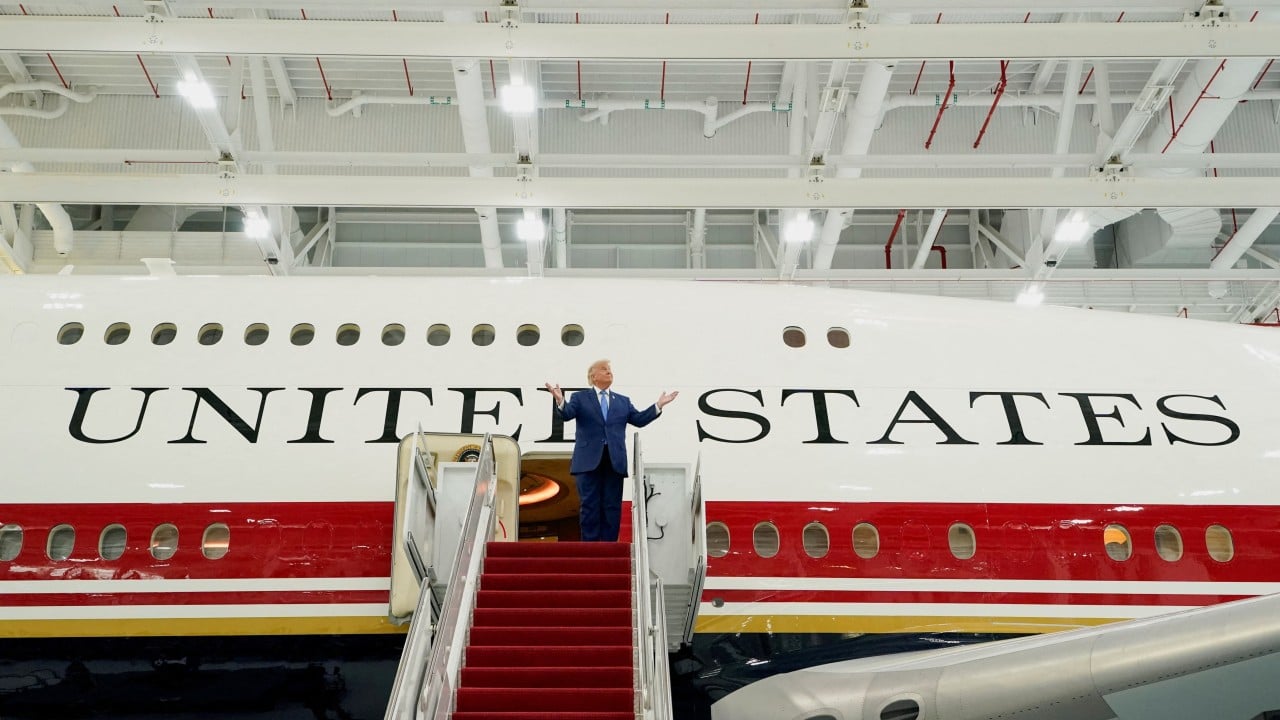
The plane will eventually taxi down the runway at Andrews Air Force Base. The engines will roar, and the massive blue-and-white aircraft will lift off into the sky, carrying the full weight of an administration's political survival in its cargo hold. The commentators will track the flight path on digital maps, analyzing the schedule and predicting the talking points.
But the true destination isn't Beijing. It is the voting booths of the American Midwest, where an anxious public waits to see if the long journey was worth the cost.