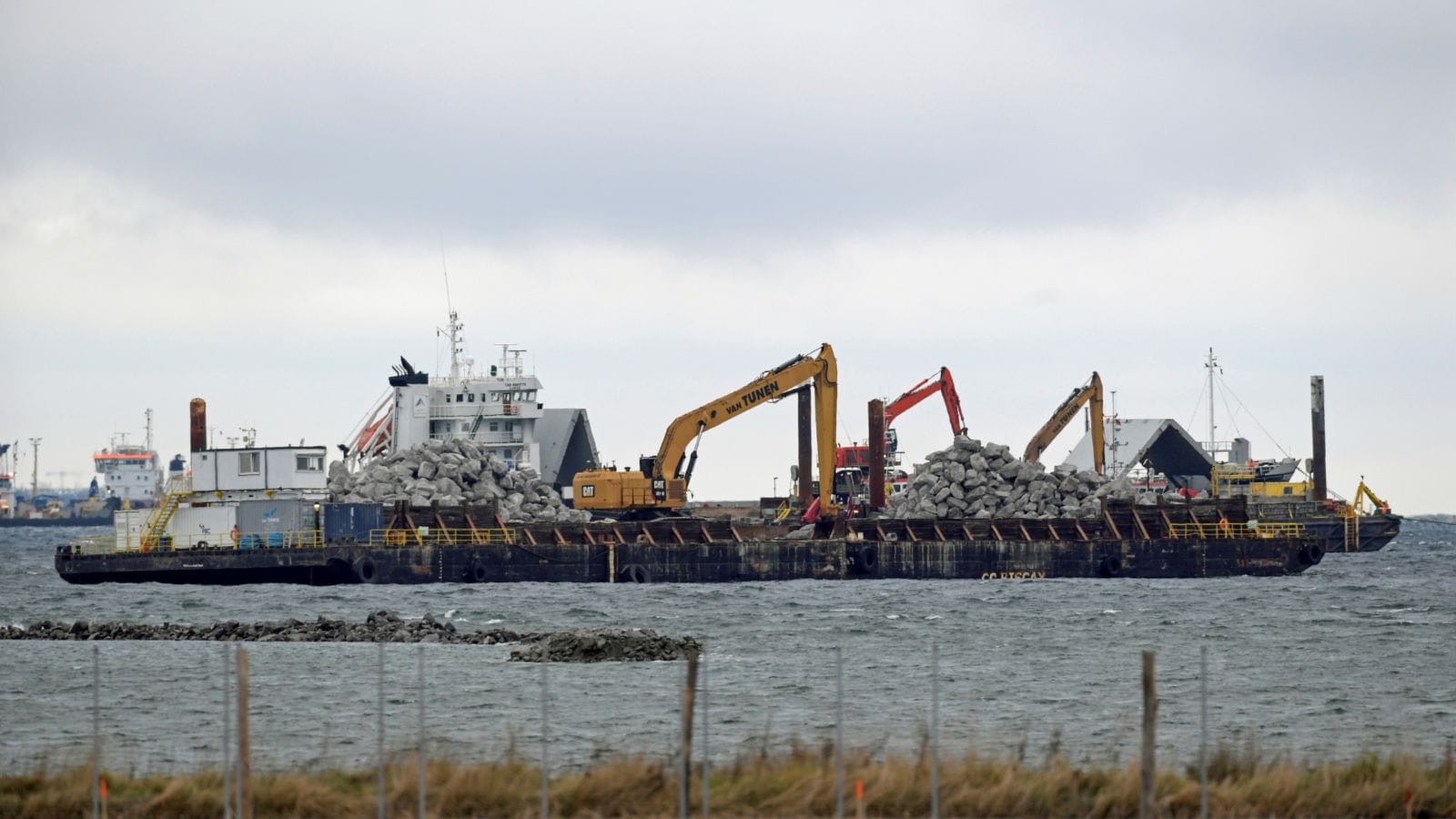
The completion of the Fehmarnbelt Fixed Link will fundamentally re-engineer the logistics corridor between Scandinavia and Central Europe. Spanning 18 kilometers across the Baltic Sea between the Danish island of Lolland and the German island of Fehmarn, this project replaces an outdated maritime bottleneck with a continuous, high-capacity land conduit. By eliminating a 45-minute ferry crossing—which fluctuates in throughput based on weather and port congestion—and replacing it with a fixed 10-minute automotive and 7-minute rail transit, the project reshapes the supply-chain economics of northern Europe.
Evaluating an infrastructure project of this magnitude requires moving past surface-level travel time reductions. Maximizing the utility of this link depends on understanding the underlying structural mechanics: the technical trade-offs of immersed tunnel engineering, the multi-modal freight efficiencies generated, and the microeconomic realities governing its capital repayment and systemic bottlenecks.
Immersed Tube Engineering: Structural and Geotechnical Mechanics
The choice of an immersed tube tunnel over a traditional bored tunnel or a cable-stayed bridge was dictated by specific geotechnical limitations and marine safety profiles. The Baltic Sea's Fehmarn Belt exhibits soft clay and sand strata down to 40 meters below sea level, coupled with shallow waters that present severe navigational hazards for high-clearance shipping bridges.
Bored tunnels require continuous, consolidated rock strata to maintain face stability during excavation. In contrast, the immersed tube method relies on a controlled, modular fabrication process that shifts structural risk from the unpredictable seabed to a highly regulated, land-based manufacturing environment.
+------------------------------------------------------------+
|                Standard Tunnel Cross-Section               |
+------------------------------------------------------------+
| [ Westbound Road ] [ Rail Track 1 ] [ Service ] [ Rail Track 2 ] [ Eastbound Road ] |
+------------------------------------------------------------+
The Modular Manufacturing Lifecycle
The construction framework relies on a purpose-built 200-hectare automated factory in Rødbyhavn, Denmark. This facility functions as a closed-loop production line, standardizing the structural integrity of the link across 89 individual elements: 79 standard units and 10 specialized functional units.
- Standard Element Specifications: Each standard element measures 217 meters in length, 42 meters in width, and 9 meters in height, with a gross weight of approximately 73,500 metric tons. These units are cast in nine discrete sub-segments using a continuous curing process to eliminate cold joints, which are the primary structural failure points for water ingress under hydrostatic pressure.
- Specialized Element Integration: Spaced at precise 1.8-kilometer intervals, the 10 specialized elements feature a two-story sub-floor or "basement." These spaces house the mechanical infrastructure—including high-capacity drainage pumps, environmental scrubbing systems, and transformers—without reducing the clearance of the main traffic tubes.
Hydrostatic Submersion and Volumetric Alignment
The transition from dry-dock fabrication to marine positioning follows a strict sequence governed by buoyancy physics and structural tolerances.
- Bulkhead Sealing and Flotation: Temporary water-tight steel bulkheads are affixed to both open ends of a cured element. The dry dock is flooded, and the hollow internal geometry allows the 73,500-ton concrete mass to float.
- Catamaran Towage and Marine Positioning: Specialized catamaran vessels tow the element to its designated coordinate over a pre-dredged trench. This trench requires the excavation of 20 million cubic meters of marine sediment, dropped to depths reaching 45 meters below sea level.
- Ballasting and Controlled Descent: Integrated ballast tanks within the element are systematically flooded, increasing the specific gravity of the structure relative to seawater to initiate a controlled descent.
- Millimetric Docking and Hydrostatic Compression: The element is lowered onto a precision-leveled gravel foundation bed. Mechanical actuators pull the new element into contact with the previously laid segment. Once the bulkheads form an initial seal, the water trapped between them is pumped out. The atmospheric pressure inside the existing tunnel section creates a massive hydrostatic differential against the external sea pressure, compressing the specialized rubber gaskets (Gina gaskets) at the joint to form a permanent, watertight seal.
- Backfilling and Structural Armoring: The element is covered with layers of graded sand and heavy rock armor, flush with the natural seabed. Over time, natural sedimentation creates a protective mantle that insulates the structure from anchor strikes and marine collisions.
Multi-Modal Freight Optimization and Spatial Economics
The primary economic value of the Fehmarnbelt Link lies in its role as an optimization tool for the Trans-European Transport Network (TEN-T) Scandinavian-Mediterranean Core Network Corridor. By converting a discontinuous maritime bottleneck into an uninterrupted overland pipeline, the link shifts the operational math of regional supply chains.
+------------------------------------------------------------+
|             Logistics Route Efficiency Comparison          |
+------------------------------------------------------------+
| Legacy Rail: Hamburg -> Jutland Peninsula -> Copenhagen      | [~4.5 Hours]
| Fehmarnbelt Link: Hamburg -> Direct Undersea -> Copenhagen | [~2.5 Hours]
+------------------------------------------------------------+
The Rail Freight Bypass Effect
Currently, rail freight moving between Sweden and Germany must utilize the Great Belt Fixed Link via the Jutland Peninsula. This detour adds 160 kilometers to the transit route. The Fehmarnbelt Tunnel removes this operational penalty, reducing rail transit times between Hamburg and Copenhagen from 4.5 hours to approximately 2.5 hours.
- Tractive Effort and Energy Reductions: The tunnel maintains a near-zero horizontal gradient compared to the steep approach inclines of high-span bridges. Freight trains up to 830 meters in length can maintain steady speeds without requiring auxiliary locomotive power, cutting energy consumption per net ton-kilometer.
- Asset Utilization Velocity: For logistics providers, a two-hour reduction on a single transit leg changes how rolling stock is deployed. Locomotives and crew shifts that previously completed one direct run per 12-hour window can now complete a round trip within the same operational period, effectively doubling asset utilization.
Road Freight and Just-In-Time Supply Chains
Automotive logistics rely on highly predictable transit windows. The existing ferry system introduces variable latency via scheduled departures, capacity constraints during peak periods, and complete operational standstills during severe winter storms. The fixed link introduces a fixed transit time, allowing logistics firms to reduce the safety stock buffers previously held in warehouses across southern Sweden and northern Germany.
Macroeconomic Models and Structural Bottlenecks
The Fehmarnbelt Fixed Link is structured under a state-guaranteed user-financed model, managed by the Danish state-owned enterprise Femern A/S. The total estimated construction cost of €7.4 billion is funded primarily through loans raised by Denmark on international capital markets, supplemented by a €1.3 billion subsidy from the European Union’s Connecting Europe Facility.
The Capital Repayment Model and Traffic Risk
The financial viability of the project rests on a 30-to-40-year amortization model based entirely on user tolls. Car passages are estimated to cost approximately €66, while heavy commercial vehicles will pay around €280.
+------------------------------------------------------------+
|                  Financial Cost Structure                  |
+------------------------------------------------------------+
| Danish State Capital Loans                                 | ============== [€6.1B]
| EU Connecting Europe Grant                                 | ==== [€1.3B]
+------------------------------------------------------------+
| Total Budget: €7.4 Billion                                 |
+------------------------------------------------------------+
However, this model remains sensitive to two primary financial variables:
- Elasticity of Passenger Demand: While commercial logistics providers value time and predictability over price, passenger vehicle traffic is highly elastic. If toll pricing is set too close to the historical cost of ferry transit, a significant portion of leisure travelers may opt for the legacy maritime route or the longer, toll-free overland route through Flensburg, extending the debt repayment timeline.
- Operational Cash Flow Diversion: Under the financing agreement, Denmark retains the toll revenue to pay off the tunnel infrastructure. However, Germany is solely responsible for funding and constructing its land-based connection networks.
The German Hinterland Connection Bottleneck
A major operational vulnerability of the project is the uneven progress of infrastructure construction on either side of the Baltic Sea. While Denmark has updated its rail linkages to dual-track, electrified standards on schedule, the German side faces systemic planning bottlenecks.
The upgrading of the rail corridor between Lübeck and Puttgarden requires dual-tracking, complete electrification, and the construction of the new Fehmarn Sound Tunnel to replace the old structurally deficient bridge. This work has been delayed by complex environmental litigation, local municipal noise objections, and budgetary shifts within Deutsche Bahn.
Operational data from 2026 confirms that the immersion phase of the main tunnel sections is running roughly two years behind its early targets, pushing the anticipated opening date from 2029 into the 2031 window.
If the main undersea link opens before Germany completes its high-speed rail connections, a structural capacity bottleneck will occur. Modern freight trains will exit a high-capacity, dual-track undersea corridor only to hit a single-track, non-electrified bottleneck on the German mainland. This mismatch will cap the entire corridor's throughput at the maximum capacity of its weakest link, reducing early-stage return on investment.
Strategic Imperatives for Regional Logistics Networks
With the operational horizon now firmly recalibrated to 2031, industrial logistics firms, intermodal transport operators, and regional supply chain planners must adjust their long-term infrastructure strategies. Speculative waiting is an operational risk; networks must adapt to the new realities of the corridor well before the first vehicle passes through the portal.
Inland Terminal Re-Centering
Logistics providers should shift primary distribution nodes away from traditional transit hubs on the western edge of the Jutland peninsula. The direct Hamburg-to-Copenhagen axis will become the dominant freight spine. Establishing high-capacity inland freight terminals and intermodal cross-docks in southern Lolland and the periphery of Hamburg will allow firms to decouple long-haul rail shipments from regional final-mile distribution.
Fleet Electrification Readiness
The dual-track rail line through the tunnel is built exclusively for electrified traction up to 200 km/h. Fleet operators must phase out any remaining diesel-hydraulic locomotives on Scandinavian-Continental runs. Rail asset procurement should favor multi-system electric locomotives capable of transitioning between different national grid voltages and signaling standards (ETCS Level 2) deployed across the German and Danish rail networks.
Intermodal Arbitrage Strategies
With road tolling structures favoring high-occupancy and low-emission vehicles, logistics managers must build freight models that mix rail for predictable, high-volume baseline cargo with road transit for time-sensitive, high-margin freight. By running predictive routing simulations that balance the fixed toll costs against driver hours-of-service limits, firms can systematically bypass marine weather delays and gain a structural cost advantage over competitors slow to adapt to the fixed link.