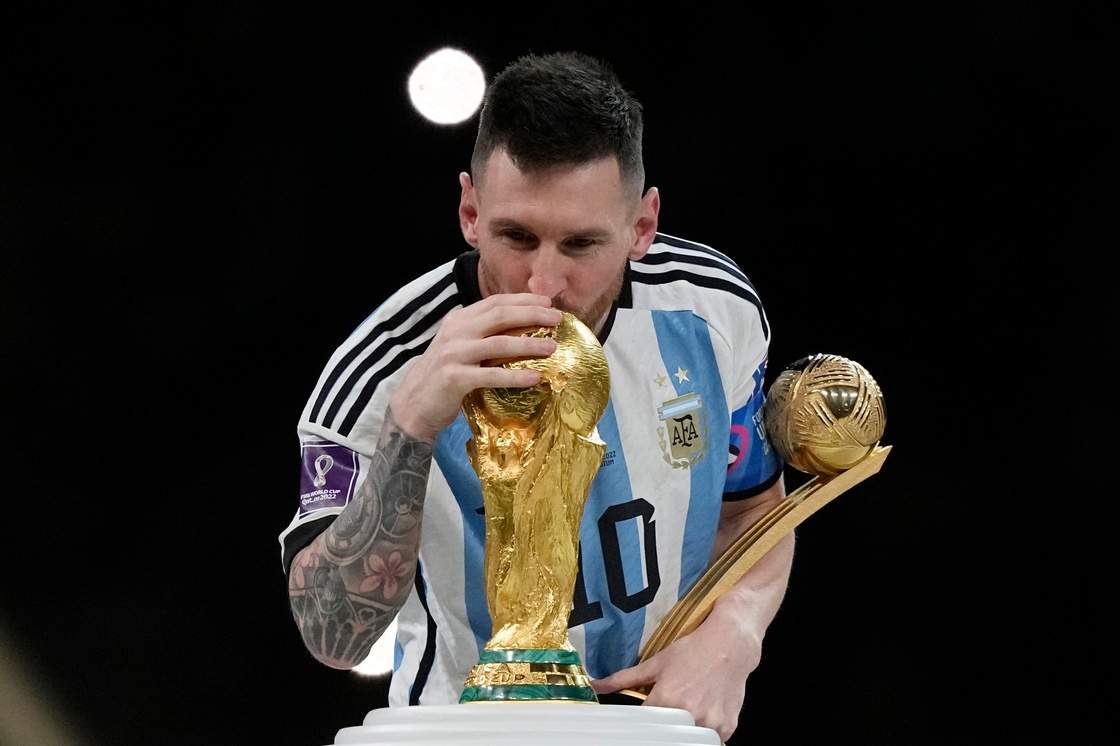
International athletic retirement is rarely a singular voluntary event driven entirely by biological decline. At the elite tier of global sport, a player's exit from national representation functions as a calculated capital preservation strategy, balancing physical depreciation, institutional leverage, and brand equity. When an athlete of Lionel Messi's magnitude concludes a national team tenure, the decision operates within a strict economic and physiological framework. The transition away from the Argentina national squad marks the closing of a high-variance asset class for the Argentine Football Association and the systematic reallocation of personal physical output for the athlete.
Evaluating this exit requires stripping away the emotional narratives typically applied to international farewells. Instead, we must examine the intersection of workload management, tournament cycles, and the diminishing marginal utility of international competition for a veteran elite performer.
The Physiological Cost Function of International Duty
As athletes age, their physical recovery curves steepen exponentially. The primary constraint on a professional soccer player's longevity is not match-day exertion, but the cumulative load of travel, compressed training blocks, and regulatory international windows.
For South American competitors, the logistical friction of international duty creates a severe drag on athletic output. Transatlantic travel schedules disrupt circadian rhythms and sleep architecture, while intense qualification cycles and continental tournaments impose high-impact mechanical stress on joints that have absorbed two decades of elite wear.
[International Call-Up]
       │
       ▼
[Transatlantic Transit & Circadian Disruption]
       │
       ▼
[Compressed Tactical Blocks & High-Intensity Sub-Max Training]
       │
       ▼
[Accelerated Tissue Fatigue & Reduced Club-Level Reserve]
This sequence illustrates why veteran management demands the elimination of non-essential competitive fixtures. The cost function of representing Argentina involves a high probability of acute soft-tissue injury paired with a delayed recovery window upon return to club environments. By severing the international obligation, the athlete shifts from a high-risk, high-frequency expenditure model to a controlled, low-volatility maintenance program.
Institutional Dependency and Systemic Rebalancing
The Argentina national team has operated for over a decade under a structural dependency model. Tactical architectures, transitional phases, and offensive generation metrics heavily skewed toward a single focal point. When an offensive system relies on a hyper-efficient creator to bypass midfield deficits, the collective tactical development of supporting cohorts is inherently suppressed.
Removing the central node forces an operational rebalancing across the squad. The technical staff can no longer rely on individual brilliance to solve structural deficiencies in ball progression or defensive block penetration.
- Tactical Decentralization: Redistribution of possession duties across multiple midfielders rather than a single primary playmaker.
- Pressing Intensity Calibration: Transitioning from a low-intensity, high-reward defensive posture anchored by a static luxury player to a collective, high-block defensive system.
- Leadership Allocation: Dispersing the captaincy burden and psychological governance across a committee of senior players currently active in elite European or domestic leagues.
This institutional shift carries short-term volatility. Win-probability metrics and expected goals ratios for the national side will inevitably experience a transitional dip as the tactical framework adapts to a distributed responsibility model. However, long-term organizational resilience increases because the systemic vulnerability of single-point-of-failure architectures is eliminated.
The Brand Capital and Legacy Preservation Matrix
Athletic legacies at the highest tier are protected through strategic scarcity. Continuing to play international fixtures past the inflection point of declining marginal performance introduces brand erosion risk. If an aging icon participates in competitive matches where physical output falls below elite thresholds, public perception shifts from reverence to critical evaluation.
The decision to retire from international play locks in peak historical valuation. The historical metrics—trophy accumulation, goal-to-game ratios in major finals, and historical win-shares—are fixed in amber, insulated from the degradation of physical decline.
┌─────────────────────────┬─────────────────────────┐
│ High-Volume Exposure    │ Low-Volume Scarcity     │
├─────────────────────────┼─────────────────────────┤
│ Risk of diminished stat │ Maximum psychological   │
│ output in minor matches │ equity preservation     │
├─────────────────────────┼─────────────────────────┤
│ Vulnerability to public │ Permanent association   │
│ scrutiny over decline   │ with peak championship  │
│                         │ era                     │
└─────────────────────────┴─────────────────────────┘
This matrix dictates that the rational actor ceases international participation the moment the marginal brand value of an additional appearance turns negative. For Messi, securing the 2022 World Cup and subsequent continental titles represented the absolute ceiling of the equity curve. Every subsequent match carried asymmetrical downside risk for marginal upside in legacy enhancement.
The Capital Reallocation Play
The reallocation of freed athletic capacity directly impacts club-level performance longevity and commercial asset valuation. Without the intercontinental travel burden, training recovery protocols can be customized down to the micro-cycle.
The immediate operational play involves optimizing minutes exclusively within high-margin, low-travel competitive environments. Capitalizing on this surplus energy allows for extended professional relevance, maintaining high commercial visibility without the compounding fatigue of CONMEBOL qualification grinds. The systemic exit from international competition is therefore an offensive maneuver designed to extend asset utility in the twilight phase of a career.