The glow of a late-night monitor illuminates a quiet kitchen. Coffee goes cold in the mug. Across the screen, a digital contract flickers with a single, brutal question: Will the Senate pass the bill by midnight? To most, it looks like a stock ticker. To the person staring at it, it is a pulse check on the future, a way to put a price tag on uncertainty.
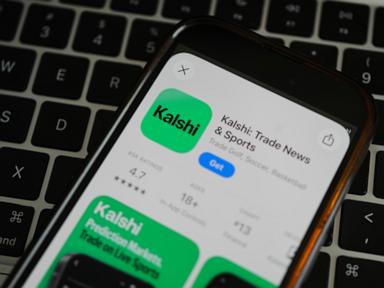
For months, platforms like Kalshi have offered a radical proposition. They argued that betting on the outcome of elections, legislative votes, and macroeconomic indicators was not traditional gambling. They called it prediction. They called it a financial instrument. They called it science. Meanwhile, you can explore similar events here: Inside the Affordability Trap Threatening the Democratic Midterm Strategy.
A federal judge just drew a hard line in the sand and told them they were wrong.
Utah stepped up to enforce its strict anti-gambling statutes against these burgeoning prediction markets, and the court refused to block them. That decision sent a tremor through the financial technology sector. It exposed a raw nerve in American jurisprudence. Where does free speech and financial speculation end, and where does state-regulated gambling begin? To explore the full picture, we recommend the detailed report by BBC News.
To understand why this ruling matters, you have to step away from legal briefs and look at how human beings actually interact with the unknown. We hate not knowing. More than that, we have an insatiable urge to bet on our own guesses.
The Anatomy of a Wager
Think about how a standard wager works. Two people disagree on a horse race, a football game, or the roll of a pair of dice. Money changes hands based on chance, spiced up by skill or insider knowledge. States have spent centuries building elaborate regulatory fortresses around this impulse. They license casinos, tax lottery tickets, and ban underground poker rooms, all under the banner of consumer protection and moral order.
Prediction markets tried to bypass these fortresses by wrapping wagers in the clean, crisp language of derivatives.
Instead of betting on a roulette wheel, users buy contracts that pay out if a specific real-world event occurs. Will inflation hit three percent next quarter? Will a specific federal nominee be confirmed? Proponents argue this creates a superior form of information aggregation. Instead of relying on flawed polls or talking heads, you look at where people are putting their actual money. Skin in the game, the argument goes, purifies the signal.
Markets do not lie, because liars lose money.
Except when the state steps in and says the market itself is illegal.
Utah’s aggressive stance against these platforms highlights a profound philosophical clash. On one side are innovators who view boundaries as obstacles to be coded around. On the other side are state regulators who view unvetted wagering as an existential threat to public welfare, regardless of whether the dice are physical or digital.
When Innovation Collides with Antiquated Statutes
Imagine walking into a vintage statehouse where the laws on the books were drafted when telegrams were cutting-edge technology. The language is archaic. Words like "lottery," "bet," and "wager" carry heavy, moralistic baggage.
When a modern platform arrives offering event contracts, state attorneys general do not see a sophisticated information market. They see a loophole. They see a digital casino operating without a license, bypassing age verifications, consumer protections, and geographic restrictions.
The recent ruling validating Utah's right to enforce its anti-gambling laws on platforms like Kalshi proves that the old definitions still pack a punch.
Courts are often reluctant to strip states of their traditional police powers—the inherent authority to regulate health, safety, and morals—simply because an industry slaps a tech-forward label on its product. If you let people buy and sell contracts on political outcomes, critics argue, you have effectively turned democracy into a sports book. You have monetized civic life.
Consider what happens next. Other states with conservative gaming laws will likely take cue from Utah. They will look at prediction markets not as neutral arbiters of truth, but as unauthorized bookmakers operating in their backyards. The legal patchwork across fifty states becomes a minefield. A platform that is legal in Delaware or New York suddenly finds itself facing criminal injunctions in Salt Lake City.
The Cost of Certainty
There is a tragic irony at the heart of this dispute. We live in an era of profound institutional distrust. Traditional media is eyed with suspicion. Polling organizations struggle to capture shifting public moods. Government agencies face relentless skepticism.
In that vacuum, prediction markets offered a seductive alternative. They promised a pure, unfiltered metric of human expectation. If a contract is trading at eighty cents, eighty cents worth of collective wisdom says the event will happen.
By allowing states to slam the brakes on these platforms, we preserve the old-school monopoly on gambling enforcement. But we also risk snuffing out a tool that, however messy, genuinely tried to map the contours of tomorrow.
The judge's decision is not just about Utah, and it is not just about Kalshi. It is about who gets to define the boundaries of human speculation in the twenty-first century.
The kitchen is dark now. The screen is locked. The question of tomorrow remains unanswered, and the law has decided that trying to buy the answer might just cost you everything.