The air in diplomatic briefing rooms is always deceptively clean. It smells of expensive upholstery, filtered oxygen, and freshly printed press releases. When a minister steps to a mahogany podium to announce a absolute halt to international dialogue, the words sound clinical. They sound like chess moves.
But thousands of miles away, those words translate into a very specific kind of silence.
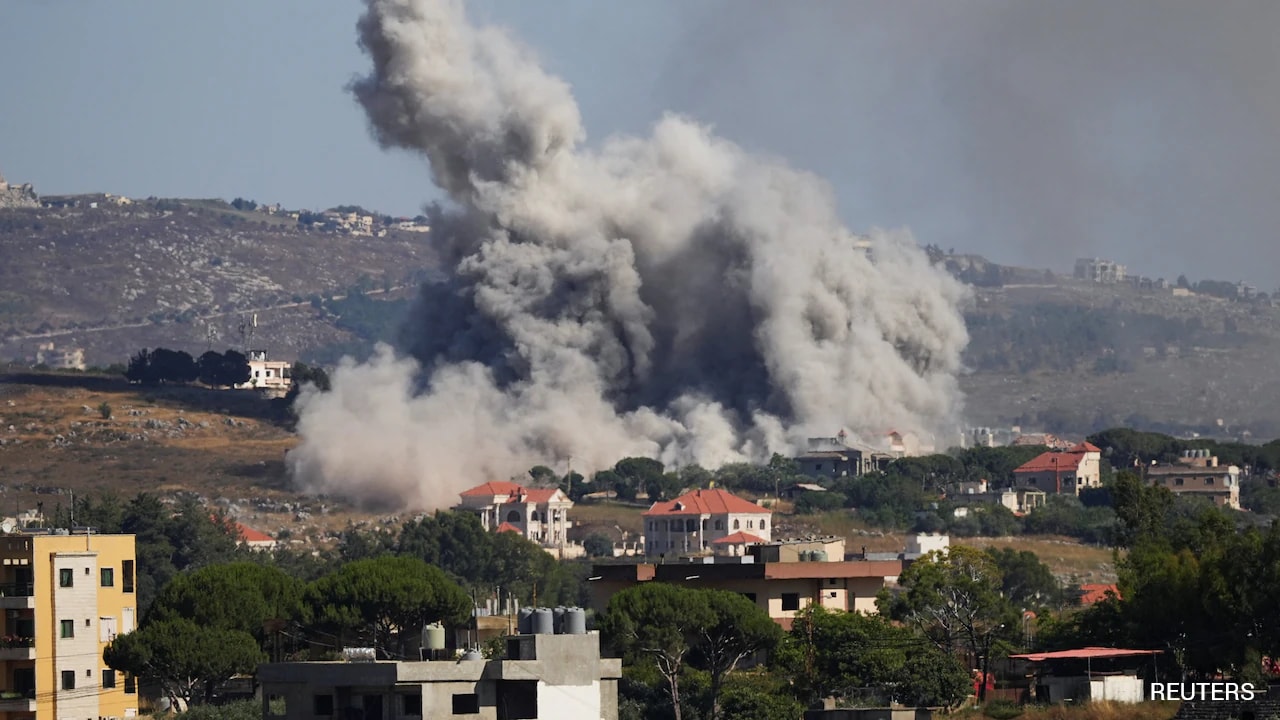
It is the silence that settles over a neighborhood in Beirut just after the fighter jets pass. It is the sound of a mother waiting for the dust to clear, holding her breath to listen for a cry beneath the rubble of what used to be her kitchen. To understand why Iran recently told the United States that there will be no peace talks, no grand bargains, and no diplomatic handshakes until the war in Lebanon stops, you have to leave the air-conditioned briefing rooms behind. You have to look at the leverage of human suffering.
Geopolitics is often taught as a game of grand strategy, a map where powerful nations move pieces across a board. That view is wrong. It is a comforting lie we tell ourselves to avoid looking at the raw, bleeding reality of international relations. The current standoff between Washington and Tehran is not a chess match. It is a high-stakes standoff where the currency being traded is time, and the people paying the price are civilians caught in the crossfire.
The Geography of a Ultimatum
When the Iranian foreign ministry issued its declaration, the immediate reaction in Western capitals was a mixture of frustration and predictable condemnation. To the policy makers in Washington, the ultimatum looked like obstructionism. It looked like a regime hiding behind its proxies to avoid the hard work of regional stabilization.
Consider the mechanics of the demand. Iran has made it clear that its willingness to sit across from American diplomats is directly tied to the cessation of hostilities in Lebanon. On the surface, this seems like a localized diplomatic maneuver. It is anything but that.
Let us use an analogy to understand how this leverage works. Imagine two rival corporate giants trying to negotiate a merger while one of them is actively funding a hostile takeover of the other’s most vital subsidiary. The negotiation cannot happen in a vacuum. By tying peace talks directly to the fate of Lebanon, Tehran is sending a message that echoes far beyond the borders of the Levant. They are stating that regional security is indivisible. You cannot offer an olive branch in Geneva while dropping bombs in Beirut.
The logic is brutal, but it is consistent. For decades, Iran has viewed its influence in Lebanon not just as a foreign policy objective, but as a core pillar of its own national defense. The relationship with Hezbollah is not a simple master-servant dynamic; it is an existential alliance. When Lebanon is struck, Tehran feels the vibration. Therefore, demanding a halt to the war before entering talks is not an arbitrary condition. It is a declaration of where Iran's red lines are drawn.
The View from the Ground
To truly grasp the weight of this diplomatic freeze, we must look at what happens when the talking stops.
Let us look at a hypothetical citizen—we will call him Karim. Karim does not read the state department readouts. He does not analyze the body language of diplomats in Switzerland. Karim owns a small grocery store in a suburb of Beirut. For the past several weeks, his life has been measured not by hours, but by the proximity of explosions. His supply chains are shattered. His savings are gone. His children sleep in the hallway because it is the only part of the house protected by thick concrete walls.
When Karim hears that Iran has refused to talk to the United States until the bombing stops, he does not feel a surge of geopolitical pride. He feels a cold, knotty dread. He knows that when two nuclear-adjacent superpowers refuse to speak to one another, the silence is filled with gunpowder.
The tragedy of modern diplomacy is that the people who hold the pens are rarely the ones who face the consequences of a failed negotiation. The United States maintains its posture of maximum pressure and unwavering support for its regional allies. Iran maintains its posture of resistance and strategic defiance. Meanwhile, the middle ground—the civilian infrastructure, the schools, the hospitals, the very fabric of daily life in Lebanon—is ground to powder.
The Illusion of Isolated Conflicts
The great mistake of Western foreign policy over the last two decades has been the belief that conflicts in the Middle East can be compartmentalized. There is a persistent, flawed assumption that you can counter Iranian influence in Yemen, strike their allies in Lebanon, enforce crushing economic sanctions on Tehran, and still somehow find a clean, isolated path to a nuclear agreement or a grand peace treaty.
It does not work that way. The regional architecture is too deeply interconnected.
When a missile hits a target in southern Lebanon, the shockwaves travel through financial markets, intelligence corridors, and political chambers across the globe. By linking the peace talks to the Lebanese ceasefire, Iran is forcing the United States to confront this interconnectedness. They are refusing to allow Washington the luxury of a bifurcated policy. They are saying, in effect, that if you want the benefits of a diplomatic breakthrough with Tehran, you must accept the responsibility of restraining the violence inflicted upon our allies.
This puts the American administration in a deeply uncomfortable position. Washington has its own domestic pressures, its own ironclad commitments to regional partners, and its own narrative to maintain. To yield to Iran's demand looks like weakness. To ignore it looks like a recipe for a wider, uncontainable regional conflagration.
The Cost of the Silent Treatment
What happens when diplomacy enters a deep freeze? History provides a grim roadmap.
When communication channels break down, miscalculation becomes the dominant force in international affairs. A radar malfunction, an overzealous commander on a naval vessel, a misdirected drone—any of these minor incidents can spark an escalation that neither side originally intended. Without a direct line of communication, without the ability to pick up a phone and clarify intentions, the march toward a larger war becomes almost automatic.
The current situation is fragile because the stakes have never been higher. We are not just talking about a localized border dispute. We are talking about a network of alliances that stretches from the Mediterranean to the Persian Gulf.
The standoff is a reminder that peace is not merely the absence of war; it is the presence of an alternative. Right now, there is no alternative on the table. There is only a rigid adherence to positions that have been frozen in place by decades of mutual distrust. The United States demands that Iran dismantle its regional influence before regular relations can resume. Iran demands that the United States halt its military and political interventions before a single word is spoken. It is a classic paradox: two parties requiring the final outcome of a negotiation as a prerequisite for starting the negotiation itself.
The Human Toll of Policy Standoffs
Behind every policy paper, behind every economic sanction, there is a human cost that rarely makes it into the evening news headlines.
Think of the families in Tehran who watch the value of their currency plummet with every new diplomatic failure, making basic medicines and imported goods look like unattainable luxuries. Think of the civilians in Lebanon who look at the sky not to check the weather, but to see if it is safe to walk to the bakery. These are not statistics. These are lives being ground down by the slow, relentless machinery of a geopolitical stalemate.
The decision by Iran to condition peace talks on a Lebanese ceasefire is a high-stakes gamble. It risks prolonging the economic isolation of its own people in exchange for a strategic point on the regional board. It assumes that the United States will eventually blink, that the pressure of an escalating conflict will force Washington to reevaluate its stance.
But Washington is a sprawling bureaucracy that does not blink easily. It is an empire built on the maintenance of its credibility. To back down under pressure from Tehran would be seen as a catastrophic blow to American prestige across the world. And so, the two giants remain locked in their embrace, while Lebanon bears the brunt of the pressure.
The dust in Beirut will eventually settle, as it always does. The buildings will either be rebuilt or left as hollow monuments to a conflict that the people living in them did not choose. But the line that has been drawn in that dust—the line between diplomacy and total escalation—remains sharper and more dangerous than ever. The international community can continue to watch from afar, analyzing the statements and parsing the grammar of foreign ministers. Or it can realize that when the talking stops entirely, the explosions only get louder.